
Industrial Metal Keyboards Construction and Types
Sealed Construction and Materials
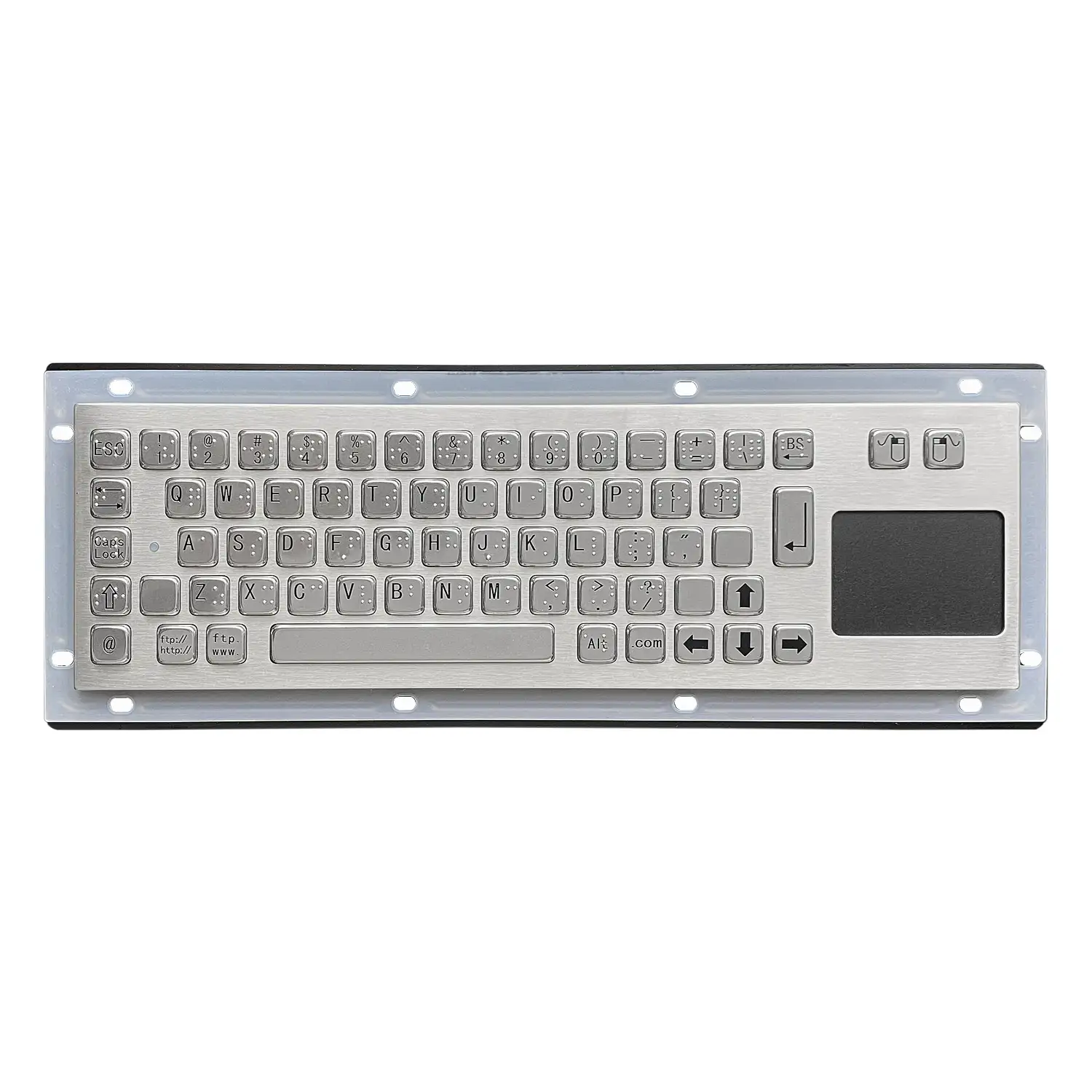
An industrial metal keyboard is built for industrial, military and medical applications, which means the enclosure does most of the work. The body is made from high-grade stainless steel or aluminium, and the design is sealed so that water, dust and other contaminants cannot reach the electronics inside. That sealing is what allows the unit to survive extreme temperatures, moisture and vibration on equipment that is anything but stationary. The keys themselves are typically high-quality silicone rubber or stainless steel and are shaped to return a clear tactile response, so the operator gets confirmation of a keystroke without having to watch the screen. Backlighting is a common addition for low-light working.
Integrated Pointing Devices
Many industrial metal keyboards carry a touchpad or trackball built into the same sealed housing, which removes the need for a separate mouse. On a sealed installation this is more than a convenience. A separate mouse is a second device to protect, a second cable to route and a second failure point in a wet or dusty area, and it usually has a lower protection rating than the keyboard it sits beside. Integrating the pointing device into the keyboard panel means one cutout, one cable and one protection specification. It also keeps the operator's hands in a single working area, which matters on a control station used continuously through a shift.
Durability and Cleaning
The strongest argument for a metal keyboard is service life. These units can run for many years without replacement, which changes the economics on any site that has been replacing office keyboards every few months. The second argument is cleaning. A sealed metal keyboard can be cleaned and maintained easily, with no gaps where residue accumulates, which is essential in industries operating to a hygiene standard. Both benefits depend on choosing the protection level against the real exposure rather than the assumed one, so record what actually reaches the keyboard surface before selecting a model. A unit that is easy to clean but sealed to the wrong level will still fail early.
Ergonomics and Programmable Keys
Ruggedness does not have to come at the cost of usability, and the better designs address both. Key spacing and positioning are worked out to reduce operator fatigue and keep the keyboard comfortable during extended periods of use, which is the normal duty cycle on a production line or in a control room. Some models add customisable function keys that can be programmed to trigger specific tasks or machine functions. For an OEM this is a useful way to simplify the operator interface: frequent actions move onto dedicated keys instead of being buried in a software menu, which reduces training time and cuts the number of keystrokes in routine operations.
Standard Waterproof and Backlit Variants
Three variants cover the majority of industrial installations. The standard industrial metal keyboard is a compact stainless steel unit for heavy-duty use in manufacturing plants, laboratories and general industrial environments. The waterproof variant is specified where liquids are routinely present, such as food processing facilities and outdoor locations, and is built to take direct exposure to water. The backlit variant illuminates the keys for use where visibility is limited, including aircraft cockpits and control rooms. These are not mutually exclusive categories, and a single order commonly combines two of them, such as a waterproof panel with backlighting.
Trackball Touchpad and Programmable Variants
The remaining three variants are defined by what is added to the key field. Industrial trackball keyboards integrate a trackball for precise navigation and are used on arcade machines, kiosks and point-of-sale systems. Touchpad models integrate a touch surface instead and appear on medical devices, point-of-sale equipment and kiosks. Programmable models allow specific commands or macros to be assigned to keys, which suits manufacturing plants where a fixed set of operations is repeated constantly. Choosing between trackball and touchpad usually comes down to glove use and available panel depth, so raise both points with your supplier when the keyboard is being fitted into an existing enclosure.
Specifying a Unit for Your Equipment
Industrial metal keyboards are built to order, so the specification conversation is where the value is created. Decide the material and grade, the protection level, the mounting method, the connector, the layout and language, the presence and type of pointing device, and whether backlighting is needed. KEYU manufactures these units in its own 4,500 square metre factory in Shenzhen with CNC and sheet metal equipment in house and over 1,000 sets of moulds, and supports OEM and ODM work, so a panel drawn to your cutout is handled within the normal order process. Send the panel dimensions and the environmental conditions together in the first enquiry.
Products Mentioned
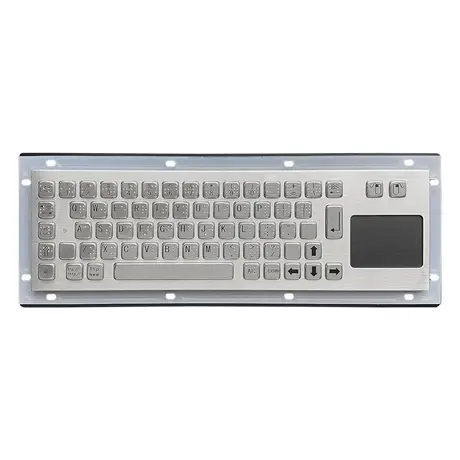
67 Key Metallic Keyboard With Braille KY-PC-NT3 BR
View Specification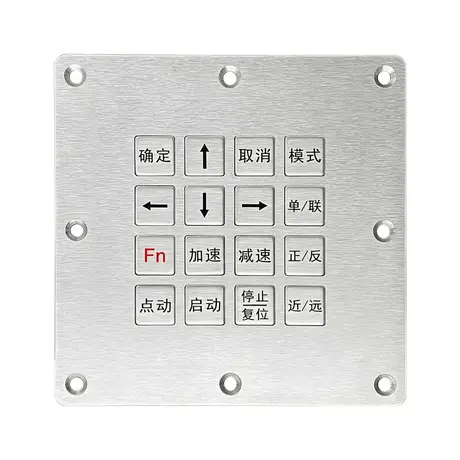
Industrial RS485 Keyboard With 16 Stainless Steel Keys
View Specification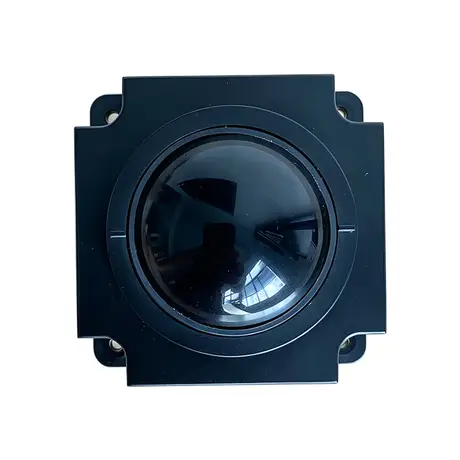
Industrial 50mm Trackball Module KY-MS-MH50-BRS-A
View Specification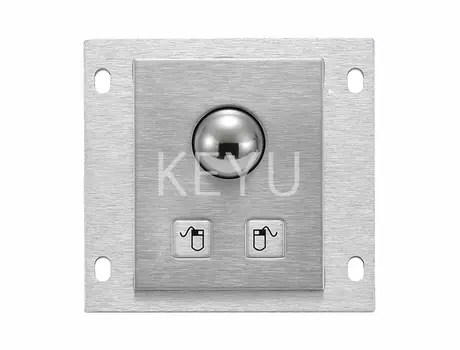
KY-PC-25G 25mm Metal Trackball Module With Two Keys
View Specification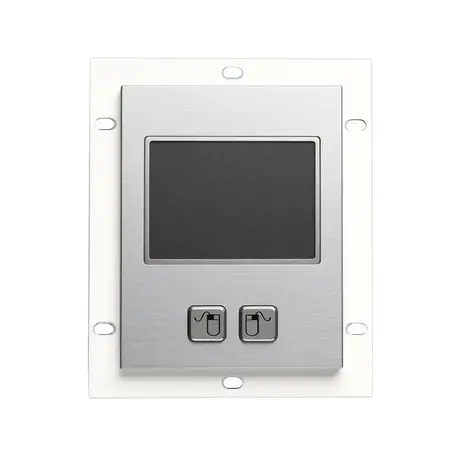
Stainless Steel External Trackpad for PC KY-PC-TB-A-R
View Specification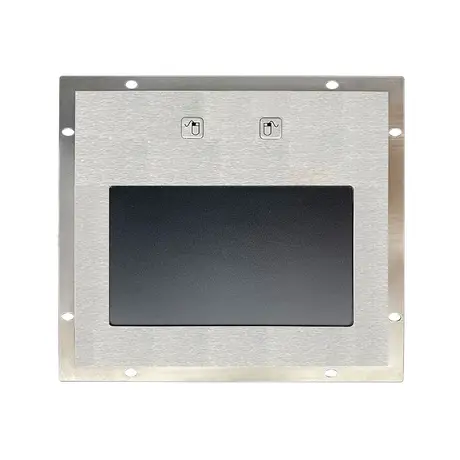
KY-TB-A160 Stainless Steel External Trackpad With 2 Function Keys
View SpecificationQuestions On This Topic
What materials are used in an industrial metal keyboard?
Can a trackball or touchpad be built into the keyboard?
Are programmable keys available?
How long does a metal keyboard last?
Put This Into A Specification
Send us the application and we will tell you which of these choices actually matter for your terminal.