
Industrial Keyboards a Buyer Guide to Types and Options
How an Industrial Keyboard Is Built
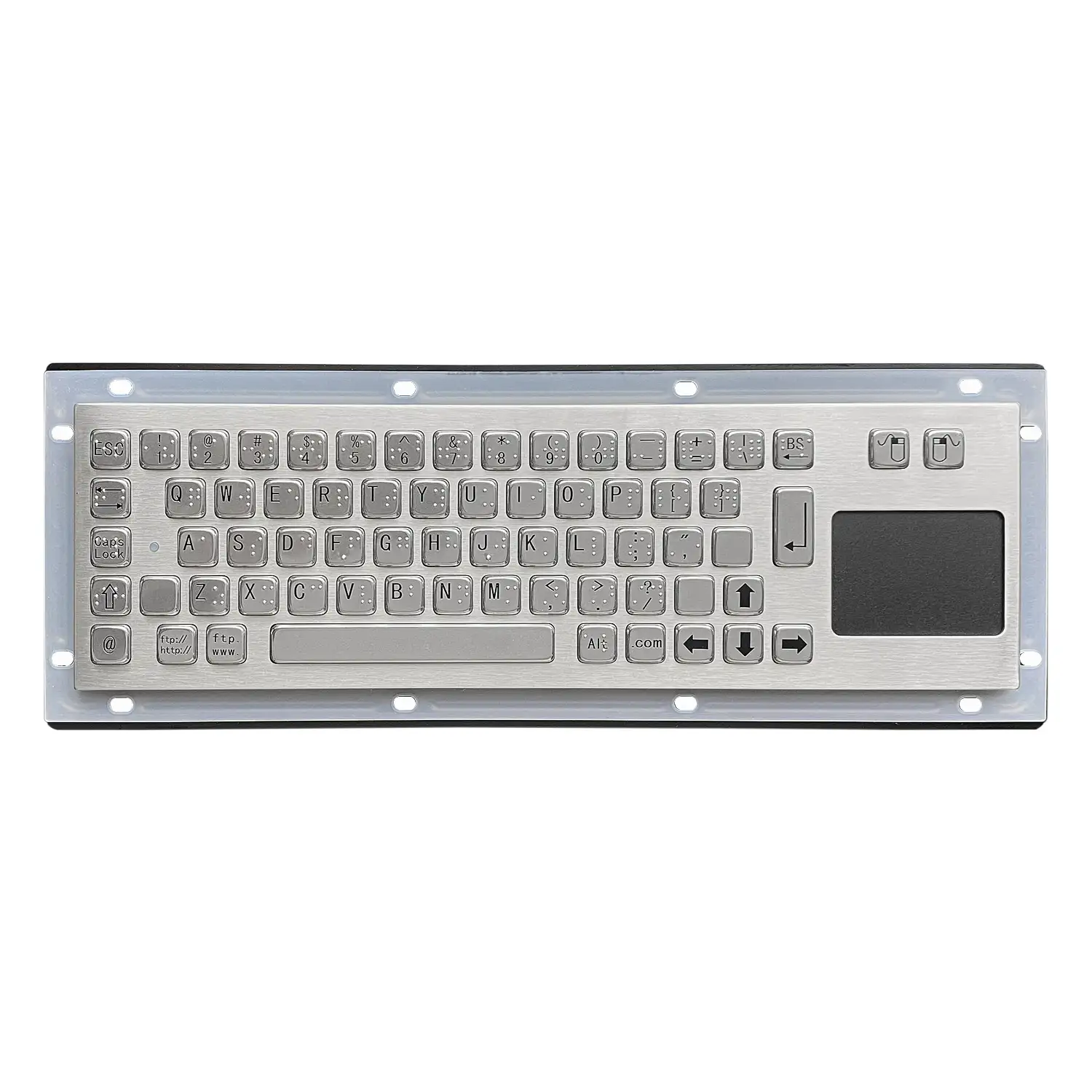
The construction of an industrial keyboard departs from a regular keyboard in several places at once. The key material is chosen to take heavy use while still returning a clear tactile response to the operator. The layout is usually reworked, with larger keys and a rugged body that tolerates rough handling instead of assuming careful desk use. Backlighting is common, which matters more than it sounds when the unit sits in a plant at night or in a control room run at low light. The result is a device that keeps its function under dust, water, chemical exposure and temperature extremes rather than one that merely survives them for a short period before degrading.
Membrane Metal and Silicone Constructions
Three material families cover most installations. Membrane keyboards use a flat board of flexible layers acting as switches, with no physical moving parts, which makes them straightforward to clean and maintain. Metal keyboards, usually stainless steel, give high resistance to water, dust and aggressive chemicals and are the normal choice for food processing, medical applications and military installations. Silicone keyboards are aimed at settings where hygiene governs the decision, such as hospitals and laboratories, because they are waterproof and quick to wipe down. The choice is driven less by preference than by what the cleaning regime and the contaminants demand, so start from the cleaning procedure and work back to the material.
Touchpad Panel Mount and Backlit Options
Beyond the base material, three option groups shape the final unit. Touchpad keyboards carry a built-in pointing surface, normally in the centre or to the right, which suits any station where a separate mouse is impractical or would need its own protection. Panel mount keyboards are designed to be fixed into a panel or wall and are built to resist shock and vibration, which makes them the default where the host equipment moves. Backlit keyboards illuminate the keys for low-light work. These options combine freely, and most industrial orders specify at least one of them, so treat them as part of the base specification rather than as extras.
Customisation Options Worth Specifying
Industrial keyboards are available with a wide range of customisation, and the items that matter are usually decided before production. Layout, keypad arrangement and language are the first three, and getting the language variant right removes the relabelling that otherwise happens on site. Size and shape follow, since the keyboard has to fit an existing cutout or bench footprint. Key colours and branding are available from many manufacturers. KEYU works to OEM and ODM briefs from its own factory in Shenzhen, using in-house CNC and sheet metal equipment and more than 1,000 sets of moulds, so panel and layout changes are handled as part of the order rather than as a separate tooling project.
Which Industries Buy These Keyboards
Industrial keyboards are used across manufacturing, aerospace, military, healthcare and transport. A second group of buyers comes from settings where hygiene rather than ruggedness drives the purchase, principally food processing plants and medical facilities, where the keyboard has to tolerate cleaning agents and leave no crevices that harbour residue. The buying logic differs between the two groups. A manufacturing buyer is usually trying to stop repeated replacement and unplanned downtime; a hygiene buyer is trying to pass an audit and support a documented cleaning procedure. Both should be stated explicitly in the enquiry, because they lead to different material and sealing choices even within the same product family.
Checking a Supplier Before You Order
Four checks cover most of the risk. Look at the manufacturer's track record and customer feedback in your own sector rather than in general. Confirm which quality standards the product is held to and ask for the certificates rather than a claim; KEYU's product approvals include CE, RoHS, FCC, EMC, IP65, IP66, IP67, IK07 and BIS, with an ISO 9001:2015 quality management system used for sheet metal processing. Be wary of pricing that sits far below the market, since it usually signals a change of materials somewhere. Finally, test communication early, because a supplier who answers specification questions clearly before the order will handle problems better after it.
Quality Control on the Order Itself
Certificates cover the product family; inspection covers your batch. Agree in advance what will be inspected and when, both before production starts and after it finishes, so that the finished units are checked against the specification you actually wrote. Keep the quality expectation in writing rather than in a conversation, including layout, legends, connector type, protection rating and mounting dimensions. Stay in regular contact with the factory through the production window so that a question about a legend or a cutout is resolved before it becomes a reworked batch. On a first order, arranging a sample against the final specification is the cheapest way to remove ambiguity from every unit that follows.
Products Mentioned
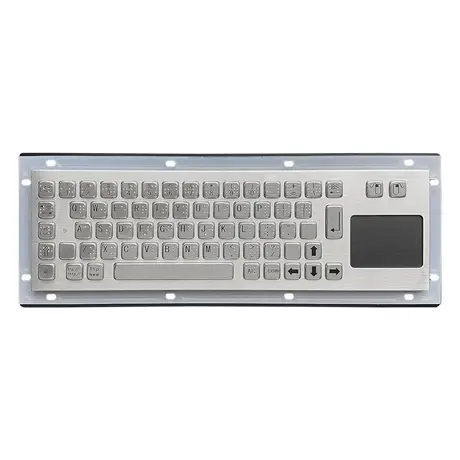
67 Key Metallic Keyboard With Braille KY-PC-NT3 BR
View Specification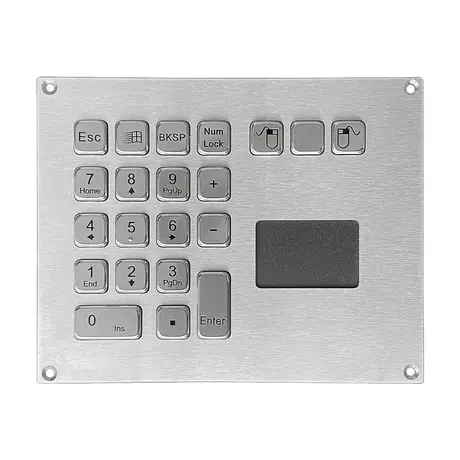
IP65 Mini Keyboard With Trackpad KY-PC-VG160T
View Specification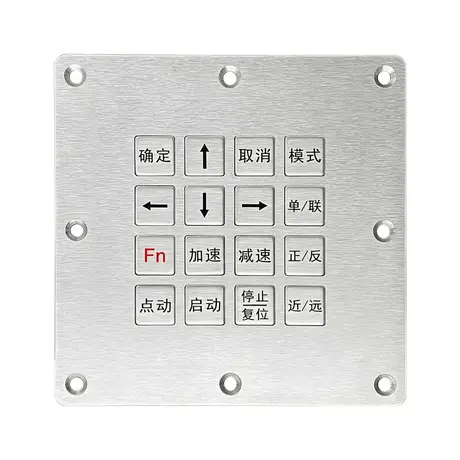
Industrial RS485 Keyboard With 16 Stainless Steel Keys
View Specification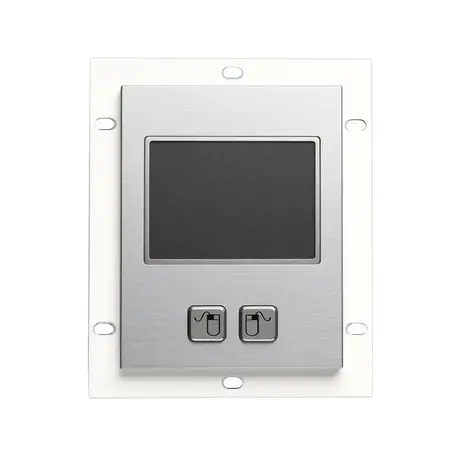
Stainless Steel External Trackpad for PC KY-PC-TB-A-R
View Specification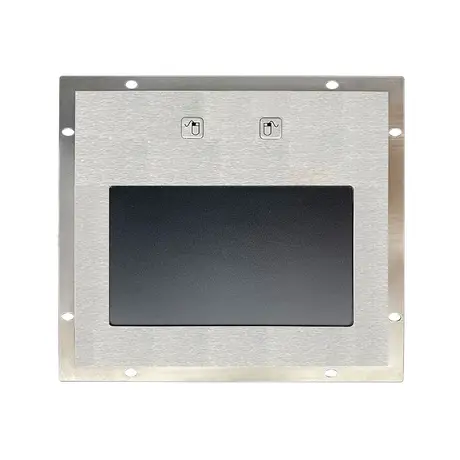
KY-TB-A160 Stainless Steel External Trackpad With 2 Function Keys
View Specification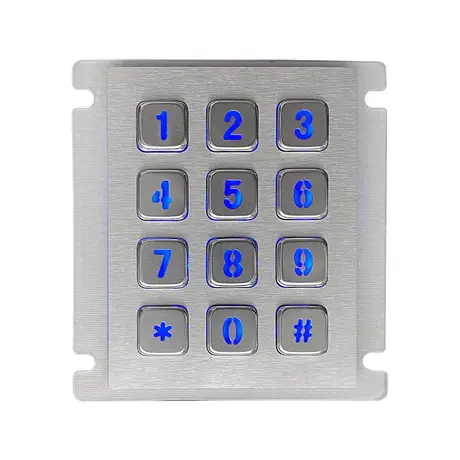
12 Key Industrial Backlight USB Keypad KY2068A-LED
View SpecificationQuestions On This Topic
What makes an industrial keyboard different from an office keyboard?
Should I choose membrane metal or silicone?
Can a pointing device be built into the keyboard?
Which certifications does KEYU hold?
Put This Into A Specification
Send us the application and we will tell you which of these choices actually matter for your terminal.