
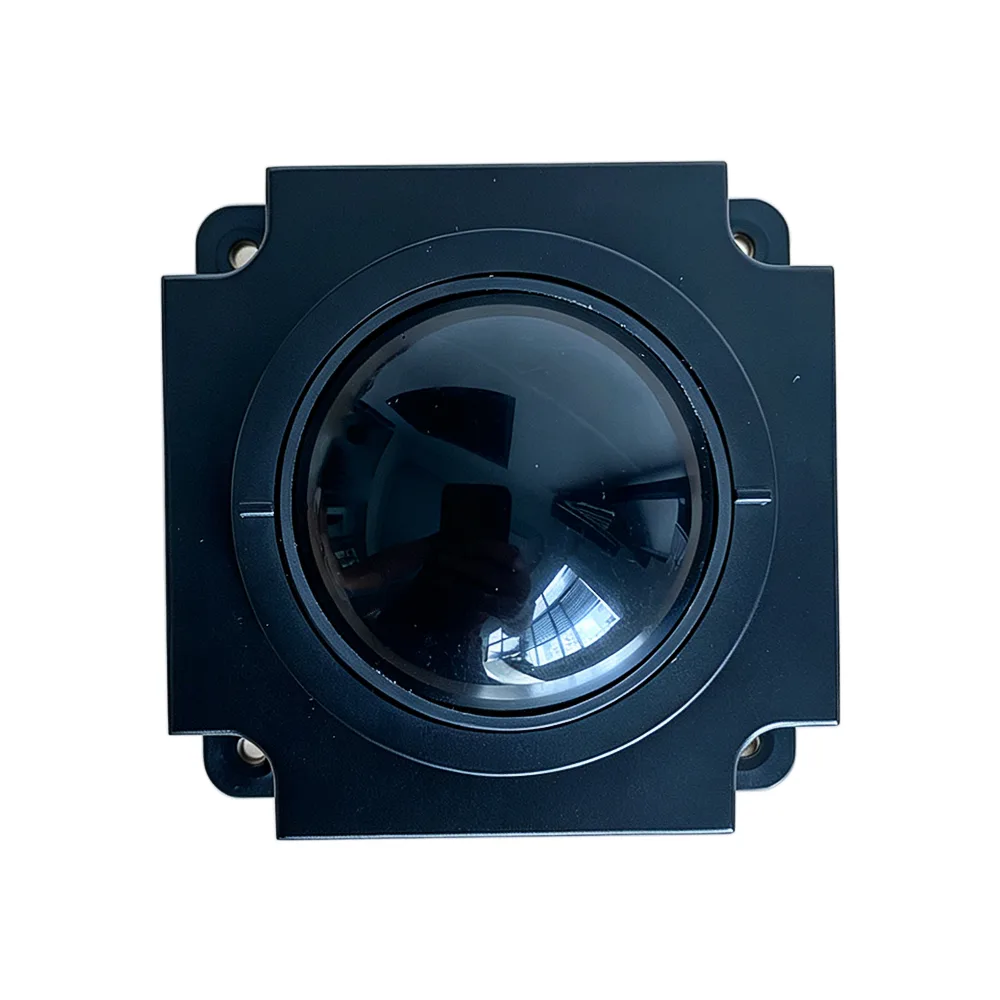
Industrial Grade Trackballs for Harsh Operating Environments
How a Trackball Works and Why It Suits Plant Use
A trackball is a type of mouse that works on the same principle as a mechanical mouse, except that its base stays stationary. The operator moves the ball directly by hand to drive the cursor, replacing the sliding motion of an ordinary mouse. That fixed base is the reason the device suits plant floors. There is no clearance requirement around it, nothing slides off a vibrating surface, and the unit can be mounted permanently into a console. It gives precise cursor control on a limited workbench surface, which is exactly the constraint in industrial control positions, monitoring stations, and other precise operation work.
Materials and Mechanical Strength
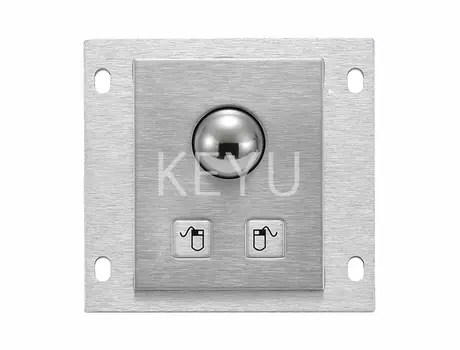
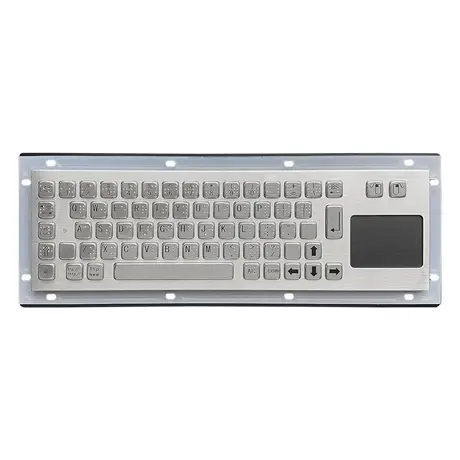
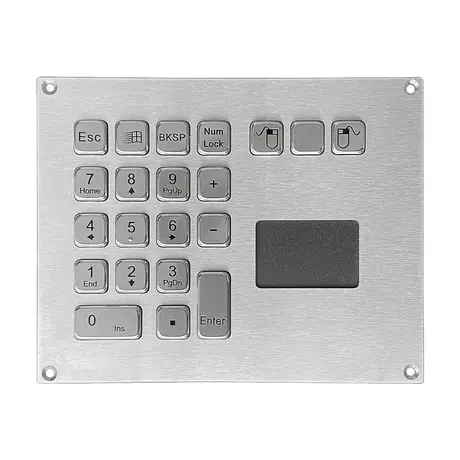
Industrial grade trackballs are made from high strength materials including tempered glass, aluminium alloy, and engineering plastics, chosen for impact resistance and wear resistance so the unit copes with the physical pressures and knocks of a working plant. Specific products illustrate the range: some touchpad and trackball sets use a high strength aluminium alloy shell, some 66 key metal keyboards with trackball use 304 stainless steel for the panel, keys, and ball with an aluminium alloy base plate, and some mechanical trackballs use a sturdy fireproof ABS shell. The rolling element itself receives special treatment so it withstands sustained high frequency operation without rapid wear.
Ingress Protection and Environmental Range
Dust, oil, and moisture are normal conditions rather than exceptions in most plants. Industrial grade trackballs typically carry a high protection level, commonly IP65 or above, giving waterproof, dustproof, and oil resistant operation so the device keeps working rather than failing because of its surroundings. Environmental capability extends beyond sealing. Some industrial trackball products are rated for a working temperature range of minus 10 to plus 60 degrees Celsius, relative humidity of 30 to 90 per cent RH, and atmospheric pressure of 50 to 100 kPa. Waterproof, dustproof, and explosion proof structures exist for public, outdoor, and other extreme positions.
Load Capacity and Service Life
Operators in industrial environments do not handle equipment gently, particularly when wearing gloves or working under time pressure, so the device has to absorb force that would break a consumer product. Some mechanical industrial trackballs are specified to withstand a maximum downward pressure of 300N, equivalent to 30kg, so heavy handed operation does not damage the mechanism. Service life is rated in the same terms: balls specified for over 1,000,000 rotations remain serviceable under high frequency use. When comparing products, ask for both figures, because load capacity and rotation life together describe how the unit behaves over years rather than on the bench.
Electrical Interference and Chemical Exposure
Industrial trackballs are designed with electromagnetic interference and electrostatic discharge in mind. Protective measures allow the device to operate stably in high electromagnetic interference environments, so operational faults and data errors caused by interference are avoided. That is a genuine concern near drives, welding equipment, and heavy switchgear. Chemical exposure is the parallel issue in chemical engineering and metallurgy, where the trackball may come into contact with various substances. Industrial grade units are treated to resist chemicals and withstand corrosion from common chemicals, so the surface and mechanism survive contact that would degrade an untreated device.
Integration Cleaning and Operator Comfort
Industrial trackballs offer a range of interface options including USB and serial, so they integrate conveniently with different industrial equipment and systems, and configuration is generally simple enough to adapt quickly to a new position. Cleaning is designed in: the smooth surface withstands repeated washing and does not readily accumulate dust and dirt, which keeps the equipment hygienic and stable over the long term. Comfort has not been sacrificed for durability. Rolling and clicking feedback is optimised to reduce hand fatigue, and the ergonomic design supports operators who stay comfortable and effective through extended periods of use.
Questions On This Topic
What ingress protection do industrial trackballs offer?
How much force can an industrial trackball take?
Will a trackball work near sources of electrical interference?
What interfaces are available?
Put This Into A Specification
Send us the application and we will tell you which of these choices actually matter for your terminal.