
Industry Application
Castings for Mining and Quarrying
We supply spare parts solutions for the mining industry, with longer service life and lower operating cost options.

Industry Pain Points
Where It Hurts
These are the failures behind most enquiries we receive from this sector.
- Crusher wear parts changed far more often than the maintenance plan allows
- Liners cracking instead of wearing evenly, usually a heat treatment or seating problem
- Chamber sets drifting out of specification because mantle and liner wear at different rates
- Plates arriving out of flat so relines run over the shutdown window
- Stock outs on fast moving parts that stop the crushing line
Customer Requirements
What Buyers Actually Need
- A wear part that reaches the planned change out interval
- Predictable batch to batch hardness so life can be scheduled
- Dimensional accuracy that lets parts interchange without site rework
- Complete sets shipped together and marked by position
- A supplier who can explain why the current part is failing, not just quote a lower price
Recommended Products
Parts We Supply Into This Sector
Product
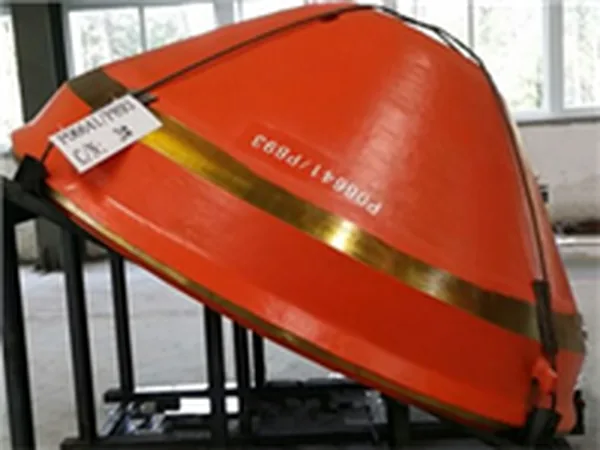
Cone Crusher Mantles and Bowl Liners
See specification →
Product
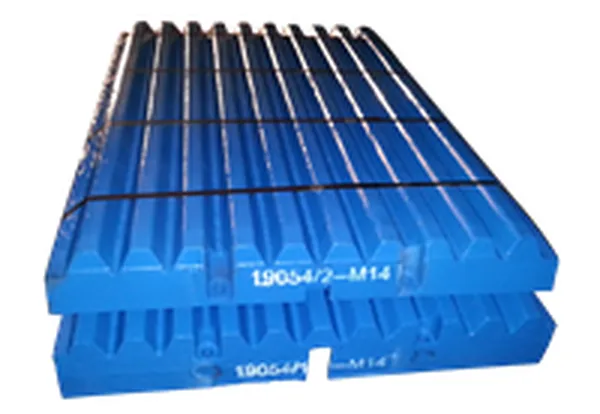
Jaw Crusher Plates and Wear Parts
See specification →
Product
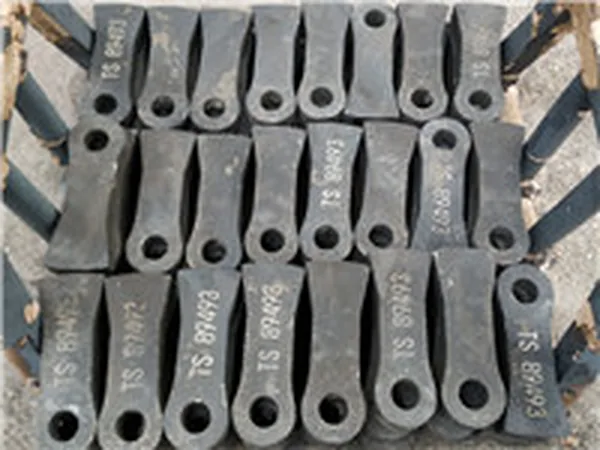
Crusher Hammers and Blow Bars
See specification →
Product
Crusher and Mill Liner Plates
See specification →
Product
High Chrome Wear Plates and Blocks
See specification →
Product
Apron Feeder Pans
See specification →
Application Scenarios
Typical Application Scenarios
Primary crushing
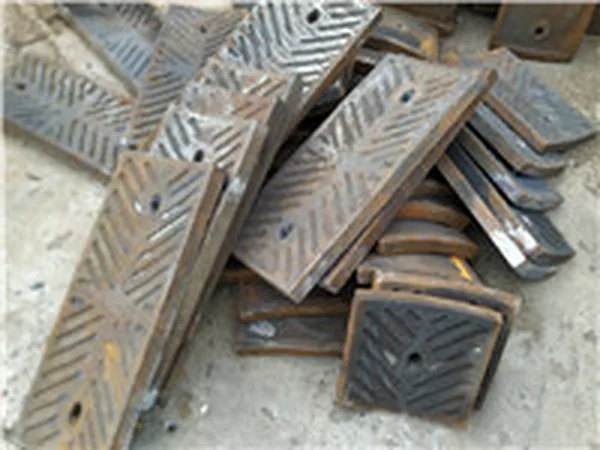
Jaw plates, cheek plates and apron feeder pans under the primary crusher, where feed size and tramp metal decide the alloy.
Secondary and tertiary crushing
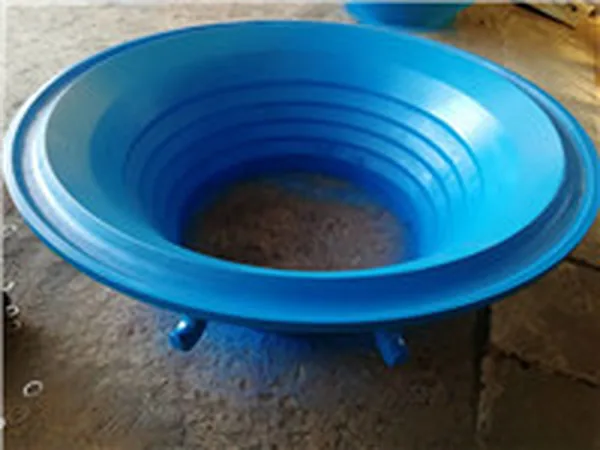
Cone mantles, bowl liners and blow bars, quoted as matched sets so the chamber profile stays true.
Grinding and milling
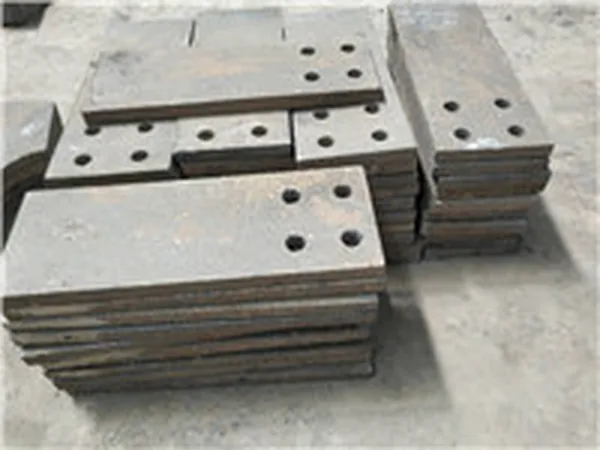
Mill shell and head liners in manganese steel, or high chrome where the duty is sliding abrasion.
Material handling
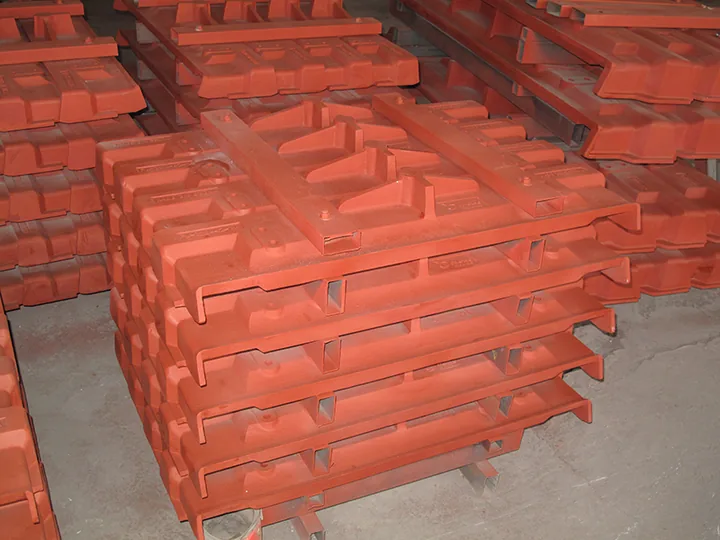
Chute and hopper wear plates, feeder pans and transfer point protection.
Solution Workflow
How a Project Runs
STEP 01
Failure review
We look at the failed part, the machine and the duty before quoting. Often the fix is geometry or seating, not a more expensive alloy.
STEP 02
Material and process proposal
Grade, moulding route, tolerance class and machining allowance, confirmed in writing.
STEP 03
Tooling and first article
Tooling made and the first article measured and tested before the batch runs.
STEP 04
Batch production
Stage inspection during production rather than only at the end.
STEP 05
Documented delivery
Test reports, marking and export packing prepared for your port.
Delivery Capability
Delivery Capability
Size and weight
Castings from a few grams to tens of tonnes. Machined parts from 10 mm to 5000 mm and 1 kg to 5000 kg.
Supply base
More than thirty partner factories covering most casting, forging, machining and surface treatment processes.
Export experience
Supplied to the United Kingdom, Spain, Italy, Poland, South Korea, the United States, South Africa, India, Algeria, France and Japan.
FAQ
Questions From This Sector
Can you match wear parts to our existing crushers?
Manganese steel or high chrome for our duty?
Do you supply complete chamber or liner sets?
What lead time should we plan for wear parts?
Can you help work out why our parts fail early?
Tell Us How the Current Part Fails
Send photographs of the failed part, the machine details and the current service life. We will tell you whether the answer is a different alloy, a different construction or a change in geometry.