
Manganese Steel Castings
Crusher Hammers and Blow Bars
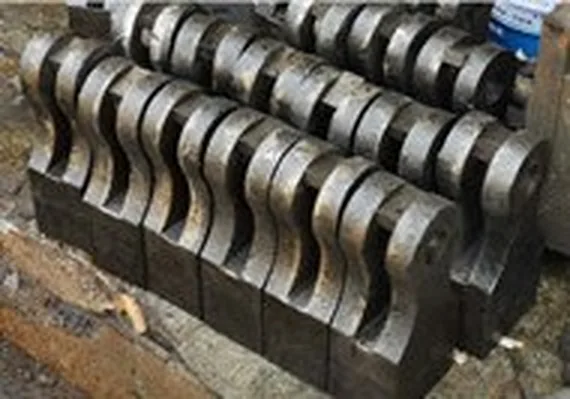
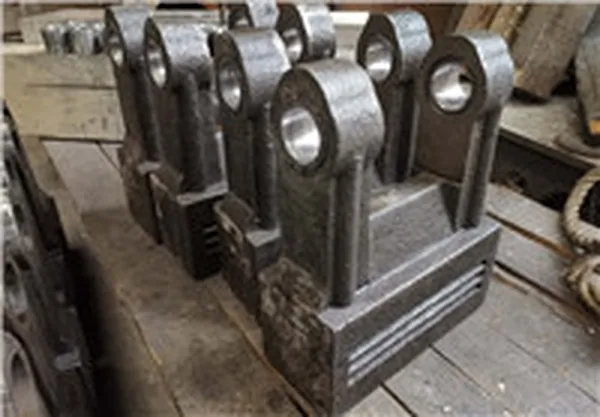
We cast hammers from one kilogram to five hundred kilograms. Where plain manganese steel does not last long enough, bimetal and TiC insert constructions extend the interval.
- 1 kg to 500 kg per piece
- All common hammer crusher types
- Bimetal hammers available
- TiC insert hammers for improved life
Product Overview
About This Programme
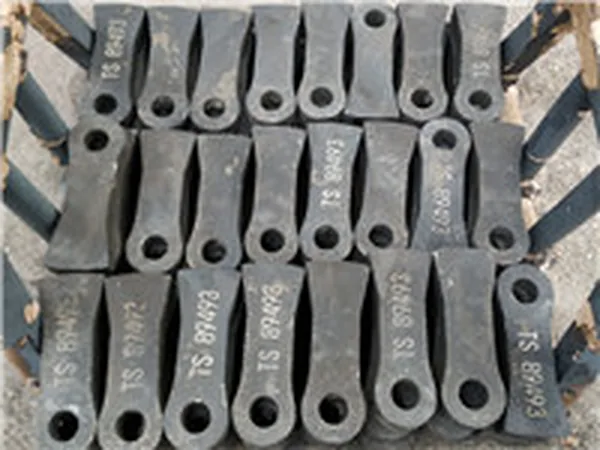
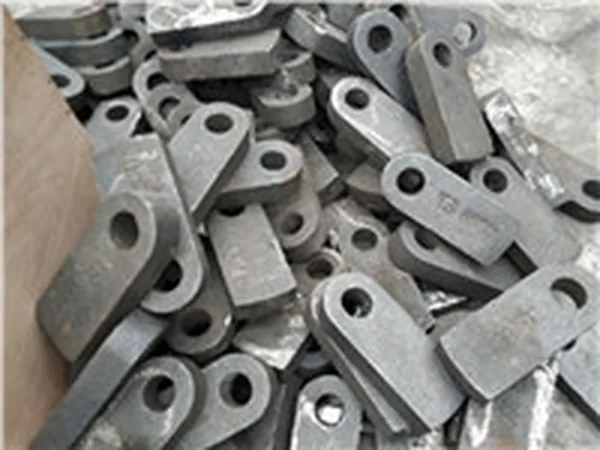
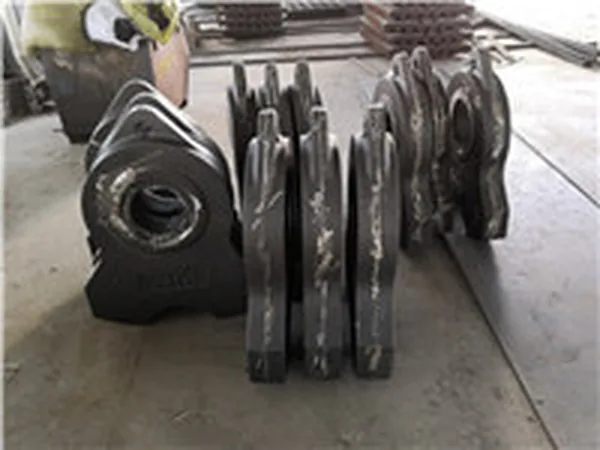
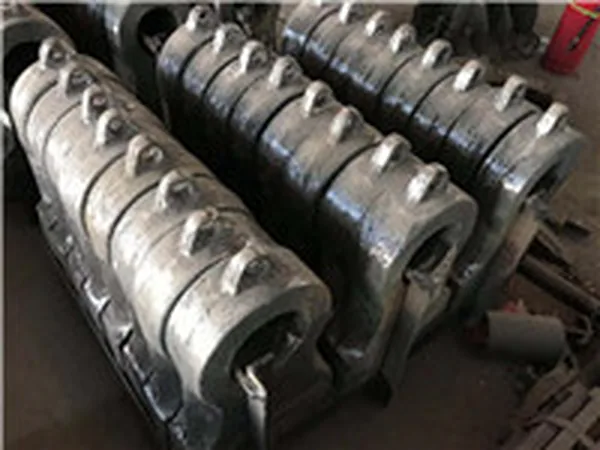
We supply all kinds of manganese hammers, from 1 kg to 500 kg, used on all kinds of hammer crushers. We also supply bimetal hammers and hammers with TiC inserts, which improve hammer life.
Hammer selection is a trade off. A plain manganese hammer is cheap and tough, and it is the right answer in impact heavy service. Where the feed is highly abrasive and the impact is moderate, the manganese never hardens properly and the hammer wears fast. That is where a hard insert or a bimetal construction pays for its extra cost.
Key Benefits
Key Benefits
Why buyers move this part to us, in their words rather than ours.
Balanced sets
Hammers supplied in weight matched sets so the rotor stays balanced and bearing loads stay predictable.
Construction matched to the feed
Plain, bimetal or insert reinforced, chosen against the abrasiveness of your material rather than sold as one option.
Wide weight range
From 1 kg small hammers up to 500 kg pieces for large rotors.
Application Scenarios
Application Scenarios
- Hammer crushers in limestone and coal
- Impact crushers producing aggregate
- Recycling and slag crushing lines
- Sizing crushers in steel plants
Who It Is For
Who It Is For
Cement and lime plants
Crushing limestone continuously where hammer life drives maintenance cost.
Coal handling plants
Sizing crushers running in dusty, abrasive service.
Recycling operators
Impact crushers on demolition and slag feed.
Problems It Solves
Problems It Solves
If one of these is happening on your plant, send us the part and the current life figures.
- Hammers wearing out far faster than the maintenance interval allows
- Rotor imbalance from hammers of unequal weight
- Tips failing while the body is still sound
- Insert hammers priced without any life evidence to justify them
- Long lead times that force an emergency purchase at a bad price
Technical Features
Technical Features and Materials
Weight range
1 kg to 500 kg per piece.
Constructions
Plain manganese steel, bimetal, and hammers with TiC inserts.
Balancing
Hammers supplied in weight matched sets on request.
Heat treatment
Solution treated and quenched to a controlled cycle, hardness reported per batch.
Manufacturing Process
Manufacturing Process
The moulding route is chosen for the part. It is confirmed in writing with the quotation, together with the tolerance class and the machining allowance.
| Process | Best Suited For | Tolerance | Piece Weight |
|---|---|---|---|
| Green sand process | Small and medium parts with low dimensional requirement | CT11–CT14 | 0.2–200 kg |
| Resin sand process | Medium and large parts with high dimensional requirement | CT10–CT11 | 100–3000 kg |
| Shell molding process | Small and medium parts with strict dimensional requirement | CT7–CT9 | ≤50 kg |
| Lost foam process | Small and medium parts with complex structure | CT7–CT9 | ≤100 kg |
| Vacuum process | Medium and large parts needing good surface roughness | CT7–CT9 | ≤10000 kg |
Quality Control
Quality Control and Certification
Inspection is planned at the stages where a problem is still cheap to fix.
- Chemical composition by optical emission and handheld spectrometer
- Hardness tested and reported on every batch
- Dimensions checked against your drawing or the master sample
- Non destructive testing by magnetic particle, penetrant or ultrasonic method where the drawing requires it
Certification documents are issued by the producing factory for the specific order. Ask for the certificate package that applies to your part before you place the order.
Customization
Customization Options
Material and grade
Any grade in the programme, or a grade you nominate with the local equivalent confirmed before production.
Geometry and fixing
Produced to your drawing or reverse engineered from a worn sample, including bolt and seat geometry.
Marking and packing
Part number marking, position marking for sets, and export packing agreed before production.
Use Guide
How to Order
STEP 01
Send the drawing or the worn part
A drawing, a 3D file, or photographs with overall dimensions and the machine details. Add the annual quantity.
STEP 02
Confirm material and construction
We propose the grade and, where relevant, the construction, and explain the trade off against your current part.
STEP 03
First article
Tooling is made and the first article is measured and tested before the batch is released.
STEP 04
Batch and inspection
Stage inspections during production and a final inspection to the agreed standard with the reports you need.
STEP 05
Packing and shipment
Export packing marked with your part numbers, with the shipping documents you require.
FAQ
Questions About Crusher Hammers and Blow Bars
When is a bimetal or TiC insert hammer worth the extra cost?
Can you supply weight matched sets?
Do you make blow bars for impact crushers?
What is the largest hammer you can cast?
How do I send you a sample hammer for copying?
Send the Part and We Will Quote It
Photographs of the worn part with dimensions and the machine details are usually enough to start. Our engineers reply with the material, the construction and a price.