
What a CT grade actually is
A CT grade is a dimensional tolerance class for castings. A lower number means a tighter tolerance. The permitted deviation is not a fixed number, it grows with the nominal dimension, so CT10 on a 50 mm feature is a much smaller band than CT10 on a 1000 mm feature.
That growth with size is the part designers most often forget. A tolerance that is comfortable on a small part becomes a serious constraint on a large one.
Which process reaches which grade
| Process and Tolerance Reference | Detail |
|---|---|
| Green sand process | CT11 to CT14, 0.2 kg to 200 kg |
| Resin sand process | CT10 to CT11, 100 kg to 3000 kg |
| Shell molding process | CT7 to CT9, up to 50 kg |
| Lost foam process | CT7 to CT9, up to 100 kg |
| Vacuum process | CT7 to CT9, up to 10 000 kg |
The mistake that costs the most money
Putting a single tight CT grade in the drawing title block and applying it to every dimension. Most castings have three to six dimensions that matter functionally, and dozens that do not.
When every dimension carries the tight class, the part is pushed into a more expensive moulding route, more parts fall outside tolerance and get rejected, and the price rises for no functional gain.
The fix is simple. Mark the critical dimensions individually and put a loose general class in the title block.
Machined features are different
Anything machined is held to the machining tolerance, not the casting tolerance. So if a bore has to be H7, that is a machining requirement and the casting only needs enough stock in the right place.
Confusing the two leads to drawings that ask for machining accuracy on as cast faces, which no foundry can deliver.
How we verify it
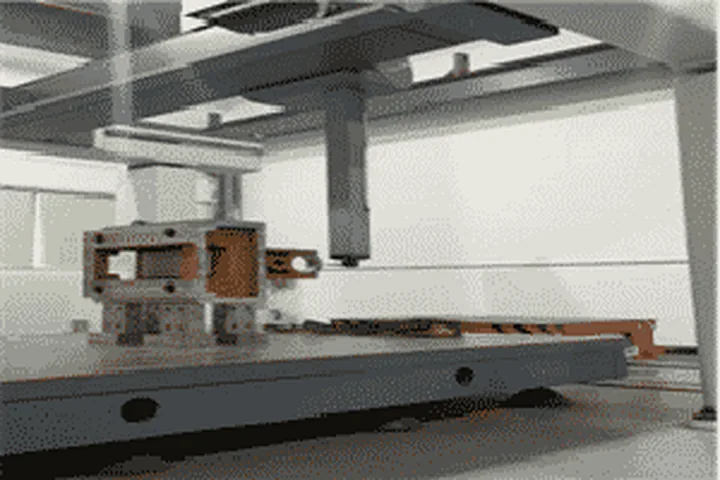
First articles are measured against the drawing, on a gantry CMM with a measurement range up to 10 000 mm on the longest axis where the part is large, or by 3D scanning where the geometry is complex enough that point measurement will not tell the whole story.
For repeat batches, the critical dimensions you marked are the ones checked across the batch. That is another reason to mark them rather than leave everything at one class.