
High Chrome Iron Castings
High Chrome Wear Plates and Blocks
Where the duty is sliding abrasion rather than impact, high chrome iron outlasts manganese steel and alloy steel by a wide margin.
- BTMCr8 to BTMCr26 and ISO 21988 equivalents
- Typically above 55 HRC after heat treatment
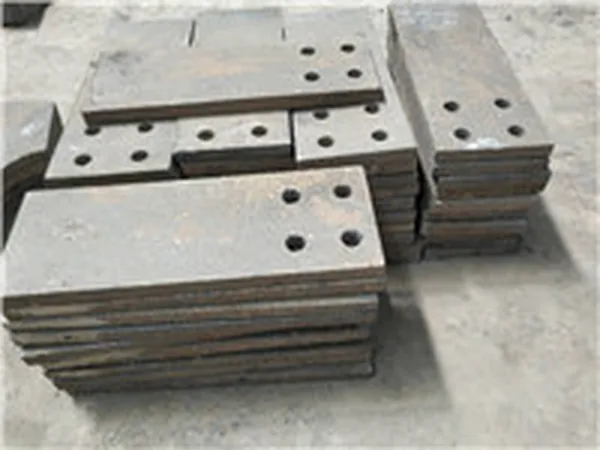
- Plates, blocks and tiles to drawing
- Good resistance in wet and corrosive duty
Product Overview
About This Programme
These castings are used for wear and corrosion resistant conditions, such as wear plates for all kinds of crushers and blow bars. They are also widely used in cement plants, in the coal industry and in similar applications.
The choice of chromium level is the whole decision. More chromium means more carbide and better sliding abrasion resistance, but less tolerance for impact. A BTMCr26 plate in a chute is excellent; the same grade in a primary crusher taking tramp metal will crack.
Key Benefits
Key Benefits
Why buyers move this part to us, in their words rather than ours.
Long change out intervals
Carbide rich microstructure resists the sliding abrasion of rock, slurry and clinker far better than steel.
Hardness reported per batch
Above 55 HRC after hardening and tempering, measured and recorded on each batch.
Works in wet and corrosive duty
High chrome iron holds up in slurry service where alloy steel corrodes and abrades together.
Application Scenarios
Application Scenarios
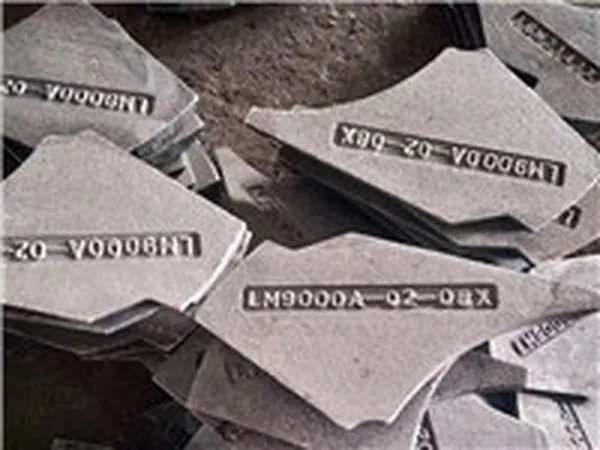
- Wear plate for crusher
- Pump shell and rotor
- Blow bars from impact crusher
- Pipe fitting
- Milling balls
- Milling shell for vertical miller
- Agriculture wear resistant parts
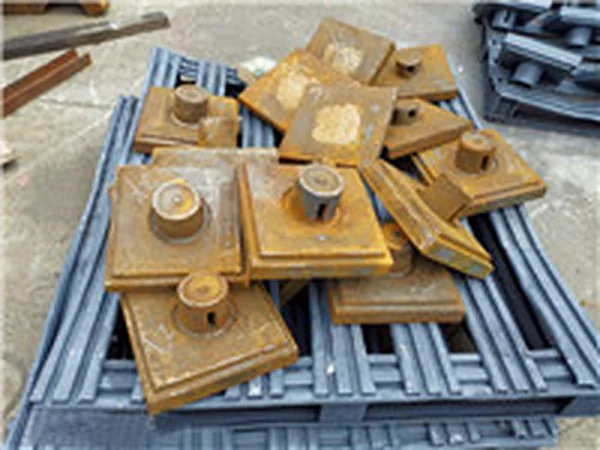
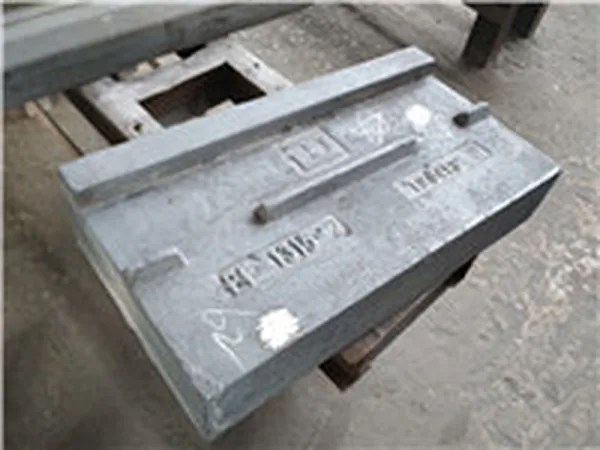
Who It Is For
Who It Is For
Crushing and screening plants
Wear plates and blocks protecting frames and chutes.
Slurry pump users
Shells and rotors handling abrasive slurries.
Cement and coal plants
Vertical mill wear elements and chute protection.
Problems It Solves
Problems It Solves
If one of these is happening on your plant, send us the part and the current life figures.
- Wear plates changed every few weeks instead of every few months
- Alloy steel plates that deform and trap material
- Cracking because a high chromium grade was used in an impact duty
- Hardness that varies from piece to piece across a delivery
- Chute liners that fail at the fixing rather than the wear face
Technical Features
Technical Features and Materials
Grades
BTMCr2, BTMCr8, BTMCr12, BTMCr15, BTMCr26 and ISO 21988 equivalents such as HBW555XCr21 and HBW600XCr20Mo2Cu.
Hardness
Normally above 55 HRC after hardening and tempering, tested per batch.
Forms
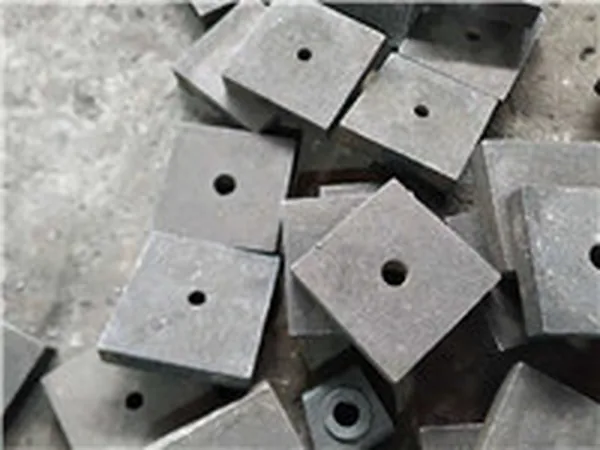
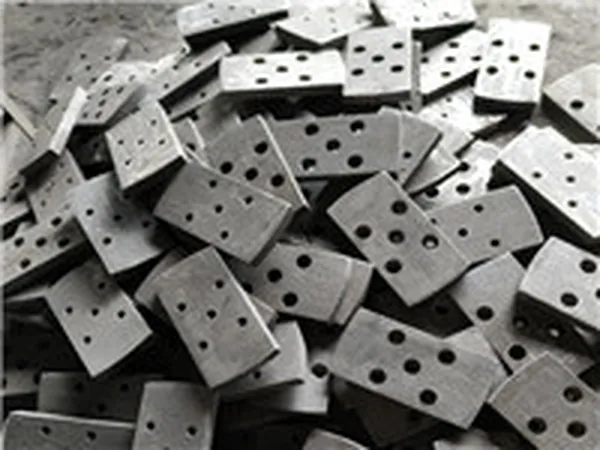
Flat plates, blocks, tiles, curved segments and bolt on or weld on constructions.
Fixing
Countersunk bolt holes, cast in studs or plain plates for welding, to drawing.
Manufacturing Process
Manufacturing Process
The moulding route is chosen for the part. It is confirmed in writing with the quotation, together with the tolerance class and the machining allowance.
| Process | Best Suited For | Tolerance | Piece Weight |
|---|---|---|---|
| Green sand process | Small and medium parts with low dimensional requirement | CT11–CT14 | 0.2–200 kg |
| Resin sand process | Medium and large parts with high dimensional requirement | CT10–CT11 | 100–3000 kg |
| Shell molding process | Small and medium parts with strict dimensional requirement | CT7–CT9 | ≤50 kg |
| Lost foam process | Small and medium parts with complex structure | CT7–CT9 | ≤100 kg |
| Vacuum process | Medium and large parts needing good surface roughness | CT7–CT9 | ≤10000 kg |
Quality Control
Quality Control and Certification
Inspection is planned at the stages where a problem is still cheap to fix.
- Chemical composition by optical emission and handheld spectrometer
- Hardness tested and reported on every batch
- Dimensions checked against your drawing or the master sample
- Non destructive testing by magnetic particle, penetrant or ultrasonic method where the drawing requires it
Certification documents are issued by the producing factory for the specific order. Ask for the certificate package that applies to your part before you place the order.
Customization
Customization Options
Material and grade
Any grade in the programme, or a grade you nominate with the local equivalent confirmed before production.
Geometry and fixing
Produced to your drawing or reverse engineered from a worn sample, including bolt and seat geometry.
Marking and packing
Part number marking, position marking for sets, and export packing agreed before production.
Use Guide
How to Order
STEP 01
Send the drawing or the worn part
A drawing, a 3D file, or photographs with overall dimensions and the machine details. Add the annual quantity.
STEP 02
Confirm material and construction
We propose the grade and, where relevant, the construction, and explain the trade off against your current part.
STEP 03
First article
Tooling is made and the first article is measured and tested before the batch is released.
STEP 04
Batch and inspection
Stage inspections during production and a final inspection to the agreed standard with the reports you need.
STEP 05
Packing and shipment
Export packing marked with your part numbers, with the shipping documents you require.
FAQ
Questions About High Chrome Wear Plates and Blocks
BTMCr15 or BTMCr26 for my application?
What hardness do you supply?
Can high chrome plates be welded?
Do you supply curved or profiled wear plates?
How do I compare life against my current supplier?
Send the Part and We Will Quote It
Photographs of the worn part with dimensions and the machine details are usually enough to start. Our engineers reply with the material, the construction and a price.