
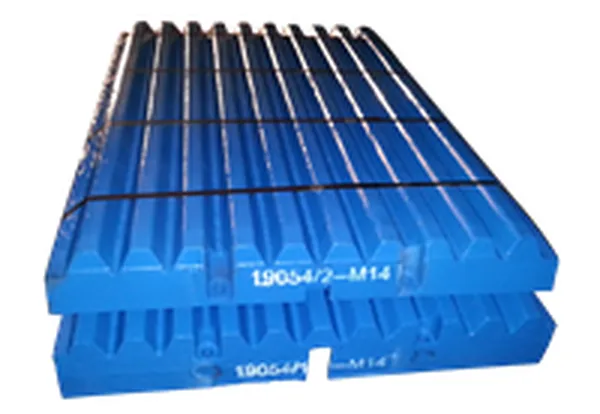
Compare cost per tonne not price per piece
A jaw plate that costs 20 percent less and lasts 30 percent fewer tonnes is more expensive, before you count the extra shutdown.
To calculate cost per tonne you need the tonnes each part achieved under the same feed and the same machine settings. Most plants have this data in the maintenance log even if nobody has assembled it.
Include the downtime. If a change out costs a shift of production, the part that lasts through a scheduled interval is worth a premium over one that does not.
Send the right information
| Information Checklist for a Wear Part Enquiry | Detail |
|---|---|
| Machine | Type, model and the position of the part on the machine |
| Feed | Material, lump size, abrasiveness, wet or dry |
| Current life | Tonnes or hours achieved and the failure mode |
| Part detail | Drawing or photographs with overall dimensions, thickness and fixing detail |
| Commercial | Annual quantity, target delivery date and destination port |
Ask the questions that separate suppliers
Which alloy and why? A supplier who answers with a grade and a reason understands your duty. One who answers "high manganese, best quality" does not.
What is the heat treatment cycle? For manganese steel, solution treatment is what makes the part work. Ask whether it is documented.
Is hardness tested per batch and reported? Consistency across a delivery is what makes life predictable.
Will the tooling be held for reorders? This affects your lead time on every subsequent order.
What happens if a part fails early? A supplier who wants the failed part back and will look at it is worth more than one who simply sends a replacement.
Diagnose the failure before you reorder
If the part wore evenly and reached the end of its useful profile, the alloy is right and the only question is whether a longer lasting construction pays back.
If it cracked across the section, look at seating, fixing torque and whether the alloy is too hard for the impact level.
If it wore quickly with no sign of hardening, the manganese steel is in a duty with too little impact. High chrome iron or an insert reinforced construction is the answer.
If it wore unevenly, look at feed distribution and chamber alignment before blaming the casting.
Practical ordering advice
Order chamber and liner components as matched sets so they wear together.
Ask for position marking on liner sets so relines go faster.
Where your shutdown schedule is known, agree a delivery plan at quotation stage rather than ordering when the store is empty.
Trial a new supplier on one position, with the tonnes recorded, before switching the whole plant.