
Four questions before the grade
What is the working temperature, and is it steady or cycling? Thermal cycling causes fatigue cracking that a steady state temperature rating will not predict.
What is the atmosphere? Oxidising, carburising and sulphidising atmospheres attack alloys differently. A grade that is fine in air can fail quickly in a carburising furnace.
What load does the part carry at temperature? Creep, not melting, is what makes a furnace tray sag.
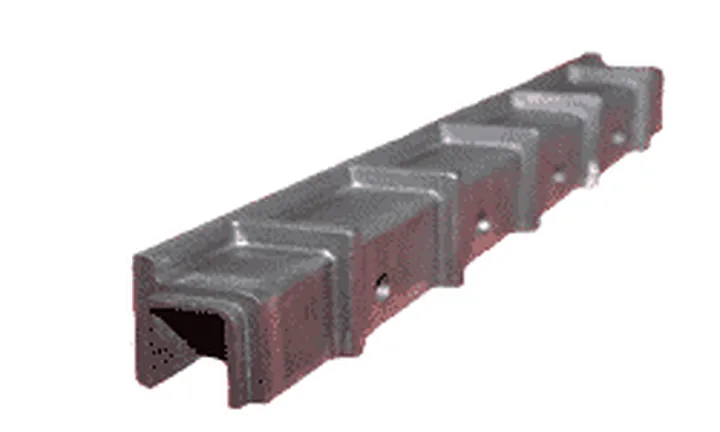
How is the section designed? A thick unrelieved section builds thermal stress between the hot face and the cool interior. Rib layout often matters more than moving up an alloy grade.
What the alloying elements do
Chromium forms a protective oxide layer that resists scaling. More chromium, better oxidation resistance.
Nickel stabilises the austenitic structure, improves creep strength and helps resist carburising attack. Nickel is also the expensive element, which is why it is the first thing a low cost supplier reduces.
Silicon improves oxidation resistance and helps in sulphidising conditions.
This is why the composition report matters. The difference between a grade that lasts and one that does not is often a few percent of nickel that cannot be seen from outside.
Common grades and where they sit
| Heat Resistant Grade Reference | Detail |
|---|---|
| GB 9437 | RTCr, RTCr2, RTCr16, RTSi5, RQTSi4, RQTSi4Mo, RQTSi5, RQTAl4Si4, RQTAl5Si5, RQTAl22 |
| GB/T 20878 | 06Cr25Ni20, ZG40Cr25Ni20Si2, ZG40Cr25Ni12Si2 |
| EN 10295 | 1.4777, 1.4837, 1.4848 |
Design decisions that add life
Relieve thick sections and add ribs rather than thickness. A well ribbed tray in a mid grade alloy frequently outlasts a flat tray in a higher grade.
Avoid sharp internal corners, which are where thermal fatigue cracks start.
Allow for growth. Heat resistant castings expand significantly at working temperature, and a fixture that constrains that growth will crack the part.
Where different positions on the same machine run at different temperatures, order different grades for different positions rather than paying for the hottest specification everywhere.
What we check
Composition by optical emission spectrometer and handheld XRF, reported with the shipment. Dimensions against the drawing or the sample. We do not claim a service life figure, because it depends on your process, but we will help you compare against what your current parts achieve.