
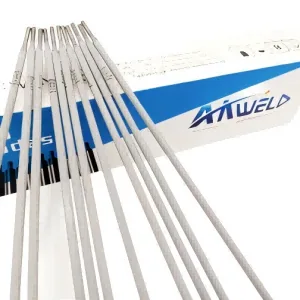
AKR407C Low Hydrogen Electrode for Heat-Resistant Steel Welding.
A low hydrogen coated electrode for welding low alloy heat-resistant steels with high resistance to temper embrittlement and excellent low-temperature toughness, suitable for demanding industrial applications.
Product Overview
AKR407C is a low hydrogen type covered electrode for manual metal arc welding of low alloy heat-resistant steels, designed for use in high-performance applications such as petroleum refining, petrochemical, coal chemical, steam turbine cylinders, thermal power, and nuclear energy equipment.
The electrode is formulated for welding ASME SA387 Gr. 22 Class 2 (12Cr2Mo1R) steel plates and other complex, corrosive environments requiring high joint integrity and long-term stability under harsh operating conditions.
It meets the EN ISO 3580 B E6216 2C1M and AWS A5.5 E9015-B3 classifications, and is also compliant with GB/T 5118 E6216 2C1M standards.
Application: Used in the petroleum refining petrochemical, coal chemicals, stesm turbine cylinder, thermal power, nuclear energy and other harsh conditions corrosive wedium large, complex equip ment ASME SA387 Gr. 22 Class 2 (12Cr2Mo1R) class steel plate welding.
Key Benefits
Low Impurity Deposited Metal.
The deposited metal has extremely low levels of sulfur and phosphorus, with S < 0.10% and P < 0.10%, contributing to high purity and reduced risk of cracking.
Excellent Low-Temperature Toughness
The weld metal achieves a Charpy impact value of at least 54 J at minus 30 degrees C, ensuring reliable performance in cold service environments.
High Resistance to Temper Embrittlement.
The electrode produces weld metal with a very low X factor of 7.2, indicating strong resistance to temper embrittlement during long-term exposure to elevated temperatures.
Suitable for Field Installation.
The electrode is designed for use in field welding and construction, maintaining consistent performance under variable site conditions.
Where It Is Used
- Welding of ASME SA387 Gr.
- Petroleum refining and petrochemical equipment.
- Coal chemical processing plants.
- Steam turbine cylinders
- Thermal power and nuclear energy systems.
- High-pressure, high-temperature, and corrosive service environments.
Who It Is For
- Welding consumable distributors supplying heat-resistant steel electrodes.
- Fabricators and EPC contractors working on high-temperature and high-pressure equipment.
- Maintenance teams in power plants and petrochemical facilities requiring reliable welds in critical components.
Problems It Solves
- Achieving high joint integrity in heat-resistant steels exposed to long-term elevated temperatures without embrittlement.
- Meeting low-temperature toughness requirements in critical welds operating below zero degrees Celsius.
- Reducing the risk of fatigue cracking and hydrogen-induced cracking in complex, high-stress welds.
- Sourcing a single electrode that meets multiple international standards for heat-resistant steel welding.
Specifications
Published by the factory for AKR407C. Values not shown are not published on the datasheet and are marked as such rather than estimated.
| Standard | Designation |
|---|---|
| Classification 1 | EN ISO 3580 B E6216 2C1M AWS A5.5 E9015-B3 |
| Classification 2 | GB/T 5118 E6216 2C1M |
| Element | Content |
|---|---|
| C | 0.07 |
| Mn | 0.69 |
| P | 0.006 |
| S | 0.003 |
| Si | 0.2 |
| Cr | 2.25 |
| Mo | 1.05 |
| Sb | 0.001 |
| As | 0.003 |
| Sn | 0.001 |
| X | 7.2 |
Mechanical property data for this grade is not published on the factory datasheet. Ask our technical team for the test record before you qualify it.
Technical Features
- Low hydrogen coating for reduced risk of hydrogen cracking.
- Deposited metal with carbon content of 0.07%, manganese 0.69%, silicon 0.2%, chromium 2.25%, and molybdenum 1.05%
- Impurities: sulfur 0.003%, phosphorus 0.006%, antimony 0.001%, arsenic 0.003%, tin 0.001%
- X factor of 7.2, indicating excellent resistance to temper embrittlement.
- Charpy impact energy of at least 54 J at minus 30 degrees C.
- Supplied to EN ISO 3580 B E6216 2C1M, AWS A5.5 E9015-B3, and GB/T 5118 E6216 2C1M classifications.
Use Guide
- Select electrode diameter based on joint thickness and welding position; use recommended current ranges to avoid overheating or underfilling.
- Ensure the joint surfaces are clean and free of oil, rust, moisture, and other contaminants before welding.
- Store electrodes in a dry environment and re-bake if exposed to humidity; follow manufacturer guidelines for preheating and interpass temperature control.
- Use proper post-weld heat treatment when required to maintain mechanical properties and reduce residual stresses.
How It Compares
AKR407C is a low hydrogen electrode designed for heat-resistant steels, differing from standard mild steel electrodes like E6013 in both coating type and mechanical performance. It is not intended for general-purpose welding but for high-temperature, high-stress applications where resistance to temper embrittlement and low-temperature toughness are critical. Compared to ordinary welding materials, AKR407C offers superior purity, lower impurity levels, and enhanced performance under prolonged thermal exposure.
Related Grades
Other welding electrodes in the same family.
AKR407C Questions
What standards does AKR407C meet?
What are the key chemical elements in the deposited metal?
What is the impact toughness of the deposited metal?
What is the X factor and why is it important?
What packing is AKR407C supplied in?
Can we test AKR407C before placing a production order?
Request a Quotation for AKR407C
Send the diameter, the quantity and the destination port. Our technical team replies with packing, pricing and the data you need to qualify the grade.