
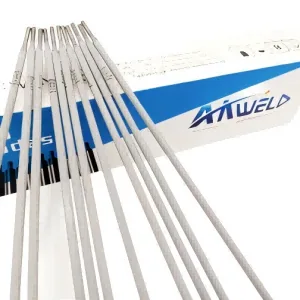
AKD-35 Low Hydrogen Sodium Electrode for Abrasion-Resistant Surfacing.
A low hydrogen sodium and low alloy steel surfacing electrode designed for heavy abrasion resistance at room temperature under non-corrosive conditions.
Product Overview
AKD-35 is a low hydrogen sodium and low alloy steel surfacing electrode used for building up surfaces on components exposed to heavy abrasion at room temperature and in non-corrosive environments. The electrode delivers good weldability and machinability in the deposited metal.
It is classified under AWS A5.13 EFe1 and GB/T 984 EDPCrMo-A0-15, with a chemical composition tailored for wear resistance and mechanical stability. The deposited metal contains controlled levels of carbon, silicon, chromium, molybdenum, manganese, phosphorus and sulfur as specified in the manufacturer’s data.
Application: FUsed for surfacing on parts with heavy abrasion accompanied under room temperature and non-corrosive condition.
Key Benefits
Low Hydrogen Sodium Coating.
The sodium-based coating minimizes hydrogen content in the weld metal, reducing the risk of hydrogen-induced cracking during and after welding.
Controlled Chemical Composition
The electrode delivers a deposited metal with carbon between 0.04% and 0.20%, silicon at 1.00%, chromium between 0.50% and 3.50%, molybdenum at 1.5%, manganese between 0.50% and 2.0%, phosphorus at 0.027% and sulfur at 0.006%.
Good Machinability of Deposited Metal.
The weld metal produced is suitable for machining after surfacing, reducing post-weld processing time and effort.
Stable Arc with Short Arc Length.
The electrode performs best with a short arc length, which helps avoid porosity and ensures consistent bead formation.
Where It Is Used
- Surfacing of parts subject to heavy abrasion in non-corrosive environments.
- Wear-resistant overlay on components such as rollers, chutes, and crusher parts.
- Repair and build-up of worn surfaces in industrial machinery operating at room temperature.
Who It Is For
- Welding consumable distributors supplying surfacing electrodes for industrial wear applications.
- Fabricators and maintenance teams working on equipment exposed to abrasive wear.
- Contractors performing repair and build-up work on machinery components in mining, quarrying, and material handling.
Problems It Solves
- Weld metal cracking due to high hydrogen content in surfacing applications.
- Poor machinability of deposited metal after surfacing, requiring additional machining time.
- Inconsistent weld quality from improper arc length or surface contamination.
Specifications
Published by the factory for AKD-35. Values not shown are not published on the datasheet and are marked as such rather than estimated.
| Standard | Designation |
|---|---|
| Classification 1 | AWS A5.13 EFe1 |
| Classification 2 | GB/T 984 EDPCrMo-A0-15 |
| Element | Content |
|---|---|
| C | 0.04-0.20 |
| Si | 1.00 |
| Cr | 0.50-3.50 |
| Mo | 1.5 |
| Mn | 0.50-2.0 :P:0.027 |
| S | 0.006 |
Mechanical property data for this grade is not published on the factory datasheet. Ask our technical team for the test record before you qualify it.
| Diameter | Current range |
|---|---|
| 3.2mm | |
| 350mm | 80-120A |
| 4.0mm | |
| 400mm | 120-170A |
| 5.0mm | |
| 2mm | before arc st -arting and then weld forward. Before extinguishing arc, stay a while and weld bac kward |
Technical Features
- Low hydrogen sodium coating for reduced risk of hydrogen cracking.
- Chemical composition: C 0.04-0.20%, Si 1.00%, Cr 0.50-3.50%, Mo 1.5%, Mn 0.50-2.0%, P 0.027%, S 0.006%
- Supplied in 3.2 mm, 4.0 mm and 5.0 mm diameters with recommended current ranges.
- AWS A5.13 EFe1 and GB/T 984 EDPCrMo-A0-15 classifications.
Use Guide
- Bake the electrodes at 300-350°C for 1 hour before use to maintain low hydrogen levels.
- Remove all water, rust, oil and other contaminants from the base metal surface before welding.
- Use a short arc length to maintain arc stability and avoid porosity.
- To prevent blowholes, withdraw the electrode 2 mm backward before starting the arc, then weld forward.
- Before extinguishing the arc, pause briefly and weld backward 5 mm to seal the crater.
How It Compares
AKD-35 is a low hydrogen sodium surfacing electrode with a controlled alloy content suitable for abrasion resistance at room temperature. It differs from basic-coated electrodes with higher hydrogen content, which are more prone to cracking in thick sections. Compared to rutile-coated electrodes, AKD-35 offers better wear resistance and mechanical stability in surfacing applications, though it requires stricter surface preparation and baking.
Related Grades
Other welding electrodes in the same family.
AKD-35 Questions
What are the recommended welding parameters for each diameter?
What standards does AKD-35 meet?
What is the chemical composition of the deposited metal?
What pre-welding preparation is required?
What packing is AKD-35 supplied in?
Can we test AKD-35 before placing a production order?
Request a Quotation for AKD-35
Send the diameter, the quantity and the destination port. Our technical team replies with packing, pricing and the data you need to qualify the grade.