
AK-TH550NQII Low-Alloy Weathering Steel Wire for Ar-80/CO2-20 Shielded Welding.
A gas shielded welding wire formulated for Q450NQRI and equivalent weathering steel, with controlled S and P content and alloying elements to deliver atmospheric corrosion resistance and high mechanical strength in demanding environments.
Product Overview
AK-TH550NQII is a low-alloy weathering steel welding wire designed for gas shielded arc welding using an 80% argon + 20% carbon dioxide shielding gas mixture. The wire contains controlled levels of copper, chromium, and nickel, which enhance atmospheric corrosion resistance in variable climatic conditions.
Sulfur and phosphorus content are strictly limited to 0.020% and 0.025% respectively, reducing the risk of weld metal embrittlement and improving crack resistance. This composition supports long-term service life in outdoor and corrosive environments.
The wire is supplied to the TB/T 2374 ER55-G standard and is intended for welding Q450NQRI and equivalent grade weathering steels, where both mechanical performance and environmental durability are critical.
Application: For welding of Q450NQRI and equivalent grade weathering steel.
Key Benefits
Enhanced Atmospheric Corrosion Resistance.
The inclusion of copper, chromium, and nickel in the wire composition promotes the formation of a protective oxide layer on the weld surface, improving resistance to atmospheric corrosion over time.
Low Sulfur and Phosphorus Content.
Sulfur is limited to 0.020% and phosphorus to 0.025%, which reduces the likelihood of hot cracking and improves weld metal toughness, especially in critical joints.
High Mechanical Strength and Crack Resistance.
The wire delivers excellent mechanical properties in the weld metal, with a tensile strength of at least 550 MPa and good resistance to cracking under thermal stress.
Compatibility with Q450NQRI and Equivalent Steels.
Designed specifically for welding Q450NQRI and similar weathering steel grades, ensuring that the weld metal matches the base metal’s performance in service.
Where It Is Used
- Welding of weathering steel structures exposed to outdoor conditions.
- Railway rolling stock and bridge components subject to variable climates.
- Steel structures in coastal or industrial environments with high corrosion risk.
- Fabrication of equipment requiring long-term durability without painting.
Who It Is For
- Welding consumable distributors supplying weathering steel welding solutions.
- Steel fabricators working with Q450NQRI and equivalent weathering steels.
- Railway and infrastructure contractors requiring corrosion-resistant welds.
Problems It Solves
- Achieving long-term atmospheric corrosion resistance in welds without relying on post-weld coatings.
- Matching weld metal properties to base metal performance in weathering steel applications.
- Reducing the risk of cracking in welds due to high sulfur or phosphorus content in filler metal.
Specifications
Published by the factory for AK-TH550NQII. Values not shown are not published on the datasheet and are marked as such rather than estimated.
| Standard | Designation |
|---|---|
| Classification | TB/T 2374 ER55-G |
| Element | Content |
|---|---|
| C | 0.10 |
| Mn | 1.2-1.6 |
| P | 0.025 |
| S | 0.020 |
| Si | 0.60 |
| Cu | 0.20-0.50 |
| Ni | 0.20-0.60 |
| Cr | 0.30-0.90 |
Mechanical property data for this grade is not published on the factory datasheet. Ask our technical team for the test record before you qualify it.
Technical Features
- Low-alloy welding wire for Ar-80/CO2-20 gas shielded welding.
- Chemical composition includes Cu 0.20-0.50%, Cr 0.30-0.90%, Ni 0.20-0.60%, with C 0.10%, Mn 1.2-1.6%, Si 0.60%
- Sulfur content limited to 0.020%, phosphorus to 0.025%
- Supplied to TB/T 2374 ER55-G standard.
- Intended for welding Q450NQRI and equivalent weathering steel grades.
Use Guide
- Use 80% argon + 20% carbon dioxide as shielding gas for optimal arc stability and weld bead appearance.
- Clean the base metal surface from oil, rust, paint, and moisture before welding to ensure sound fusion and minimize defects.
- Maintain consistent wire feed speed and travel speed during welding to achieve uniform bead profile and penetration.
- Store the wire in a dry environment and avoid exposure to humidity to prevent hydrogen pickup and porosity.
How It Compares
AK-TH550NQII is designed for weathering steel applications where atmospheric corrosion resistance is required. Unlike standard low-carbon steel wires, it contains alloying elements to match the base metal’s performance. It differs from general-purpose wires by its controlled S and P levels and specific alloy content, which improve both corrosion resistance and crack resistance in service.
Related Grades
Other welding wire in the same family.
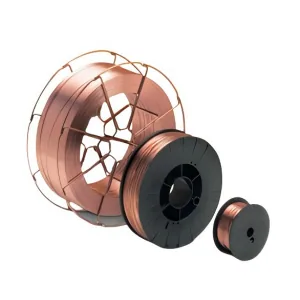
AK-TH550NQII Questions
What base metals is AK-TH550NQII suitable for?
What are the key alloying elements in the wire?
What are the sulfur and phosphorus limits?
What shielding gas is recommended?
What packing is AK-TH550NQII supplied in?
Can we test AK-TH550NQII before placing a production order?
Request a Quotation for AK-TH550NQII
Send the diameter, the quantity and the destination port. Our technical team replies with packing, pricing and the data you need to qualify the grade.