
AK-ERCuSn-C TIG and MIG Wire for Copper and Copper Alloy Welding.
A tin-bronze filler metal for joining copper and copper alloys, with controlled phosphorus and low lead content, suitable for butt welding of brass and steel with recommended preheat and pulse argon arc welding for steel surfacing.
Product Overview
AK-ERCuSn-C is a TIG and MIG welding wire designed for the welding of copper and copper alloys, particularly suited for butt welding of brass and steel joints. The wire is formulated with 7.50–8.50% tin and 0.10–0.40% phosphorus to ensure good fluidity and crack resistance in the weld metal.
It meets EN ISO 24373 CuSn8P, AWS A5.7 ERCuSn-C, and GB/T 9460 CuSn8P standards. The chemical composition includes ≤0.02% lead, 0.10% iron, 0.20% nickel, and ≤0.20% other elements, with copper as the balance. The wire is recommended for use with preheating on thick sections and pulse argon arc welding when surfacing steel.
Application: Applied to the welding of copper and copper alloys, especially for butt welding of brass and steel, it is recommended to preheat when used for large thick ness weldments, and pulse argon arc welding is recommended for steel surfacing.
Key Benefits
Controlled Phosphorus for Crack Resistance.
The phosphorus content of 0.10–0.40% enhances fluidity and reduces the risk of solidification cracking in the weld metal, especially in high-stress joints.
Low Lead for Health and Environmental Safety.
Lead content is limited to ≤0.02%, reducing fume toxicity and meeting modern safety requirements in industrial environments.
Suitable for Brass and Steel Butt Joints.
The wire is specifically recommended for joining brass to copper or steel, with preheating advised for thick sections to prevent cracking.
Pulse Argon Arc Recommended for Steel Surfacing.
When used for steel surfacing, pulse argon arc welding improves control of heat input and reduces distortion.
Where It Is Used
- Butt welding of brass and copper alloys.
- Welding of copper to steel joints.
- Steel surfacing with controlled heat input.
- Repair and fabrication of copper-based components in marine and industrial systems.
Who It Is For
- Welding consumable distributors supplying copper alloy welding solutions.
- Fabricators working with brass and copper components in HVAC, marine, and power industries.
- Maintenance teams performing repairs on copper piping and brass fittings.
Problems It Solves
- Achieving crack-free welds in copper and brass joints with proper phosphorus control.
- Reducing lead content in filler metal to meet health and environmental standards.
- Managing heat input and distortion when welding copper to steel or surfacing steel with copper-based wire.
Specifications
Published by the factory for AK-ERCuSn-C (TIG / MIG). Values not shown are not published on the datasheet and are marked as such rather than estimated.
| Standard | Designation |
|---|---|
| Classification | EN ISO 24373 CuSn8P AWS A5.7 ERCuSn-C GB/T 9460 CuSn8P |
| Element | Content |
|---|---|
| Cu | ≤bal |
| Al | —— |
| Fe | 0.10 |
| P | 0.10-0.40 |
| Ni | 0.20 |
| Pb | ≤0.02 |
| Si | —— |
| Sn | 7.50-8.50 |
| Zn | ≤0.20 |
| Other | ≤0.20 |
| Property | Value |
|---|---|
| Solids-Temperature | 875℃ |
| Liquids-Temperature | 1025℃ |
| Density | 8.8kg/dm³ |
| Tensile Strength | 260N/mm² |
| Elongation | 20% |
| Brinell-Hardness | 80HB |
Technical Features
- Complies with EN ISO 24373 CuSn8P, AWS A5.7 ERCuSn-C, and GB/T 9460 CuSn8P standards.
- Tin content: 7.50–8.50%
- Phosphorus content: 0.10–0.40%
- Lead content: ≤0.02%
- Iron: 0.10%, Nickel: 0.20%
- Solidus temperature: 875℃
- Liquidus temperature: 1025℃
- Density: 8.8 kg/dm³
- Tensile strength: 260 N/mm².
- Elongation: 20%
- Brinell hardness: 80 HB.
Use Guide
- Preheat thick sections before welding to reduce thermal stress and cracking risk.
- Use pulse argon arc welding when surfacing steel to control heat input and minimize distortion.
- Clean joint surfaces of oil, oxide, and moisture before welding to ensure sound fusion.
- Store wire in dry conditions and avoid exposure to humidity to prevent contamination.
How It Compares
AK-ERCuSn-C is a tin-bronze wire with 7.50–8.50% tin and controlled phosphorus, suitable for joining copper and brass. It differs from pure copper wires in its higher strength and better fluidity. Compared to leaded bronze wires, it has lower lead content (≤0.02%) for improved safety. For steel surfacing, pulse argon arc welding is preferred over continuous wave to manage heat and penetration.
Related Grades
Other welding wire in the same family.
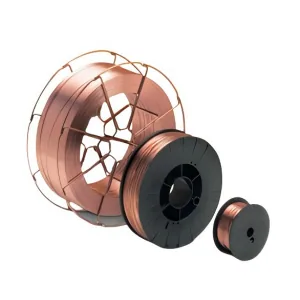
AK-ERCuSn-C (TIG / MIG) Questions
What standards does AK-ERCuSn-C meet?
What is the tin content range in AK-ERCuSn-C?
What is the tensile strength and elongation of the deposited metal?
Is preheating required for thick sections?
What packing is AK-ERCuSn-C (TIG / MIG) supplied in?
Can we test AK-ERCuSn-C (TIG / MIG) before placing a production order?
Request a Quotation for AK-ERCuSn-C (TIG / MIG)
Send the diameter, the quantity and the destination port. Our technical team replies with packing, pricing and the data you need to qualify the grade.