
AK-E81T1-Ni1C Flux-Cored Wire for Low-Temperature Structural Welding.
A rutile flux-cored wire with 1% nickel and ultra-low diffusible hydrogen, designed for high-performance welding in cryogenic and offshore applications.
Product Overview
AK-E81T1-Ni1C is a rutile flux-cored welding wire containing 0.8–1.1% nickel, formulated for welding structural steels requiring excellent low-temperature impact performance. The wire delivers deposited metal with ultra-low diffusible hydrogen content, reducing the risk of hydrogen-induced cracking in critical joints.
It is designed for use in applications demanding high process stability, minimal spatter, and clean weld bead profiles. The slag removal performance is good, supporting efficient multi-pass welding without excessive inter-run cleaning. The wire meets the EN ISO 17632-A:T 46 4 1Ni P C1 1 and AWS A5.20 E81T1-Ni GB/T 17493 E551T1-Ni1C classifications.
Recommended welding parameters vary by diameter: 1.0 mm at 15–20 V / 80–150 A, 1.2 mm at 20–32 V / 140–300 A, and 1.6 mm at 20–38 V / 180–400 A.
Application: Suitable for welding bridges, port machinery, shipbuilding, offshore pl atforms, LPG cryogenic equipment, etc. of the same strength level.
Key Benefits
Ultra-Low Diffusible Hydrogen
The wire’s formulation ensures deposited metal with ultra-low diffusible hydrogen content, which helps prevent cold cracking in high-strength and low-temperature service environments.
Stable Arc and Low Spatter.
The rutile flux system provides a stable arc across the recommended current range, minimizing spatter and improving weld consistency, especially in automated or semi-automated processes.
Excellent Slag Removal
The slag produced is easy to remove, reducing the need for extensive chipping or grinding between passes and improving overall welding efficiency.
Superior Low-Temperature Impact Performance.
With 0.8–1.1% nickel in the deposited metal, the weld metal maintains high impact toughness at low temperatures, making it suitable for cryogenic and offshore structures.
Where It Is Used
- Welding of bridges and port machinery requiring high toughness at low temperatures.
- Shipbuilding and offshore platform construction in harsh marine environments.
- LPG cryogenic storage tanks and pressure vessels operating at sub-zero temperatures.
- Structural components in cold climate regions where impact resistance is critical.
Who It Is For
- Welding consumable distributors supplying specialty flux-cored wires for offshore and cryogenic projects.
- Fabricators working on high-strength steel structures exposed to low-temperature service.
- Contractors involved in offshore and marine construction requiring reliable, low-hydrogen welding solutions.
Problems It Solves
- Achieving low-temperature impact performance in welds without compromising process stability or requiring post-weld heat treatment.
- Reducing the risk of hydrogen-induced cracking in critical joints by using a wire with ultra-low diffusible hydrogen content.
- Minimizing spatter and slag removal time during multi-pass welding, improving productivity on large-scale structural projects.
Specifications
Published by the factory for AK-E81T1-Ni1C. Values not shown are not published on the datasheet and are marked as such rather than estimated.
| Standard | Designation |
|---|---|
| Classification 1 | EN ISO 17632- A:T 46 4 1Ni P C1 1 |
| Classification 2 | AWS A5.20 E81T1-Ni GB/T 17493 E551T1-Ni1C |
| Element | Content |
|---|---|
| C | 0.12 |
| Mn | 1.50 |
| P | 0.03 |
| S | 0.03 |
| Si | 0.80 |
| Ni | 0.8-1.1 |
Mechanical property data for this grade is not published on the factory datasheet. Ask our technical team for the test record before you qualify it.
| Diameter | Current range |
|---|---|
| 1.0mm | :15-20V / 80-150A |
| 1.2mm | :20-32V / 140-300A |
| 1.6mm | :20-38V / 180-400A |
Technical Features
- Rutile flux-cored wire with 0.8–1.1% nickel in the deposited metal.
- Ultra-low diffusible hydrogen content in the deposited metal.
- Complies with EN ISO 17632-A:T 46 4 1Ni P C1 1 and AWS A5.20 E81T1-Ni GB/T 17493 E551T1-Ni1C standards.
- Chemical composition: C 0.12%, Mn 1.50%, P 0.03%, S 0.03%, Si 0.80%, Ni 0.8–1.1%
- Recommended welding parameters: 1.0 mm (15–20 V / 80–150 A), 1.2 mm (20–32 V / 140–300 A), 1.6 mm (20–38 V / 180–400 A)
Use Guide
- Select the wire diameter based on joint thickness and welding position, then set voltage and current within the recommended ranges.
- Ensure the wire is stored in a dry environment and used within the manufacturer’s recommended shelf life to maintain low hydrogen levels.
- Clean the joint surfaces from oil, rust, moisture, and paint before welding to avoid contamination and porosity.
- Maintain consistent travel speed and arc length during welding to achieve uniform bead profile and slag coverage.
How It Compares
AK-E81T1-Ni1C and E81T1-Ni1 are both rutile flux-cored wires with 1% nickel, but AK-E81T1-Ni1C is specifically formulated for ultra-low diffusible hydrogen and improved low-temperature impact performance. Standard E81T1-Ni1 wires may not meet the same hydrogen control requirements. Basic flux-cored wires offer lower hydrogen but require stricter storage and handling. Cellulosic flux wires provide deeper penetration but generate more spatter and are less suitable for critical low-temperature joints.
Related Articles
Technical background on this grade from the AKWELD knowledge centre.
Related Grades
Other welding wire in the same family.
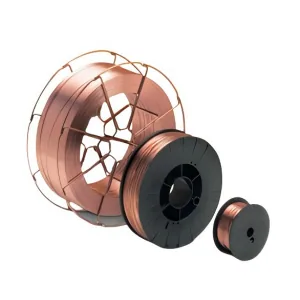
AK-E81T1-Ni1C Questions
What is the nickel content in the deposited metal?
What standards does this wire meet?
What are the recommended welding parameters?
Can I get technical data sheets and packaging details?
What packing is AK-E81T1-Ni1C supplied in?
Can we test AK-E81T1-Ni1C before placing a production order?
Request a Quotation for AK-E81T1-Ni1C
Send the diameter, the quantity and the destination port. Our technical team replies with packing, pricing and the data you need to qualify the grade.