
ER80S-Ni2 Influence on Impact Toughness
ER80S-Ni2 weld metal microstructure affects impact toughness, fracture resistance, and low-temperature welding performance
- What Is ER80S-Ni2 Welding Wire?
- Why Weld Metal Microstructure Determines Impact Toughness
- The Role of Nickel in ER80S-Ni2 Microstructure Development
- 2. Nickel Promotes Tougher Ferritic Structures
- 3. Nickel Helps Reduce Brittle Fracture Sensitivity
- Microstructural Factors Affecting ER80S-Ni2 Impact Toughness
- Effect of Welding Parameters on ER80S-Ni2 Microstructure
- ER80S-Ni2 Impact Toughness in Low-Temperature Applications
For welded structures operating in cold environments, impact toughness is one of the most critical performance requirements. As temperatures decrease, many steel weldments become more vulnerable to brittle fracture due to reduced plastic deformation ability and increased crack propagation sensitivity. ER80S-Ni2
ER80S-Ni2 welding wire is specifically designed for low-temperature and high-strength steel welding applications where reliable toughness and structural integrity are required. Its performance is strongly influenced by the chemical composition and the microstructure formed during welding. The controlled addition of nickel plays an important role in improving weld metal toughness by modifying phase transformation behavior and supporting the formation of favorable microstructural features.
Understanding the relationship between ER80S-Ni2 weld metal microstructure and impact toughness helps engineers optimize welding procedures and select suitable filler materials for demanding applications.
What Is ER80S-Ni2 Welding Wire?
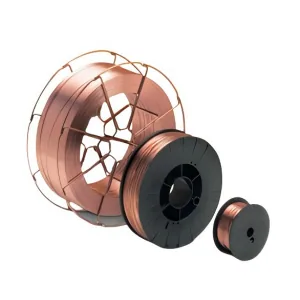
ER80S-Ni2 is a low-alloy solid welding wire classified under AWS A5.28 specifications. It is developed for welding fine-grained and low-alloy steels that require high strength combined with excellent low-temperature toughness.
Compared with conventional carbon steel welding wires, ER80S-Ni2 contains a higher nickel alloy addition, typically within the range designed to improve toughness in cold service conditions. Nickel-enriched weld metal can maintain better impact performance when exposed to sub-zero temperatures.
- Low-temperature structural steel fabrication
- Offshore structures
- Storage tanks
- Pipeline components
- Heavy engineering equipment
- High-strength low-alloy steel assemblies
The primary advantage of ER80S-Ni2 is its ability to maintain mechanical reliability when welded joints are exposed to severe temperature conditions.
Why Weld Metal Microstructure Determines Impact Toughness
The mechanical behavior of a weld is directly related to its internal microstructure.
During welding, the molten weld pool undergoes rapid heating and cooling. This thermal cycle determines:
- Grain size
- Phase transformation
- Ferrite morphology
- Inclusion distribution
- Crack propagation resistance
A coarse and uneven microstructure generally increases the risk of brittle fracture because cracks can propagate more easily through large grains.
In contrast, a refined microstructure with favorable phase distribution improves:
- Energy absorption capacity
- Resistance to crack growth
- Low-temperature impact performance
Therefore, controlling weld metal microstructure is essential for achieving high toughness in ER80S-Ni2 welds.
The Role of Nickel in ER80S-Ni2 Microstructure Development
1. Nickel Improves Phase Stability During Cooling
Nickel is an important alloying element that influences the transformation behavior of weld metal during cooling.
During welding solidification, nickel helps regulate the formation of different phases and contributes to a more balanced microstructure.
- Improved ductility at low temperatures
- Reduced brittle phase formation
- Better toughness-strength balance
This allows ER80S-Ni2 weld metal to maintain stable mechanical properties even under sub-zero service conditions.
2. Nickel Promotes Tougher Ferritic Structures
One of the key factors affecting weld toughness is the type and distribution of ferrite structures.
A favorable ER80S-Ni2 weld metal microstructure typically contains refined ferritic components, including tougher structures such as acicular ferrite.
Acicular ferrite is beneficial because its randomly oriented grain structure can reduce crack propagation paths and improve impact resistance.
The formation of these tougher microstructural constituents contributes to:
- Higher Charpy impact energy
- Improved fracture resistance
- Better performance in cold environments
3. Nickel Helps Reduce Brittle Fracture Sensitivity
At low temperatures, brittle fracture becomes a major concern because cracks can rapidly propagate through weak microstructural regions.
ER80S-Ni2 achieves improved fracture resistance through:
- Nickel alloy strengthening
- Controlled grain refinement
- Improved microstructural uniformity
- Enhanced deformation capability
These characteristics allow welded joints to absorb more impact energy before failure.
Microstructural Factors Affecting ER80S-Ni2 Impact Toughness
Grain Size Control
Fine grains provide more grain boundaries that interrupt crack propagation.
A refined weld metal structure generally results in:
- Higher toughness
- Better resistance to brittle failure
- Improved reliability under dynamic loading
Ferrite Morphology
Different ferrite structures have different effects on toughness.
- Fine-grained ferrite
- Acicular ferrite
- Coarse ferrite
- Large brittle regions
The welding process and alloy composition work together to determine the final ferrite morphology.
Inclusion Distribution
Non-metallic inclusions can influence microstructure development.
Controlled inclusions may provide nucleation sites for beneficial ferritic structures, while excessive or unfavorable inclusions can become crack initiation points.
Therefore, proper alloy design and welding control are essential.
Effect of Welding Parameters on ER80S-Ni2 Microstructure
Although alloy composition provides the foundation for toughness, welding parameters also significantly affect final performance.
Heat Input
- Grain coarsening
- Reduced toughness
- Changes in phase distribution
Optimized heat input helps maintain a refined weld structure.
Cooling Rate
Cooling conditions influence transformation behavior.
- Balanced strength
- Improved toughness
- Stable weld performance
Shielding Gas and Welding Process
Stable arc conditions and proper shielding gas selection help reduce:
- Porosity
- Defects
- Inconsistent microstructure
High-quality welding procedures are necessary to fully utilize the advantages of ER80S-Ni2.
ER80S-Ni2 Impact Toughness in Low-Temperature Applications
ER80S-Ni2 is widely used where welded structures must withstand cold environments and dynamic loading.
ER80S-Ni2 Offshore Structures
- Low temperatures
- Impact loading
- Continuous mechanical stress
High weld toughness is essential for long-term reliability.
ER80S-Ni2 Storage and Processing Equipment
Tanks and process equipment operating in cold regions require welding materials with excellent fracture resistance.
ER80S-Ni2 Pipeline Construction
Pipeline systems exposed to harsh climates require weld metals that maintain toughness after fabrication and during service.
ER80S-Ni2 vs Conventional Welding Wire: Microstructure Advantage
| Performance Factor | ER80S-Ni2 Advantage |
|---|---|
| Nickel alloy design | Improved toughness capability |
| Weld microstructure | More favorable phase distribution |
| Low-temperature performance | Higher impact resistance |
| Crack resistance | Reduced brittle fracture tendency |
| High-strength steel compatibility | Better mechanical matching |
ER80S-Ni2 Conclusion
The impact toughness of ER80S-Ni2 weld metal is strongly determined by its microstructure. Through controlled nickel alloying and optimized welding conditions, ER80S-Ni2 can achieve a refined and stable weld structure with improved resistance to brittle fracture.
The relationship between microstructure and mechanical performance explains why ER80S-Ni2 welding wire is widely selected for low-temperature and high-strength steel applications.
For engineers working with demanding welded structures, understanding how nickel influences weld metal transformation and toughness is essential for achieving safe, durable, and reliable joints.
- Products AK Welding Wire
- AK Welding Electrodes
- AK Welding Rod
- AK Flux
Grades Discussed Here
Questions About This Article
Can AKWELD supply the consumables discussed in this article?
Can you advise on our specific joint?
Need the Consumables Behind This Article?
Tell us the grade or the base metal and we will confirm what we supply and send the data.