
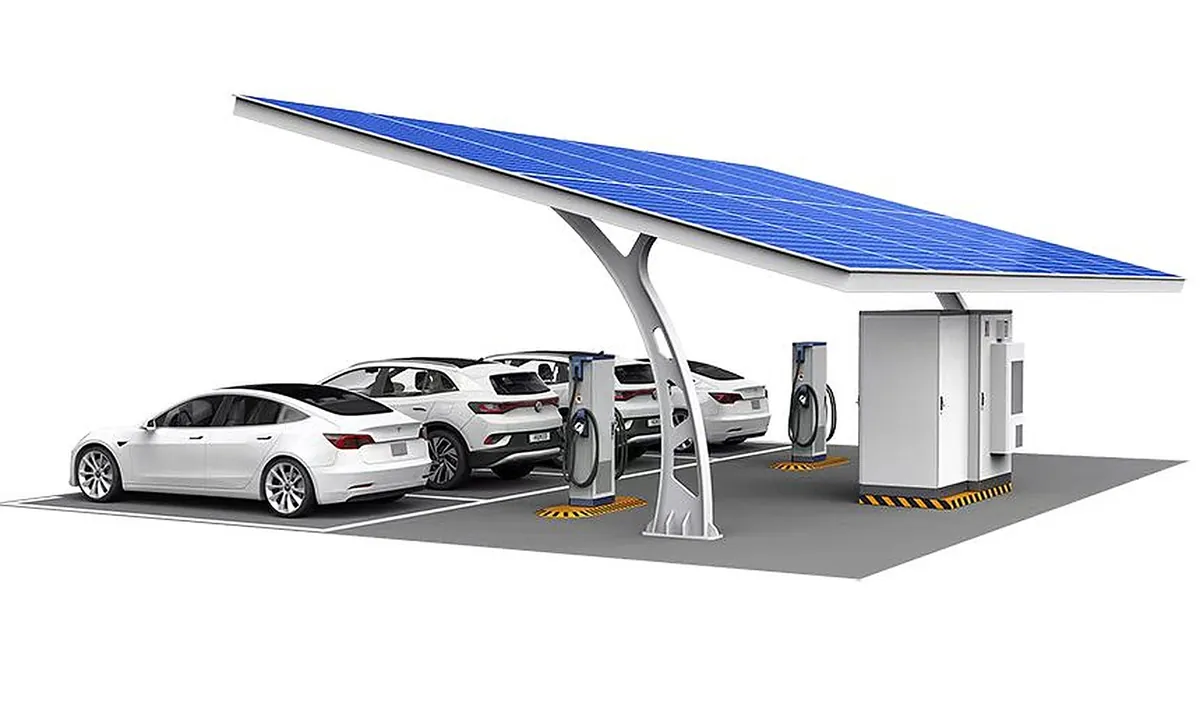
Solution
Generate, store and charge on one site
The integrated station ZCForest was built to deliver: photovoltaic generation, battery storage and EV charging specified, shipped and commissioned as a single system.
What it is
The mechanism, not the marketing
Three products bought separately meet badly on site: the canopy contractor finishes before the charger arrives, the battery has no interface to either, and nobody owns the grid interconnection. An integrated station is the same three components procured as one scope, with one dispatch controller deciding what happens to each kilowatt-hour — fill the battery, fast-charge the fleet, run the building, or export.
How we deliver it
Six stages, same on every project
Site and grid assessment
Available area, orientation, contracted capacity and the connection agreement. Grid capacity, not roof area, is usually the binding constraint.
Demand modelling
Vehicle numbers, dwell times and simultaneous-charging scenarios, because the peak that matters is the one when everything plugs in at once.
Integrated sizing
PV capacity, storage capacity and charger ratings solved together, with dynamic load balancing holding the site inside its contract.
Turnkey EPC
Structure, electrical works, chargers, storage and grid interconnection delivered under one scope on the commercial line.
Software configuration
Dispatch modes, payment methods, white-label app branding and CSV billing exports set up before handover.
Monitor and optimise
System performance monitoring, remote optimisation recommendations and an annual operation report with energy-efficiency analysis.
Outcomes
What changes on site
Charging that does not blow the connection
PV supplies part of the load, storage absorbs the peak, and load balancing holds the rest inside contracted capacity.
Dispatch under your control
Battery first, fleet first, or grid export — configured by tariff and forecast rather than fixed at commissioning.
One contract, one commissioning date
Turnkey delivery removes the gaps between a canopy project, a charger project and a battery project.
Reportable sustainability data
Per-charge CO2 savings and annual efficiency analysis from measured generation and dispatch.
Products used
The building blocks
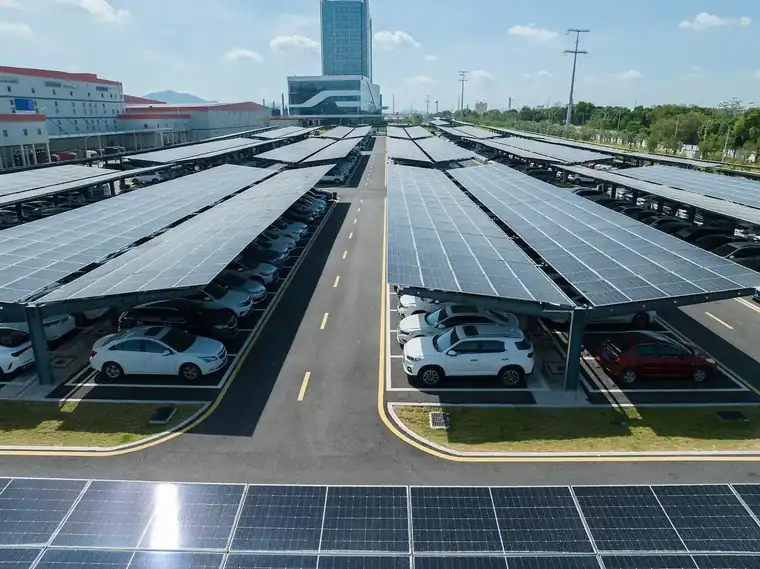 Solar Charging
Commercial Solar Parking Station
100 kWp to multi-MW with up to 240 kW DC charging
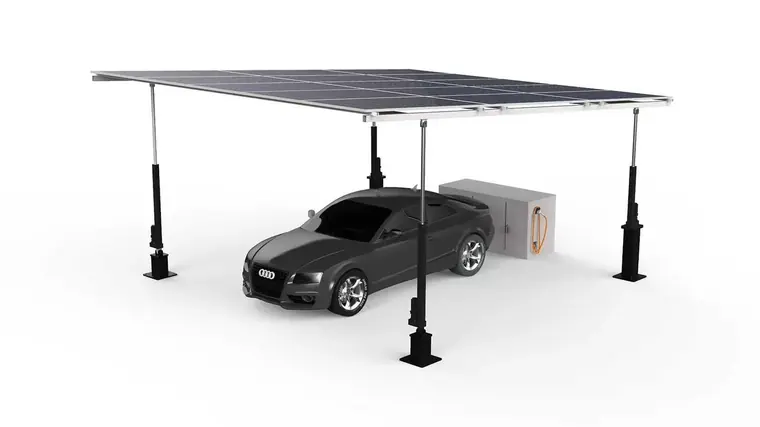 Solar Charging
Residential Solar Parking Station
3.6–7.2 kWp canopies with 7/11/22 kW AC charging
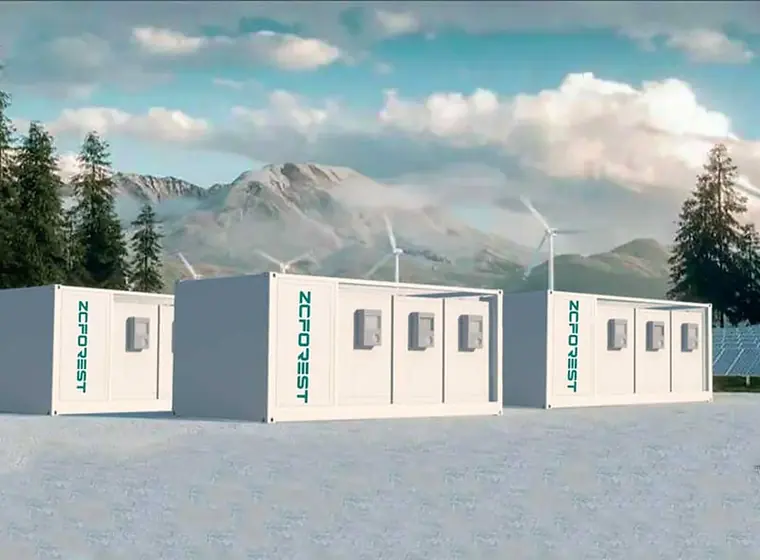 Energy Storage
Industrial & Commercial Energy Storage
100 kWh to multi-MWh cabinets and containers
FAQ
About integrated solar-storage-charging stations
Why buy the three together rather than separately?
Can storage be added in a later phase?
Are incentives available in our market?
Which dispatch mode should we run?
Related products
Industry applications
Model solar-storage-charging for your site
Send the data and we run the numbers before anyone talks about equipment.