
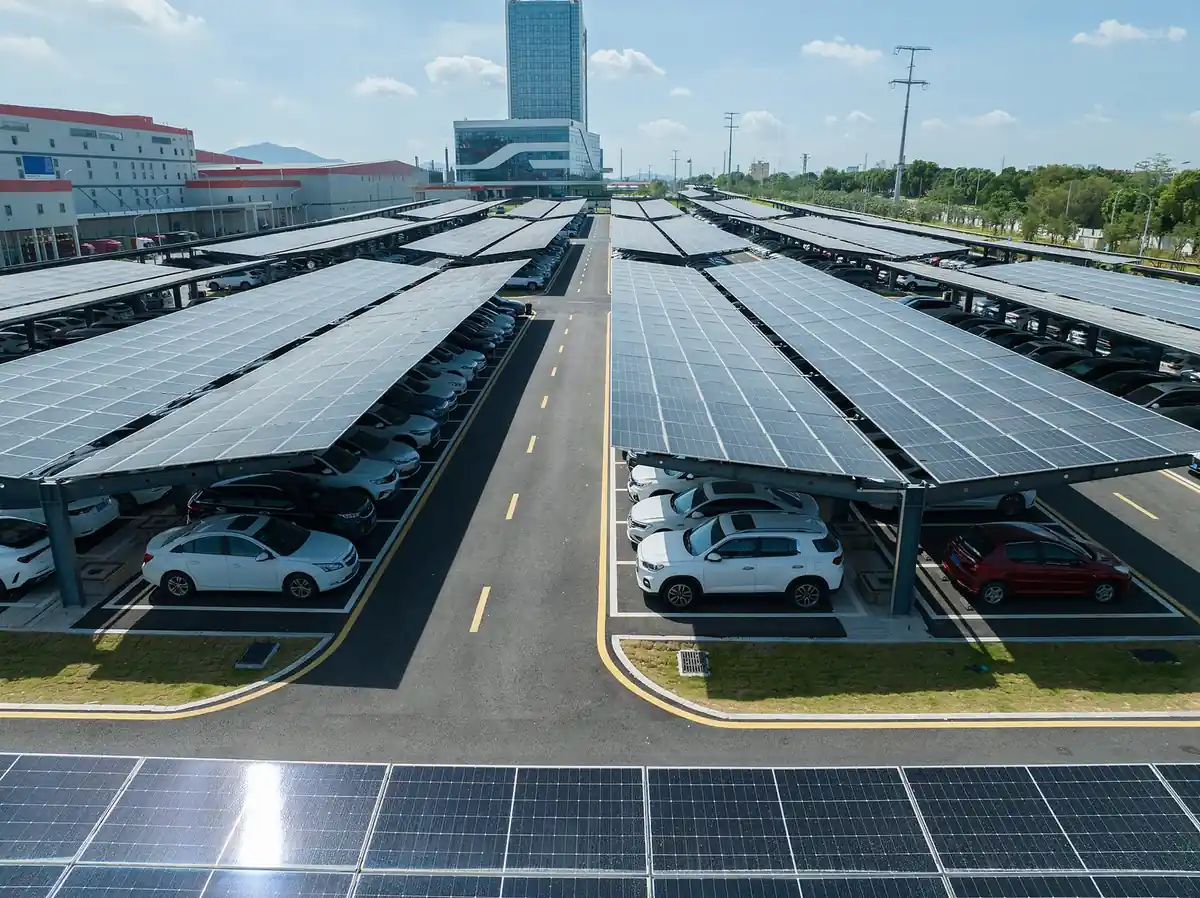
Southeast Asian incentives for solar-storage-charging stations gather pace.
Several ASEAN governments have moved to subsidise integrated PV + battery + EV charging deployments. We summarise what's available where, who qualifies, and how to navigate the application process.
One of the more underreported stories of 2026 has been the wave of incentive programmes for integrated solar-storage-charging infrastructure across Southeast Asia. While EU and US incentive programmes get most of the attention in trade press, the policy landscape across Vietnam, Thailand, Indonesia, the Philippines and Malaysia has shifted materially in ways that change project economics for commercial buyers.
This piece is a practical orientation: what programmes exist, who qualifies, and what the application process looks like. It's not legal or financial advice — please consult local counsel before committing capital — but it should help frame whether a closer look is worth your time.
What's actually on offer
The incentive programmes vary considerably by country, but four common structures recur across the region:
- Capital subsidies. Direct grant against equipment cost for qualifying solar+storage+charger installations, typically capped at a percentage of capex or a per-kWh ceiling.
- Tax incentives. Accelerated depreciation, import duty waivers, and corporate income tax abatement for qualifying projects — particularly common for projects that meet local-content or local-employment thresholds.
- Feed-in tariffs and net metering. Several markets have introduced or extended favourable export tariffs for solar generation paired with storage, creating revenue beyond pure self-consumption.
- Soft loans. Government-backed concessional finance, typically routed through national development banks, with rates well below commercial debt.
Country snapshots
A non-exhaustive view of the landscape — programmes change, so verify the specifics before relying on any of this:
Vietnam
Continued strong support for rooftop solar with storage, particularly for industrial parks. Recent updates have explicitly recognised solar-storage-charging stations as a qualifying technology for accelerated permitting and tax incentives. The economics are particularly attractive in the southern industrial corridor.
Thailand
The Board of Investment has updated its promoted-activity list to include integrated EV charging infrastructure with on-site renewables, opening up corporate income tax holidays for qualifying projects.
Indonesia
Recent regulatory updates have improved the framework for behind-the-meter solar with storage, and a number of provincial-level programmes are providing additional support for commercial and industrial deployments.
Philippines
The renewable energy framework has been strengthened, with specific provisions for energy storage that complement the existing net-metering and FIT structures. Mindanao and Visayas projects have particular momentum.
Malaysia
The NEM 4.0 framework continues to evolve with provisions for storage. Industrial and commercial customers in Peninsular Malaysia have notably attractive economics on the latest tariff structure.
How to qualify, practically
The pattern across most of these programmes is similar:
- Pre-application engagement with the relevant agency to confirm eligibility
- Technical specification meeting local standards and certifications
- Local content or local employment thresholds in some programmes
- Documentation: project plans, equipment specs, financial projections
- Approval, then construction and commissioning
- Ongoing reporting through the operational period
For ZCForest customers, we typically support the technical specification and equipment-side documentation directly, and work with local partners to navigate the agency-facing parts of the process. If you have a project in any of these markets, reach out via WhatsApp or email and we'll connect you with the right people for the specific country.
Keep reading
More from the knowledge centre
 Industry
LFP cell prices touch a fresh low — what it means for storage economics in 2026.
Lithium iron phosphate prismatic cells have crossed below new spot-price thresholds, making 2-hour C&I storage payback periods viable in a dozen new m…
 Technology
Why we standardised the residential ESS line on LiFePO4.
Storage units don't just need to be cheap — they need to be safe, predictable, and warranted. We explain why lithium iron phosphate is now the only ch…
 Industry
The vehicle-to-grid window is opening in select markets.
With several OEMs shipping bidirectional EVs and CPO platforms enabling V2G arbitrage, we look at the practical rollout — what's working, what's stuck…
Does this apply to your project?
Send the site and the numbers. We will tell you where this analysis holds and where it does not.