
Energy Storage · ESS 01
Store your energy — not just a battery
A portable and residential storage line built on lithium iron phosphate cells. Three core models — ZCF-500, ZC-500 and ZCF-2000 — cover 345 Wh through 2000 Wh with multi-port output, wireless charging and solar-ready input.
Product overview
What the residential ess is
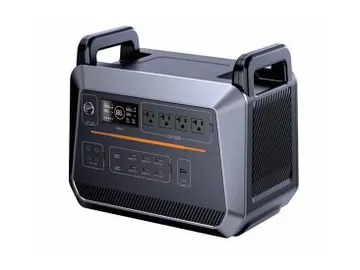
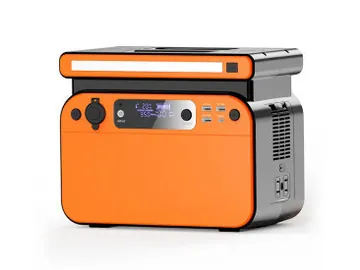
The ZCF-500 and ZC-500 share one engineering platform: small enough to carry in one hand, capable enough to run a workstation, a mini fridge or a weekend of devices. The ZCF-2000 inherits the same output platform and adds substantially more capacity for longer-duration off-grid use, emergency backup and small-business loads.
What ties the range together is not the capacity number but the discipline behind it. One chemistry — lithium iron phosphate — across every model. One output panel: AC, USB-A, USB-C Power Delivery, 12 V DC and two wireless pads. One recharge story: wall charger, car cigar socket or solar. Buy a second unit two years later and your cables, your habits and your expectations still apply.
For dealers and OEM buyers, the same discipline is what makes the line easy to stock. Voltage, connectors, branding and market certifications are customised per order, and ZCForest's portable range has been extended with outdoor-focused models including the LBN-G500 and CTECHi-branded heavy-duty units.
Key benefits
Six things this product does better
LiFePO4 chemistry
Lithium iron phosphate cells dramatically lower thermal-runaway risk compared with nickel-rich alternatives — a meaningful safety upgrade when the battery lives in a tent, a van or a hallway.
2,000 charge cycles
Two thousand cycles before significant capacity loss, meaningfully longer than a typical NMC portable station. Charge it daily and the cell chemistry is still the last thing to fail.
Wireless plus every port
Two 10 W wireless pads on the top surface, plus AC, USB-A, USB-C PD at 60 W and a 12 V DC socket. Nothing in a normal kit bag is left without a port.
Solar-ready input
A built-in MPPT input accepts 12–24 V panels for off-grid recharging. Paired with a folding panel it becomes a self-contained generator with no fuel line.
500 W pure-sine AC
Pure-sine output runs sensitive electronics, small power tools, lighting and fridges — anything that does not need a large motor surge — with 700 W of headroom for start-up.
OEM / ODM ready
Voltage, connectors, branding and certifications are customised per market, backed by ZCForest's service and trade-finance package.
Who it is for
The buyers this was designed around
Households in unreliable-grid markets
Keep the router, lights, fans and a fridge running through an outage without a generator, its fuel, or its exhaust.
Trades and mobile workshops
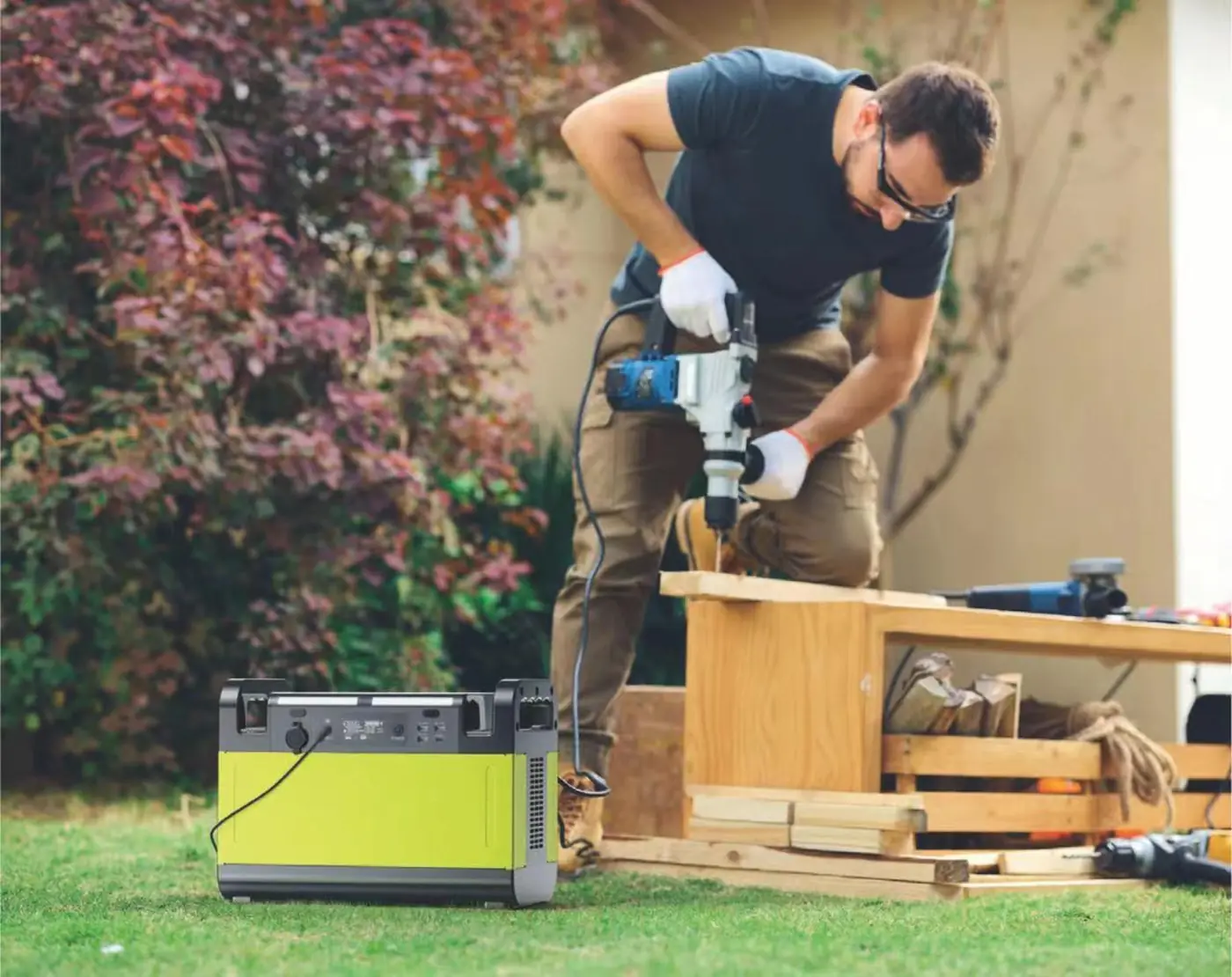
Run a drill, a grinder or a work light where there is no socket and no reason to drag a cable across a site.
Outdoor and overlanding users
Camping, van conversions and remote photography, where the recharge comes from a folding panel rather than a campsite hookup.
Distributors and OEM buyers
A LiFePO4 line that can be branded, certified and stocked for a specific market rather than resold as-is.
Problems it solves
What it removes
Outages that cost more than they should
Grid interruptions stop work, spoil stock and shorten equipment life. A silent battery on standby removes the fuel, noise and permitting that a generator brings with it.
Solar generated at the wrong time
Panels produce at midday and households consume in the evening. Storage moves the generation to when it is actually wanted.
Portable power that dies in two years
Cheap portable stations use chemistries rated for a few hundred cycles. At 2,000 cycles the cost per usable kilowatt-hour is a different calculation.
Cable drawers that never match
One recharge standard and one output panel across the range means the accessories bought for the first unit still fit the third.
Technical features
How it is engineered
Dual-handle housing
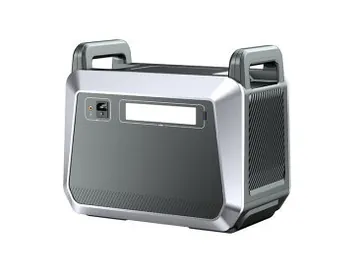
The ZCF-500 family carries on two moulded handles, which matters more than it sounds when the unit is loaded and the ground is not flat.
Complete output panel
Three USB-A ports, one USB-C PD and QC3.0 port, one 12 V cigarette socket, AC outlets and two wireless charging pads.
Three recharge paths
27 V / 4.5 A 120 W mains charger, car cigarette port, or 12–24 V / 4.5 A solar input.
Integrated LED and SOS
Two-watt LED lighting with an SOS mode, because the outage and the need for light usually arrive together.
Selectable AC standard
Configured at 100–120 V or 220–240 V, 50/60 Hz, to match the destination market.
Capacity tiers
345, 518 and 576 Wh options on the ZCF-500 platform; the ZCF-2000 extends the range to 2000 Wh.
Application scenarios
Specifications
The numbers
Transcribed from the ZCForest specification sheet for this product.
| Battery type | LiFePO4 (lithium iron phosphate) |
|---|---|
| Battery capacity | 345 / 518 / 576 Wh (ZCF-500 · ZC-500); up to 2000 Wh (ZCF-2000) |
| Cycle life | 2,000 cycles |
| AC output | 100–120 V or 220–240 V · 50/60 Hz · 500 W continuous, 700 W peak |
| USB output | 3 × 5 V / 2.4 A · 12 W max |
| USB-C in/out | 1 × PD & QC3.0 · 5/9/12/15/20 V × 3 A · 60 W max |
| Cigarette (CIG) output | 1 × 12 V / 16 A · 120 W max |
| Wireless output | 2 × 10 W charging pads |
| Input | 27 V / 4.5 A 120 W charger · car cigarette port · solar 12–24 V / 4.5 A |
| LED light / SOS | 2 W LEDs |
| Weight | 7 kg (ZCF-500 · ZC-500) |
| Dimensions | 287 × 161 × 230 mm (11.29 × 6.33 × 9.05 in) |
| Customisation | OEM/ODM voltage, connectors, branding and local certifications |
| Certifications | TBC — confirm the certificate set required for your market before ordering |
Certification is the one TBC line above: the certificate set depends on the destination market, so it is confirmed per order rather than estimated here.
Customisation
OEM and ODM options
- AC standard set to 100–120 V or 220–240 V for the destination market
- Socket type and connector set matched to local plug standards
- Housing colour and customer branding
- Capacity tier selected from the 345 / 518 / 576 Wh and 2000 Wh platform
- Market certification packages arranged per order
- Retail packaging and multilingual manuals
Use guide
Getting the specification right
Size it against the load, not the label
Add the watts of everything that runs at once. A 500 W continuous rating runs a router, lights, a laptop and a small fridge; it will not run a kettle or a compressor.
Recharge before storage
Store the unit at partial charge rather than empty. LiFePO4 tolerates storage well, but a flat cell left for months is the one avoidable way to shorten its life.
Match the panel to the input
The solar input accepts 12–24 V at up to 4.5 A. A panel above that voltage window will not charge faster — it will simply not be accepted.
Use the AC output for what needs it
Run DC devices from the USB and 12 V ports where possible. Skipping the inverter conversion adds usable runtime at no cost.
Comparison
How it compares with the alternatives
The honest comparison for a portable station is not against another brand but against the two things buyers actually consider instead: a petrol generator, or a cheaper NMC-cell power station.
| ZCForest LiFePO4 station | Petrol generator | NMC portable station | |
|---|---|---|---|
| Indoor use | Safe — no combustion, no exhaust | No — carbon monoxide risk | Safe, with higher thermal risk |
| Noise | Silent | Loud enough to annoy neighbours | Silent |
| Cycle life | 2,000 cycles | Service intervals, not cycles | Typically a few hundred cycles |
| Refuelling | Mains, car socket or solar | Petrol, stored and carried | Mains or solar |
| Cold-start reliability | Push a button | Depends on the pull cord and the fuel | Push a button |
| Best fit | Backup, outdoor work, off-grid | Continuous high-power site loads | Weight-critical use where cycles do not matter |
FAQ
About the residential ess
What is the difference between the ZCF-500 and the ZC-500?
How long will it run my equipment?
Can I charge it from solar while using it?
Why LiFePO4 rather than a lighter chemistry?
Do you supply OEM and own-brand units?
What warranty applies?
Industry applications
Quote the Residential ESS
Tell us the market, the capacity tier and whether you need own-brand units. We confirm the AC standard, the connector set and the certification route before quoting.