
Energy Storage · ESS 02
Containerised storage at commercial scale
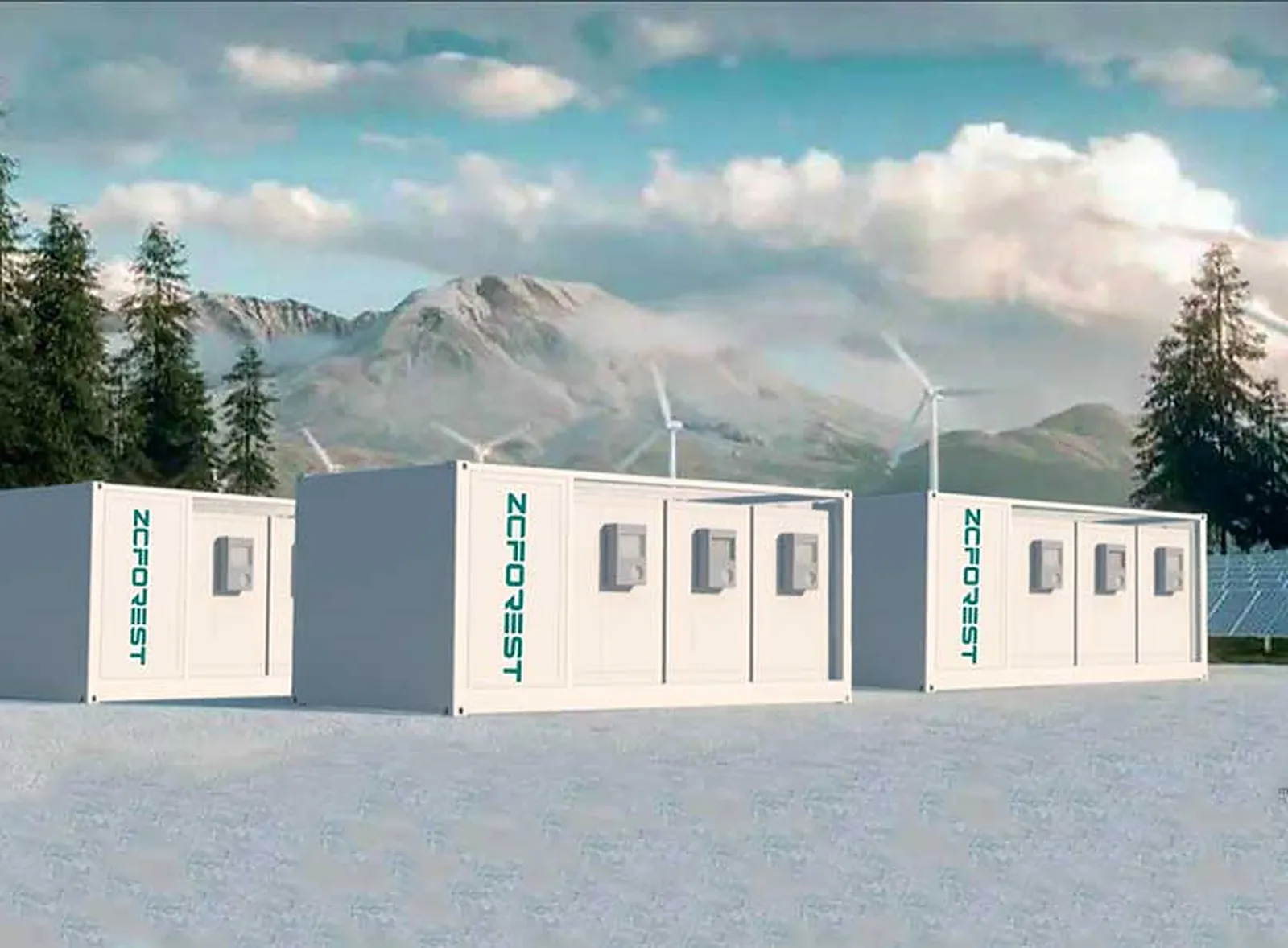
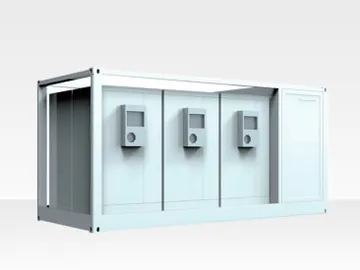
Outdoor cabinet and 10, 20 or 40-ft containerised LiFePO4 systems for industrial sites — peak shaving, demand-charge management, microgrid backup and PV integration, configured per project for the local grid, climate and use case.
Product overview
What the industrial & commercial ess is
Industrial storage is not a product decision, it is an engineering one. The right capacity, the right PCS rating and the right cooling depend on the shape of your load curve, the tariff you are billed under and the temperature the container will sit in for the next fifteen years. ZCForest configures the system around those inputs rather than asking you to pick a box off a list.
The building blocks are consistent: LiFePO4 prismatic cells, multi-layer protection at cell, module, pack and container level, and a communications stack — Modbus TCP, CAN and Ethernet — that a serious operations team can actually integrate. What changes per project is the sizing, the cooling strategy and the interface to whatever generation and switchgear already exists on site.
Because ZCForest integrates rather than only supplies, the same team handles equipment selection, system integration and project implementation. For overseas buyers the trade-finance relationship matters as much as the engineering: a containerised system is a large single shipment, and payment structure is often what decides whether the project moves this quarter or next year.
Key benefits
Six things this product does better
Peak shaving that pays back
Discharge through the facility's peak window and cut the demand charge that a single 15-minute spike would otherwise set for the whole month. On time-of-use tariffs this is usually where the payback sits.
Microgrid backup
Black-start capable, with seamless transfer that keeps critical loads running through a grid outage instead of restarting a process line from cold.
Multi-layer safety
Protection at cell, module, pack and container level, including thermal monitoring, smoke detection and fire-suppression options.
Remote monitoring
Live telemetry to an operations centre, with dispatch and alarm management included rather than sold as an upgrade.
Modular and expandable
Add capacity in stages without replacing the system — the second phase does not invalidate the first.
PV integration
A native interface to solar inverters for self-consumption, time-shifted dispatch and export management.
Who it is for
The buyers this was designed around
Manufacturing plants on demand tariffs
Sites where a short production peak sets a monthly charge out of all proportion to the energy actually consumed.
Facilities with critical process loads
Textile, food, cold chain, data and pharmaceutical operations where an outage costs far more than the kilowatt-hours involved.
Commercial sites with rooftop PV
Buildings exporting midday generation cheaply and buying evening power expensively.
Microgrid and IPP developers
Projects that need a block which can be sized, repeated and expanded across several sites.
Problems it solves
What it removes
Demand charges out of proportion to use
Billing on the highest 15-minute peak means one compressor start can define a month. Storage clips the peak and the bill follows.
Outages that restart a whole process
Seamless transfer and black-start capability turn a production stoppage into a flicker.
Solar that is worth more than the export tariff
Storing midday surplus and using it in the evening turns exported kilowatt-hours back into avoided purchases.
Grid capacity you cannot get
Where the utility will not increase the connection, storage supplies the peak locally instead of waiting for reinforcement.
Technical features
How it is engineered
LiFePO4 prismatic cells
The same chemistry used across the ZCForest storage range, chosen for thermal stability and cycle life in stationary duty.
Cabinet or container format
Outdoor cabinet for smaller sites; 10-ft, 20-ft or 40-ft containers where the capacity justifies the footprint.
Cooling matched to climate
Forced-air or liquid cooling depending on model and the ambient conditions the system will actually operate in.
Industrial communications
Modbus TCP, CAN and Ethernet, so the system reports into existing SCADA and energy-management platforms.
Configured PCS rating
Power conversion sized to the use case, typically from 50 kW up to more than 1 MW per unit.
Project parameter sheets
Detailed parameter documentation is issued per project rather than as a generic datasheet.
Application scenarios
Specifications
The numbers
Transcribed from the ZCForest specification sheet for this product.
| Cell chemistry | LiFePO4 prismatic cells |
|---|---|
| Form factor | Outdoor cabinet · 10-ft / 20-ft / 40-ft container |
| Capacity range | Configurable from 100 kWh to multi-MWh per system |
| PCS power | Sized to use case — typically 50 kW to 1+ MW per unit |
| Cooling | Forced-air or liquid cooling (model dependent) |
| Communication | Modbus TCP · CAN · Ethernet |
| Applications | Peak shaving · Backup · Microgrid · PV smoothing |
| Safety | Cell, module, pack and container-level protection; thermal monitoring, smoke detection, fire-suppression options |
| Customisation | OEM/ODM voltages, connectors and local certifications |
| Detailed parameters | Issued per project against the customer load profile |
| Certifications | TBC — confirm the grid-code and certificate set required for your market |
Capacity, PCS rating and certification are marked configurable or TBC because they come out of your load profile and grid code, not a catalogue page.
Customisation
OEM and ODM options
- Capacity and PCS rating sized to the measured load profile
- Cabinet or 10/20/40-ft container format
- Forced-air or liquid cooling selected for the site climate
- Voltage and connector configuration for the local grid code
- Fire-suppression and detection package
- Communication mapping into an existing SCADA or EMS
- Local certification support for the destination market
Use guide
Getting the specification right
Start with a measured load profile
Half-hourly interval data for a full year beats an estimate. The shape of the curve decides the capacity; the height of the peak decides the PCS rating.
Decide what the system is for
Peak shaving, backup and arbitrage all want different sizing. A system optimised for demand-charge savings is not automatically the one that carries you through a four-hour outage.
Plan the site before the shipment
Foundation, clearances, cable routes and fire access are the things that delay commissioning. ZCForest issues the requirements with the project parameter sheet.
Agree the monitoring handover
Decide early which alarms go to your operations centre and which come to ZCForest's support team, so nobody assumes the other is watching.
Comparison
How it compares with the alternatives
Industrial buyers are usually choosing between three ways to deal with a peak: install storage, install a diesel set, or negotiate with the utility. They solve different problems.
| ZCForest containerised ESS | Diesel genset | Grid connection upgrade | |
|---|---|---|---|
| Cuts demand charges | Yes — discharges through the peak | No — runs during outages only | No — usually raises capacity charges |
| Outage cover | Seamless transfer, black-start capable | Yes, after start-up delay | No |
| Uses on-site solar | Yes — stores surplus for later | No | Indirectly at best |
| Emissions on site | None in operation | Combustion and noise | None |
| Lead time driver | Manufacturing and shipping | Manufacturing and shipping | Utility programme, often years |
| Expandable later | Yes, in stages | By adding units | Rarely without re-engineering |
FAQ
About the industrial & commercial ess
What capacity do I actually need?
How long does a project take from order to commissioning?
Can the system run the site during a grid outage?
Which communication protocols are supported?
Is on-site commissioning support available?
How is payment structured for an overseas project?
Industry applications
Quote the Industrial & Commercial ESS
Send twelve months of half-hourly interval data and your tariff structure. We size the capacity and the PCS against the peak you are trying to clip, then quote.