
Solar Charging · Solar 02
Parking lots that generate revenue
Multi-bay photovoltaic canopies with DC fast charging for fleets, retail, workplace and hospitality — engineered to interconnect with ZCForest storage and delivered as a turnkey EPC project.
Product overview
What the commercial parking station is
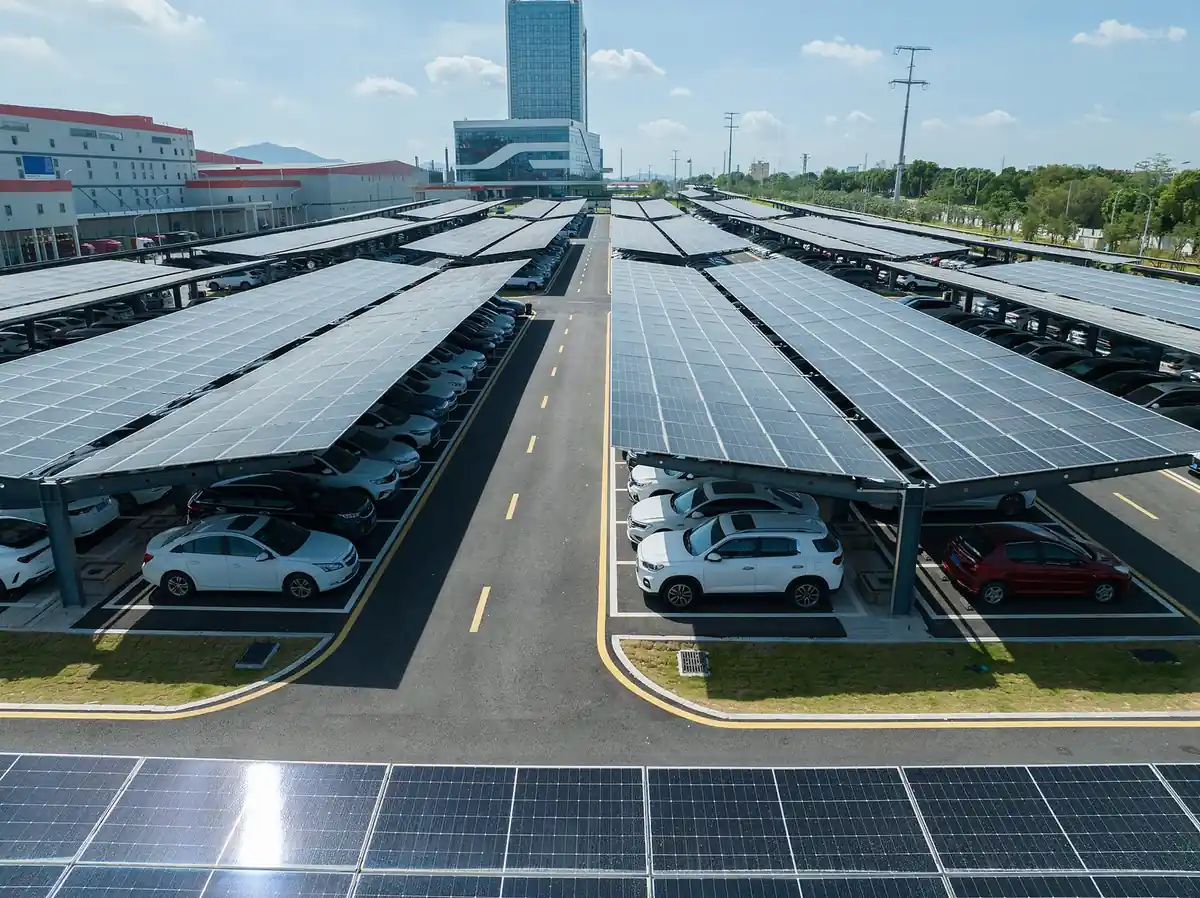
Commercial parking is one of the largest underused real-estate categories on earth. It is already graded, already fenced, already connected to a supply, and it earns nothing. Putting a canopy over it converts the same square metres into generation, fleet charging and, in most tariff structures, a defensible new revenue line.
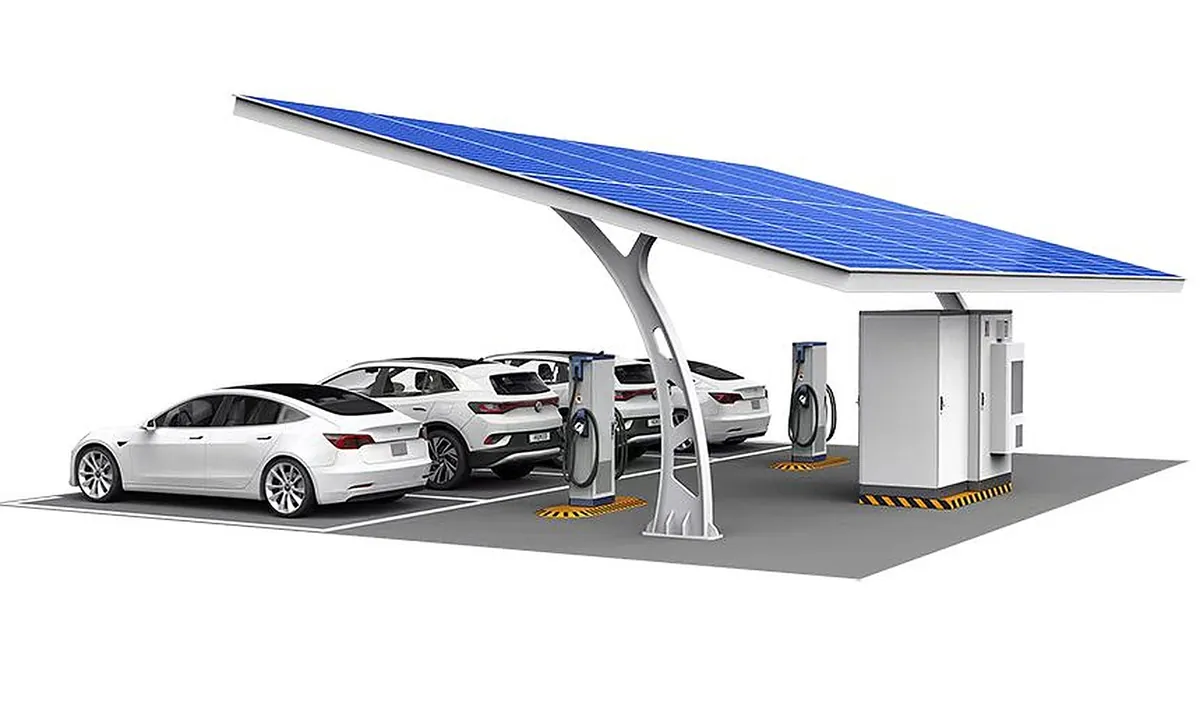
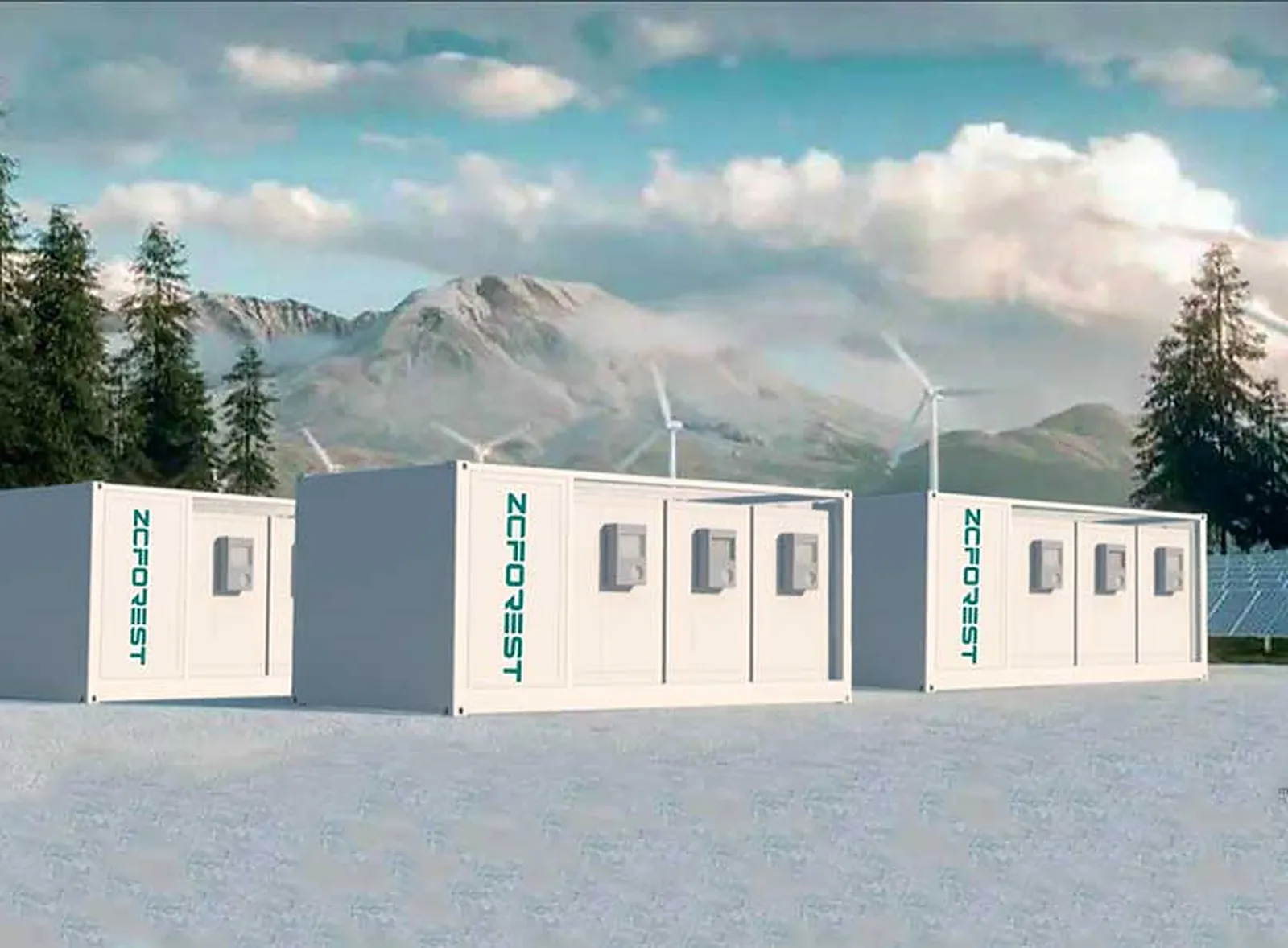
The engineering problem is rarely the modules. It is grid capacity: a row of 240 kW stalls can exceed a site's contracted demand before a single vehicle is fully charged. Dynamic power sharing across stalls keeps the site inside its contract, and co-located storage absorbs the rest — which is why ZCForest specifies the canopy, the chargers and the battery as one system rather than three procurements.
Delivery is turnkey EPC including grid interconnection, with CPO-ready software on top: white-label app, payment processing, CSV billing exports, and a per-charge CO2 saving figure that goes to the driver and to whoever writes your sustainability report.
Key benefits
Six things this product does better
Up to 240 kW DC
Add hundreds of kilometres of range in fifteen minutes, which is the difference between a charging stop and a break in the shift.
Grid-aware load balancing
Dynamic power sharing across stalls keeps site demand inside contracted capacity instead of triggering a penalty or a connection upgrade.
CPO-ready software
White-label app, payment processing and CSV billing exports for operators who intend to charge for the service.
Sustainability scorecard
Per-charge CO2 savings reported to drivers and to your CSR team, from metered data rather than an estimate.
Storage co-location
An integrated battery shaves the grid demand peak the chargers create and provides resilience for the rest of the site.
Engineered for weather
Specified for tropical, equatorial and high-wind operating environments — the conditions in the markets ZCForest actually ships to.
Who it is for
The buyers this was designed around
Fleet and logistics depots
Overnight and turnaround charging for vans, trucks and last-mile vehicles, generated on site.
Retail and hospitality operators
Charging as a dwell-time driver, with generation offsetting the building's own load.
Workplace and campus estates
Daytime generation matched to daytime demand, plus staff charging as a benefit that costs less than it appears.
Charge point operators
A turnkey site package with the software layer needed to bill for it.
Problems it solves
What it removes
Grid capacity that will not stretch
Fast charging multiplies peak demand. Generation plus storage supplies it locally instead of waiting on a utility reinforcement programme.
Asphalt that earns nothing
The largest asset on the site is doing one job. A canopy makes it do three.
Charging bills nobody can allocate
Metered, per-session data with CSV exports turns an unexplained energy line into something finance can reconcile.
Sustainability claims with no evidence
Per-charge CO2 figures come from measured generation and dispatch, not a spreadsheet assumption.
Technical features
How it is engineered
Modular bay rows
4, 6, 8 or 10 bays per row, so the array scales with the lot rather than forcing a layout on it.
Glass-glass modules
Monocrystalline glass-glass construction for long-term durability in exposed, high-irradiance sites.
Dual charging standards
DC fast charging at 60–240 kW per stall plus Type 2 AC at 11 or 22 kW for longer dwell times.
Payment flexibility
RFID, app, POS and Plug & Charge — because a fleet, a customer and a visitor each expect a different one.
Open network protocols
OCPP 2.0.1 and OCPI 2.2 for roaming and back-end independence.
Structural spans
5–6 m per bay in single-cantilever or double configuration.
Application scenarios
Specifications
The numbers
Transcribed from the ZCForest specification sheet for this product.
| PV capacity | 100 kWp — multi-MW per site |
|---|---|
| Bays per row | 4 / 6 / 8 / 10 (modular) |
| DC fast charging | 60 / 120 / 180 / 240 kW per stall |
| AC charging | Type 2 · 11 / 22 kW |
| Structure span | 5–6 m per bay (single-cantilever or double) |
| Module type | Monocrystalline glass-glass |
| Storage option | Integrated 100 kWh — multi-MWh battery |
| Payment | RFID · App · POS · Plug & Charge |
| Network | OCPP 2.0.1 · OCPI 2.2 |
| Project model | Turnkey EPC including grid interconnection |
| Environment | Specified for tropical, equatorial and high-wind conditions |
Bay count, charger rating and storage capacity are configurable because they are solved together against your contracted grid capacity.
Customisation
OEM and ODM options
- Bay count and row layout to suit the existing lot
- DC charger rating per stall from 60 to 240 kW
- AC charging added for long-dwell spaces
- Storage capacity co-located and sized to the charging peak
- Payment methods enabled per site
- White-label app and operator branding
- Structural specification for local wind and seismic requirements
Use guide
Getting the specification right
Model the charging peak before the array
The binding constraint is almost always contracted grid capacity, not roof area. Size the storage against the simultaneous-charging scenario, not the average.
Decide who pays at the stall
Fleet-only sites can skip payment hardware entirely; mixed public and fleet sites need RFID and app from day one.
Phase the bays
Modular rows mean the first phase can cover the vehicles you have and the second can follow the fleet, without stranding the structure.
Plan interconnection first
Grid interconnection is the long-lead item in most markets. It starts at requirement intake, not after the canopy ships.
Comparison
How it compares with the alternatives
Site operators generally compare a solar canopy hub against grid-only fast charging, or against ground-mounted PV somewhere else on the estate.
| Commercial solar parking station | Grid-only charging hub | Ground-mount PV elsewhere | |
|---|---|---|---|
| Uses existing land | Yes — the car park | Yes | No — needs separate land |
| Generates on site | 100 kWp to multi-MW | No | Yes |
| Shelters vehicles | Yes | No | No |
| Peak demand impact | Reduced by PV and storage | Full charging peak on the grid | No effect on the charging peak |
| Delivery model | Turnkey EPC with interconnection | Charger supply and install | Separate PV project |
| Revenue from charging | Yes, with CPO software | Yes | No |
FAQ
About the commercial parking station
Can the site handle 240 kW chargers?
Is this supplied as equipment or as a project?
Can we bill drivers for charging?
Will it work with roaming networks?
How is the structure specified for storms?
Can storage be added later?
Industry applications
Solutions
Quote the Commercial Parking Station
Send the lot layout, the connection agreement and the vehicles you expect to charge. We model the simultaneous-charging peak before proposing anything.