
New Energy Vehicle · EV 03
Ground support equipment, zero-emission
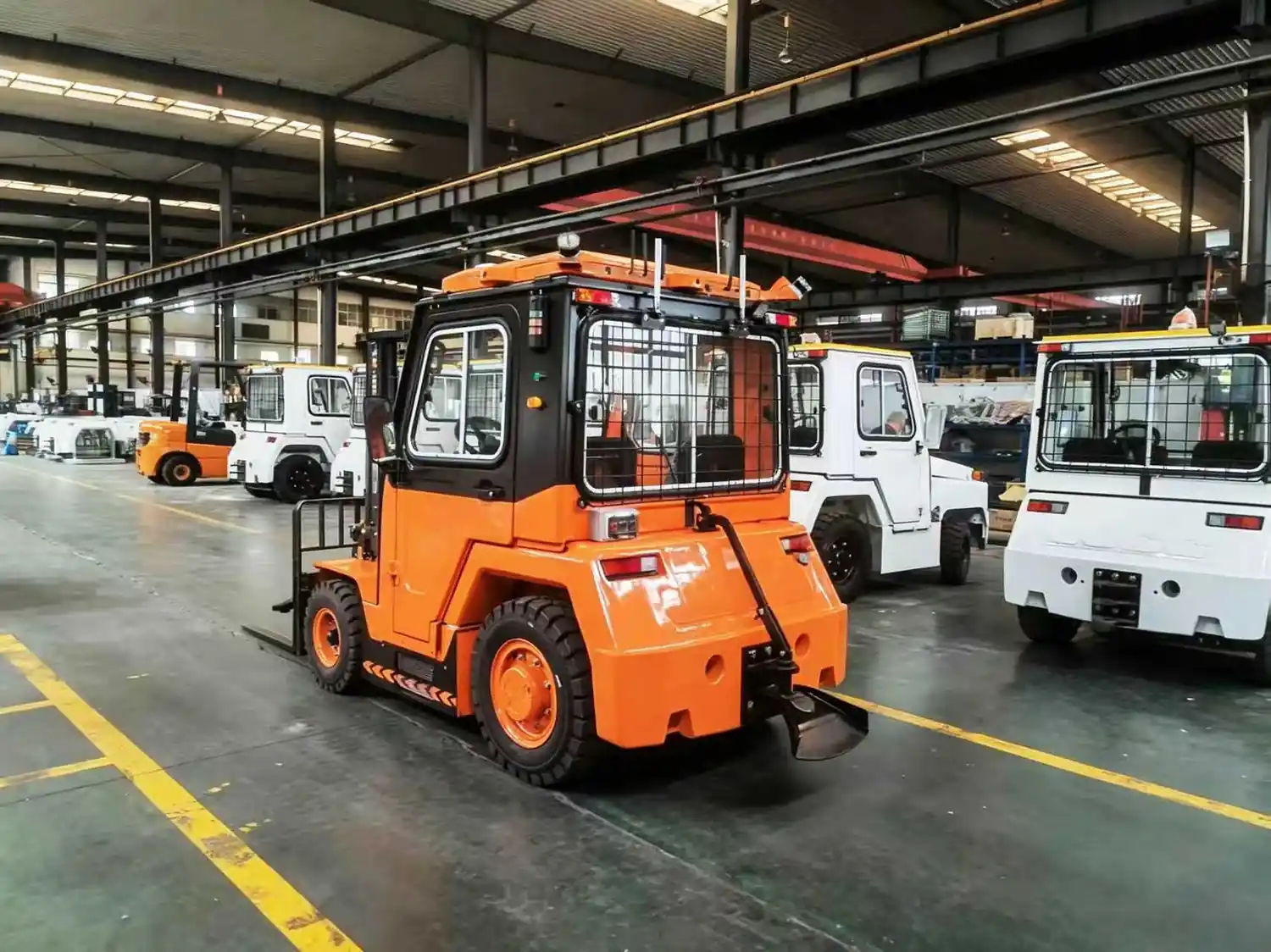
Airport baggage tractors and apron equipment built to replace diesel with quiet, clean alternatives that meet airport sustainability mandates — rated for 12+ hour shifts from −20°C to +50°C.
Product overview
What the ground support equipment is
Major airports worldwide are committing to zero-emission ground operations, and the apron is where those commitments meet a tug that has to start at 04:30 in any weather. The engineering problem is not whether electric works — it is whether it works for a full shift, between rotations, in the climate the airport actually has.
ZCForest sizes GSE battery capacity against the duty cycle rather than a catalogue figure, and supports the two charging patterns airports really use: DC fast top-ups in the gap between rotations, and overnight AC when the apron is quiet. Severe-weather configuration — sealed drivetrain, heated battery — is specified for the site, not assumed.
Beyond the vehicles, the operational case is the one ground handlers make themselves: energy and maintenance costs typically far below diesel equivalents, direct contribution to Scope 1 reduction targets, and quiet enough to enable overnight operations near terminal buildings.
Key benefits
Six things this product does better
Zero apron emissions
Replacing diesel units contributes directly to Scope 1 reduction targets — the category airports are least able to offset away.
DC fast charging
Designed to top up between rotations, inside the tight ramp-side turnaround windows ground handlers actually work to.
Severe-weather rated
Sealed drivetrain and heated battery, configurable for tropical and arctic operations from −20°C to +50°C.
Apron telematics
Optional live position and state of charge for every unit, integrating with airport operations platforms.
Quiet operation
Low noise enables overnight operations near terminal buildings where diesel equipment is restricted.
Lower total cost of ownership
Energy and maintenance costs typically far below diesel equivalents, with no fuel bowser and no engine service schedule.
Who it is for
The buyers this was designed around
Airport operators
Estates with published zero-emission ground operation commitments and a diesel fleet to retire.
Ground handling companies
Operators measured on turnaround time and equipment availability rather than fuel receipts.
Regional airports electrifying in phases
Sites replacing the highest-hour units first and building charging as they go.
Cargo and freight terminals
High-utilisation apron operations where fuel and maintenance costs dominate.
Problems it solves
What it removes
Diesel emissions that cannot be offset
Apron equipment sits squarely in Scope 1. Electrifying it is one of the few direct reductions an airport controls outright.
Noise limits on night operations
Quiet equipment opens operating windows near terminal buildings that diesel units are excluded from.
Fuel logistics on the apron
No bowser, no spillage risk, no fuel storage — one less regulated process on a restricted airside.
Equipment that cannot finish a shift
Sizing against the real duty cycle, plus DC top-ups between rotations, is what makes 12+ hour operation achievable.
Technical features
How it is engineered
Three tug classes
Light tug, standard tug and heavy pushback, so the fleet matches the aircraft mix.
Wider GSE range
Belt loader, baggage tractor and ground power unit alongside the tugs.
Duty-cycle battery sizing
LiFePO4 capacity specified against the shift pattern rather than a fixed catalogue rating.
Dual charging strategy
DC fast between rotations, or overnight AC when the apron is quiet.
Wide operating temperature
−20°C to +50°C depending on configuration.
Optional fleet telematics
Position and state of charge per unit, for integration into airport operations platforms.
Application scenarios
Specifications
The numbers
Transcribed from the ZCForest specification sheet for this product.
| Tug models | Light tug · Standard tug · Heavy pushback |
|---|---|
| Other GSE | Belt loader · Baggage tractor · Ground power unit |
| Battery | LiFePO4, capacity sized to duty cycle |
| Range per shift | 12+ hours typical apron duty |
| Charging | DC fast or overnight AC |
| Operating temperature | −20°C to +50°C (configuration dependent) |
| Communication | Optional fleet telematics |
| Customisation | OEM/ODM voltage, connectors and certifications |
| Warranty | 1–2 years vehicle · 3–5 years battery |
| Airside certification | TBC — confirm the airside approval requirements for your airport |
Battery capacity is sized rather than listed, and airside certification is marked TBC because approval requirements are set by each airport and authority.
Customisation
OEM and ODM options
- Tug class and towing capacity matched to the aircraft mix
- Battery capacity sized to the measured shift pattern
- Charging strategy — DC fast, overnight AC or both
- Cold or tropical weather package
- Fleet telematics integration with the airport operations platform
- Voltage, connector and certification configuration
- Livery and handler branding
Use guide
Getting the specification right
Electrify the highest-hour units first
The units that run most are where fuel and maintenance savings arrive fastest, and where a charging point serves the most vehicles.
Plan charging around rotations, not around vehicles
The constraint is the gap between aircraft, not the tug. DC fast charging is specified to fit those windows.
Specify the weather package honestly
Heated battery and sealed drivetrain cost money and earn it back in one bad season. Tell us the apron's actual temperature range.
Integrate telematics with airport ops
Live state of charge is only useful if it reaches the people allocating equipment. Agree the integration during procurement.
Comparison
How it compares with the alternatives
Airports replacing apron equipment are choosing between electric GSE, keeping diesel, or retrofitting existing units.
| ZCForest electric GSE | Diesel GSE | Retrofit of existing units | |
|---|---|---|---|
| Scope 1 emissions | Eliminated at the unit | Full | Reduced, rarely eliminated |
| Noise | Low — night operation possible | Restricted near terminals | Depends on the retrofit |
| Refuelling infrastructure | Charging points, airside electrical work | Bowser and fuel storage | Charging points |
| Shift capability | 12+ hours typical, sized to duty | Continuous with refuelling | Depends on pack fitted |
| Maintenance | No engine service schedule | Full engine schedule | Mixed — new pack, old chassis |
| Fleet consistency | One platform across tug classes | Varies by supplier | Varies by donor vehicle |
FAQ
About the ground support equipment
Will one charge cover a full shift?
How does charging fit into turnaround times?
Can the equipment work in extreme heat or cold?
Which GSE types can you supply?
What about airside certification?
Is on-site commissioning available?
Related products
Industry applications
Quote the Ground Support Equipment
Send the rotation data, the towing loads and the apron's temperature range. We size the battery, plan the charging around turnarounds, then quote.