
Industry application
The apron is going electric — we supply the fleet
Airport authorities and ground handlers replacing diesel apron equipment with electric tugs, baggage tractors, belt loaders and ground power units that meet emissions mandates without breaking turnaround times.
Industry pain points
What keeps costing money
Scope 1 emissions with nowhere to hide
Apron equipment is a direct emission source the airport owns outright, which is exactly why authorities and airline customers target it first.
Ramp-side air quality
Diesel exhaust in a confined, high-occupancy working area affects both staff and neighbouring communities.
Noise limits on night operations
Diesel equipment is restricted near terminal buildings at the hours when the apron is otherwise free.
Charging that has to fit a turnaround
Vehicles cannot leave the rotation to charge. The infrastructure has to match the existing operational rhythm.
Hot-climate battery management
High ambient temperatures place real demands on thermal management that temperate-climate engineering does not anticipate.
What customers need
The brief, in practice
- Battery capacity sized against measured shift patterns
- A charging mix of overnight AC and strategic DC fast points
- Climate-appropriate cooling and battery management
- Connector and communication standards the existing operations team already uses
- A phased rollout that proves out before it scales
Recommended products
What ZCForest supplies here
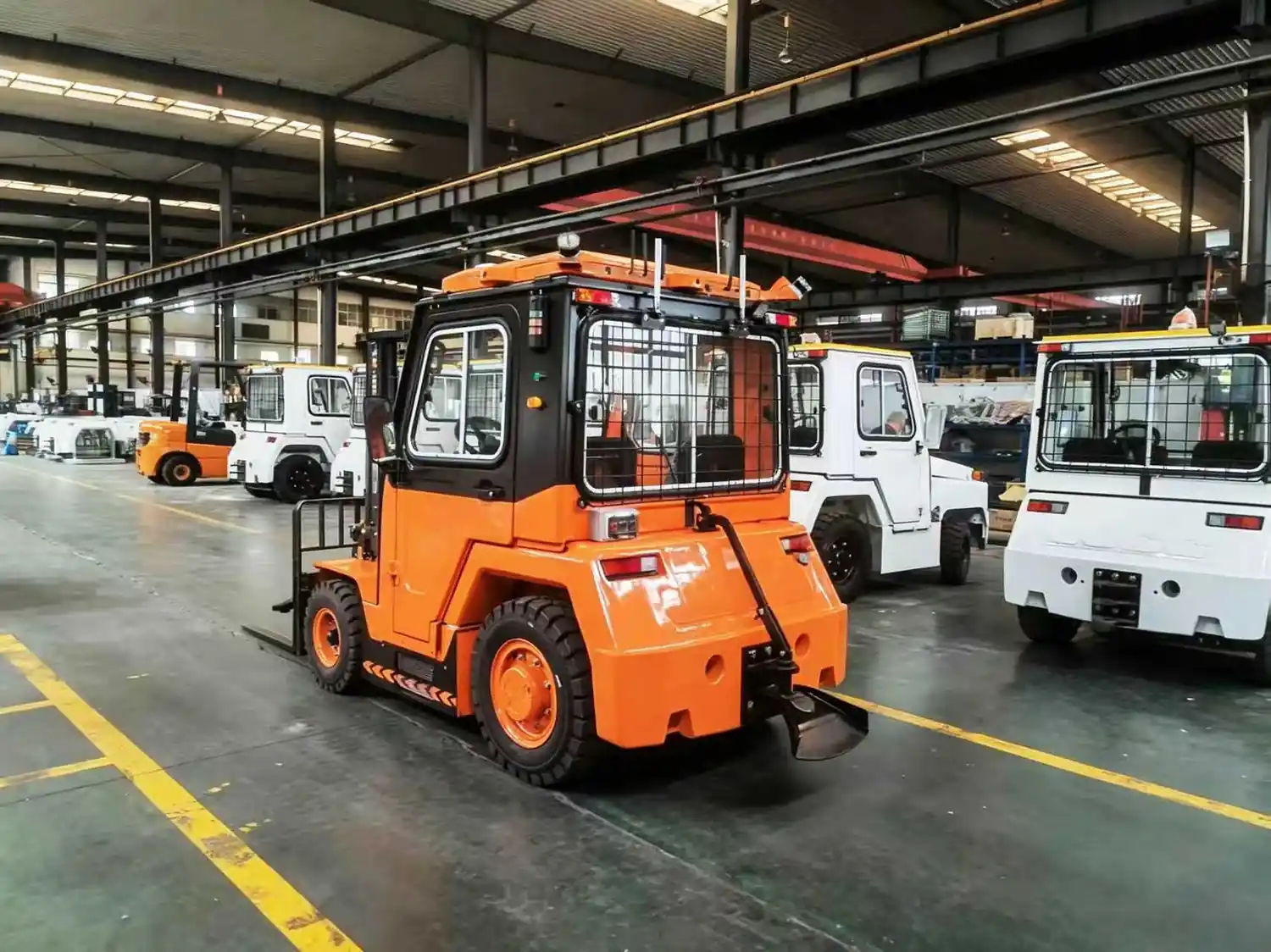
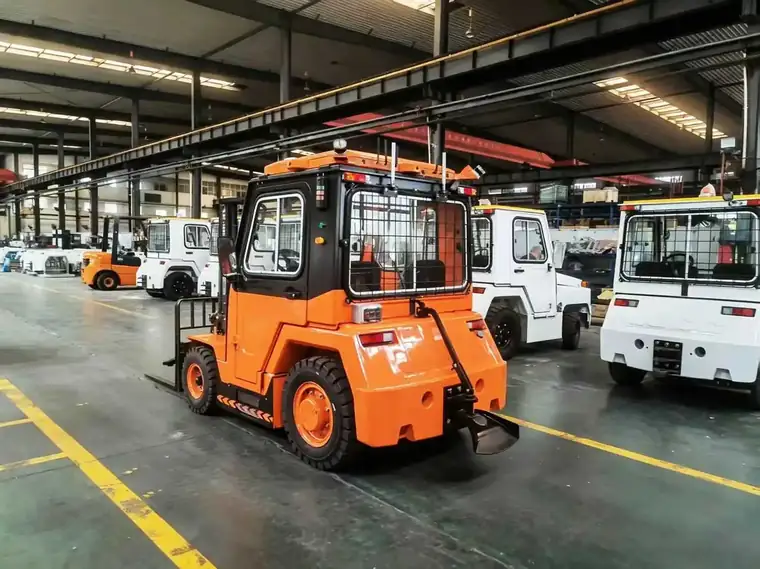 New Energy Vehicles
Airport Ground Support Equipment
Electric baggage tractors, belt loaders and GPUs
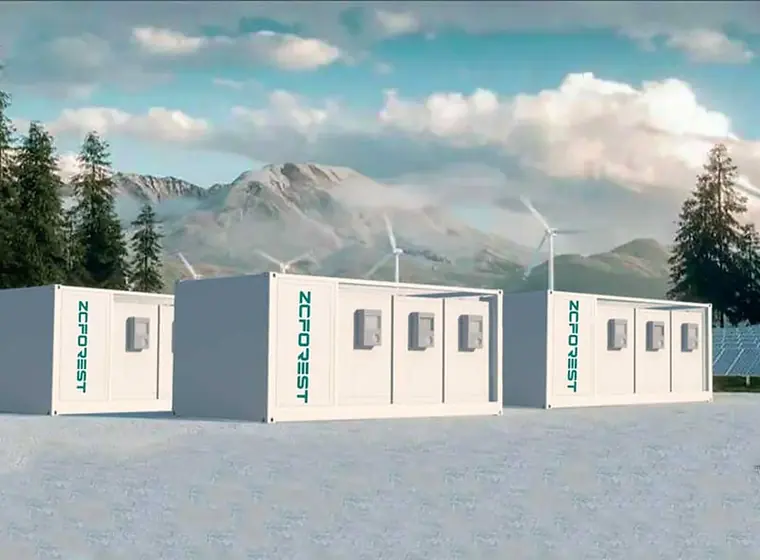 Energy Storage
Industrial & Commercial Energy Storage
100 kWh to multi-MWh cabinets and containers
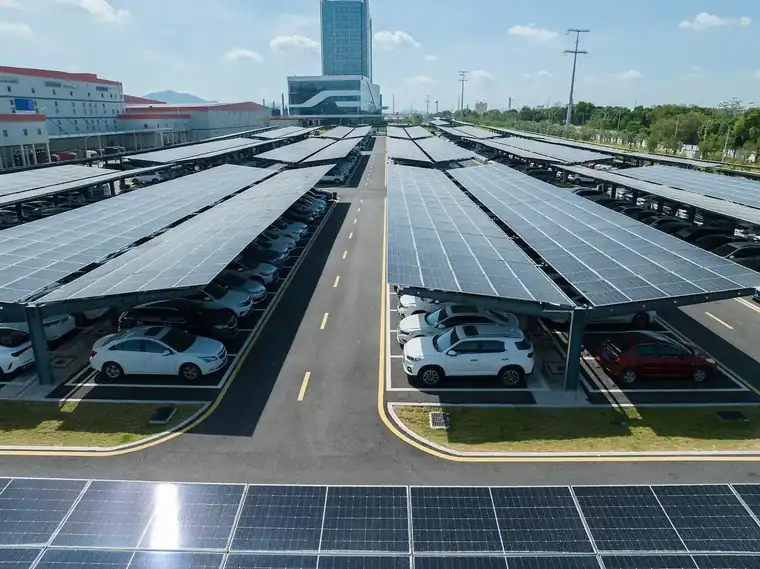 Solar Charging
Commercial Solar Parking Station
100 kWp to multi-MW with up to 240 kW DC charging
Typical scenarios
Where this shows up
Regional airports electrifying in phases
Replacing the highest-hour units first and building charging capacity alongside, as in ZCForest's Southeast Asian GSE rollout.
Ground handling contractors
Operators measured on equipment availability and turnaround, where reliability and running cost decide the fleet.
Cargo and freight terminals
High-utilisation apron operations where fuel and maintenance costs dominate the equipment budget.
Landside parking and staff charging
Solar canopies over airport car parks that generate on site and charge staff and fleet vehicles.
Delivery capability
From first call to long-term support
Fleet and duty-cycle assessment, equipment specification with climate and connector configuration, charging infrastructure planning in parallel with vehicle supply, export logistics, on-site commissioning supervision, operations and maintenance training, and phased expansion informed by first-phase data.
Requirement intake
Customer needs, site, load profile and goals.
Solution & quote
System design and pricing.
Contract
Order confirmation and trade-finance setup.
Production
Manufacturing and stocking.
Export & logistics
Customs, transport and destination clearance.
Delivery support
Remote or on-site commissioning.
Training
Operations team handover.
After-sales
Long-term support and warranty.
Case studies
Delivered in this sector
FAQ
About aviation & airports projects
Will electric GSE complete a full apron shift?
What is the biggest implementation risk?
How do operators respond to the change?
Is there a capital premium over diesel?
Related products
Have a aviation & airports project?
Send the site, the load profile and the goal. We come back with a sized proposal.