
Storage projects that ship, because the finance works
A project pipeline across Brazil, Chile and Peru pairing containerised storage with rooftop solar — where trade finance has repeatedly been the factor that decided whether the project happened at all.
Market background
South America has emerged as one of the most dynamic markets for behind-the-meter storage in 2026, driven by high industrial electricity tariffs, rapidly improving solar economics, and a regulatory environment that increasingly rewards self-generation and demand-response capability.
ZCForest expanded its delivery capability across the region over the past quarter, focused on projects that combine containerised storage with rooftop solar for industrial and commercial customers. The pipeline spans Brazil, Chile and Peru, with discussions at advanced stages in Colombia.
Why this market, why now
- Tariff structure. Many countries have implemented hourly or time-of-use industrial tariffs with a significant peak/off-peak spread, creating native arbitrage value for storage.
- Solar resource. High-irradiance regions across northern Chile, north-eastern Brazil and coastal Peru deliver capacity factors that materially improve solar-plus-storage economics.
- Currency and finance. Trade-finance instruments — letters of credit, supplier credit and structured product finance — allow imports to be financed in ways domestic balance sheets sometimes cannot accommodate.
Customer pain points
- High industrial tariffs with a wide peak-to-off-peak spread.
- Capital constraints on importing megawatt-scale hardware as a cash transaction.
- Limited in-house engineering capability to integrate storage, solar and the existing electrical infrastructure.
- Customs, clearance and compliance exposure on large single shipments.
What is being built
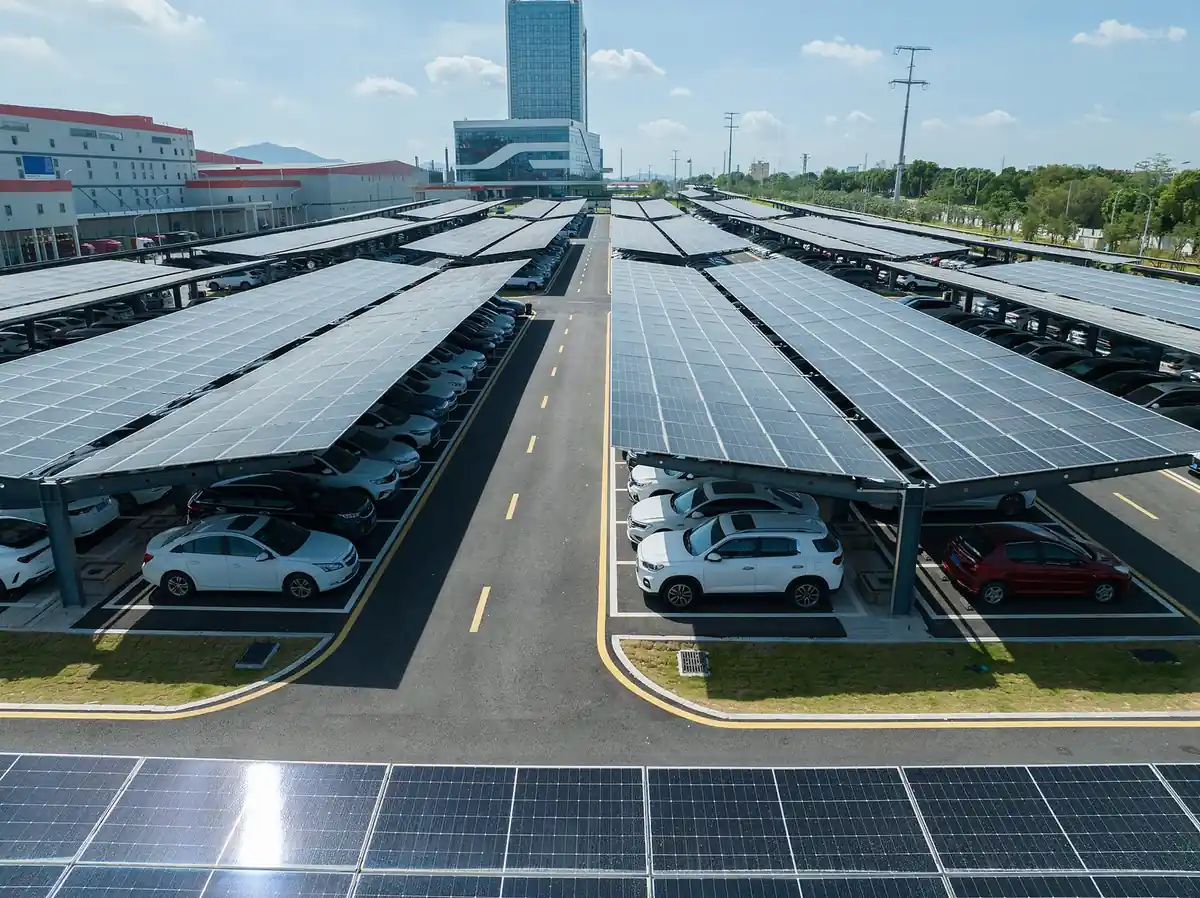
- The typical project profile is a 500 kW to 2 MW system paired with 800 kWp to 3 MWp of rooftop or canopy solar, sized for self-consumption with controlled grid export.
- Customer types include textile manufacturing, food processing, cold storage, mining service operations and retail logistics.
- Project archetype: 1 MW / 2 MWh containerised LFP storage with 1.5 MWp rooftop solar, configured for daytime self-consumption plus evening peak shaving. Typical payback is 4–6 years depending on the local tariff and incentive landscape.
Integration is the differentiator
What sets these projects apart is integration. This is not battery supply — it is an end-to-end scope covering engineering, equipment selection, trade-finance support, logistics, customs clearance, on-site commissioning supervision, training and warranty.
For customers without a deep in-house engineering team, that integrated supply is the difference between a project that ships and one that stalls.
Trade finance decides projects
Importing megawatt-scale energy hardware into South America is rarely a cash transaction. ZCForest's stable banking relationships allow commercial terms including LC-backed shipments, supplier credit and structured finance, which smooth the buyer's cash-flow profile.
In several recent projects, this has been the determining factor in whether the project went forward at all.
The pipeline currently has more than a dozen active projects in commercial discussion, with first commissioning targets across the second half of 2026. ZCForest is also actively looking for installer and EPC partners in markets without a deep local presence — WhatsApp is the fastest route to a first conversation, with email for the detailed engineering exchange.
Industry applications
A similar profile to yours?
Send the load profile and tariff structure and we will tell you whether the same approach works on your site.