
New Energy Vehicle · EV 02
Cargo tricycles for the last mile
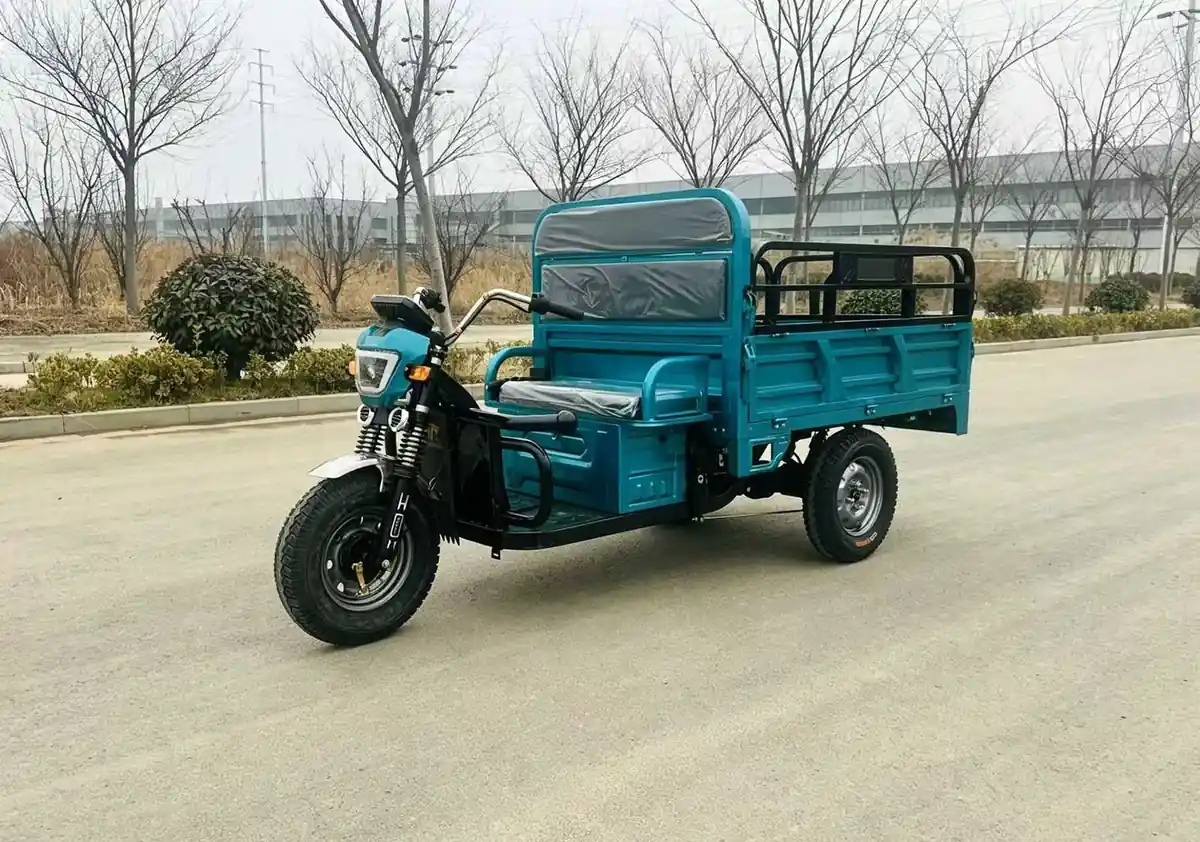
A workhorse line of three-wheeled cargo vehicles — open-bed, closed-box, refrigerated and tipper — carrying 200 to 500 kg through streets a van cannot use.
Product overview
What the electric tricycle is
Last-mile delivery is the highest-leverage segment for electrification — short routes, high stop counts, low average speeds, and a vehicle that returns to the same yard every night. It is the duty cycle where a battery beats an engine on cost rather than on principle.
The tricycle line is built around that reality. A reinforced, heavy-gauge steel chassis with anti-corrosion coating, a differential rear drive that turns tighter and grips better than a chain-drive trike, and an upper module that swaps — box, flatbed, tipper or refrigerated — so one chassis covers several routes as the business changes.
For a mixed fleet the decisive detail is mundane: the tricycles share a charging post with the ZCForest motorcycles. One yard installation, one set of spares, one training session.
Key benefits
Six things this product does better
Modular cargo body
Box, flatbed, tipper or refrigerated on the same chassis — swap the upper module to fit the route rather than buying a second vehicle.
Differential rear drive
Better traction and a tighter turning circle than typical chain-drive trikes, which is what decides whether a route is viable in a narrow market street.
Reinforced chassis
Heavy-gauge steel with anti-corrosion coating, tested to long-cycle cargo duty rather than occasional loads.
Optional telematics
GPS and route reporting for operators who dispatch rather than just deliver.
Quiet operation
Neighbourhood-friendly for dawn deliveries and indoor logistics where a combustion engine is simply not allowed.
Compatible charging
Shares the charging post with the ZCForest motorcycle line — one yard solution for a mixed fleet.
Who it is for
The buyers this was designed around
Parcel and multi-drop couriers
Routes with dozens of stops per shift where a van spends more time parked than moving.
Market and wholesale traders
Bulk loads between market, store and customer on streets a van cannot enter.
Construction and maintenance crews
Tipper and flatbed bodies moving sand, rubble, tools and materials on and around a site.
Cold-chain and food distributors
Refrigerated bodies for short-run chilled delivery.
Problems it solves
What it removes
Vans that cannot reach the address
A tricycle takes a 200–500 kg load into streets, lanes and markets where a van is either illegal or physically stuck.
Fuel and servicing on low-speed routes
Stop-start urban duty is the worst case for a combustion engine and the best case for a battery.
Delivery windows closed by noise rules
Quiet operation makes dawn and indoor deliveries possible.
Fleets that need three vehicle types
One chassis with interchangeable bodies covers parcel, bulk and tipper work without three separate purchases.
Technical features
How it is engineered
Four body variants
Open-bed, closed-box, refrigerated and tipper, on a common chassis.
Three cabin options
Open, half-cabin or fully enclosed, specified for the climate the vehicle works in.
60 V LiFePO4 pack
100 to 200 Ah, sized against route length rather than a headline figure.
Differential rear axle
1.5 to 5.0 kW, matched to payload and terrain.
Regulated top speed
45 km/h, which is the operating envelope these vehicles are designed and regulated for.
Warranty structure
1–2 years on the vehicle and 3–5 years on the battery.
Application scenarios
Specifications
The numbers
Transcribed from the ZCForest specification sheet for this product.
| Models | Open-bed · Closed-box · Refrigerated · Tipper |
|---|---|
| Payload | 200 — 500 kg (model dependent) |
| Top speed | 45 km/h (regulated) |
| Range | 80 — 130 km per charge |
| Battery | 60 V · 100 — 200 Ah LiFePO4 |
| Motor | Differential rear · 1.5 — 5.0 kW |
| Charging | On-board AC or charging post |
| Cabin | Open · Half-cabin · Fully enclosed |
| Chassis | Heavy-gauge steel with anti-corrosion coating |
| Customisation | OEM/ODM cargo body, voltage and certifications |
| Warranty | 1–2 years vehicle · 3–5 years battery |
Payload, range and motor rating are ranges because they depend on the body, the cabin and the gradient the vehicle actually works on.
Customisation
OEM and ODM options
- Cargo body type — open-bed, closed-box, refrigerated or tipper
- Cabin configuration for the local climate
- Battery capacity between 100 and 200 Ah
- Motor rating matched to payload and gradient
- Voltage and charging configuration for the destination market
- Livery and customer branding
- Local certification support
Use guide
Getting the specification right
Size the battery to the route, then add margin for load
Range falls with payload and gradient. The 80–130 km band assumes representative duty, not a fully loaded tipper on a hill.
Pick the cabin for the climate, not the price
A half-cabin is cheaper and miserable in monsoon season. Rider retention is a real operating cost.
Load within the rated payload
Heavy-gauge steel and anti-corrosion coating extend chassis life, but overloading shortens it faster than any coating extends it.
Charge on one yard standard
Running the tricycles and motorcycles on the same post keeps the yard simple and the spare-charger count low.
Comparison
How it compares with the alternatives
The tricycle is normally weighed against a small van, or against the petrol trikes already working the same routes.
| ZCForest electric tricycle | Small diesel van | Petrol cargo trike | |
|---|---|---|---|
| Payload | 200 — 500 kg | Typically 800 kg and above | Comparable |
| Narrow-street access | Yes | Frequently not | Yes |
| Fuel or energy cost per stop | Low — battery, best case self-generated | Highest in stop-start duty | Moderate |
| Routine servicing | No oil, filters or plugs | Full engine schedule | Full engine schedule |
| Indoor and dawn operation | Yes — quiet, no exhaust | No | No |
| Body flexibility | Four interchangeable bodies | Usually one fixed body | Usually one fixed body |
FAQ
About the electric tricycle
Which body type should I order?
How far will it go fully loaded?
Can it be charged from the same post as the motorcycles?
Is the 45 km/h limit adjustable?
What is the battery warranty?
Can you supply our own cargo body design?
Related products
Industry applications
Quote the Electric Tricycle
Send the load, the route and the body type you need. We confirm payload, battery capacity and the cargo body specification before quoting.