
Solar Charging · Solar 01
A solar canopy for the driveway
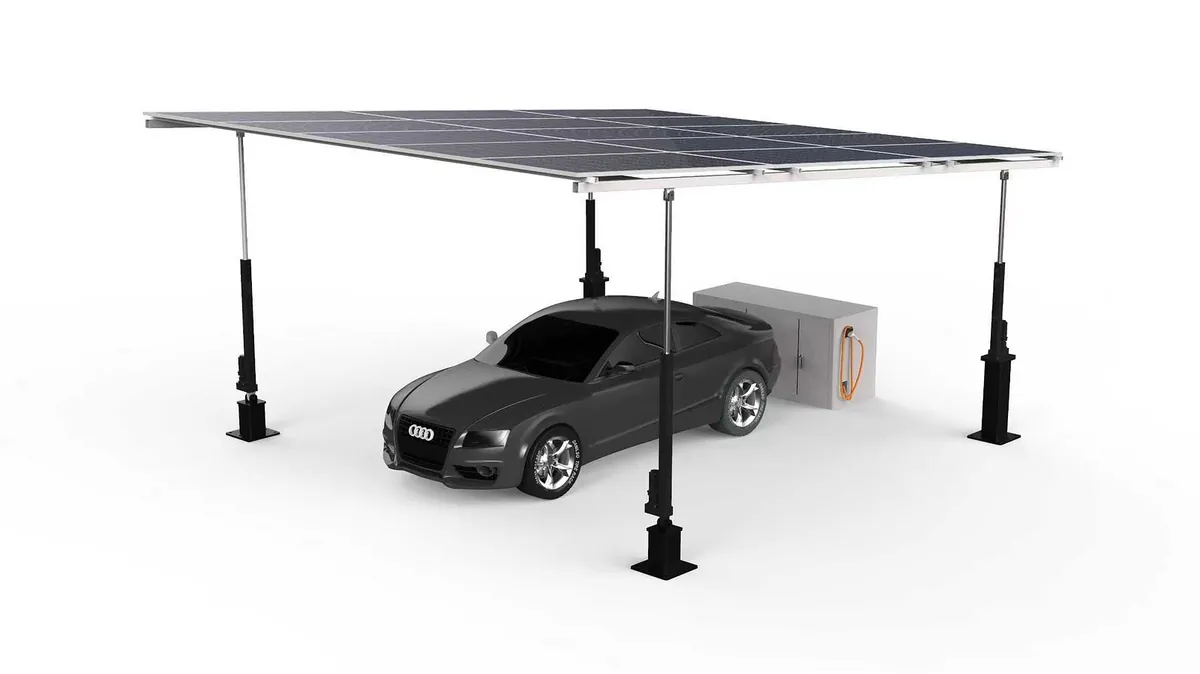
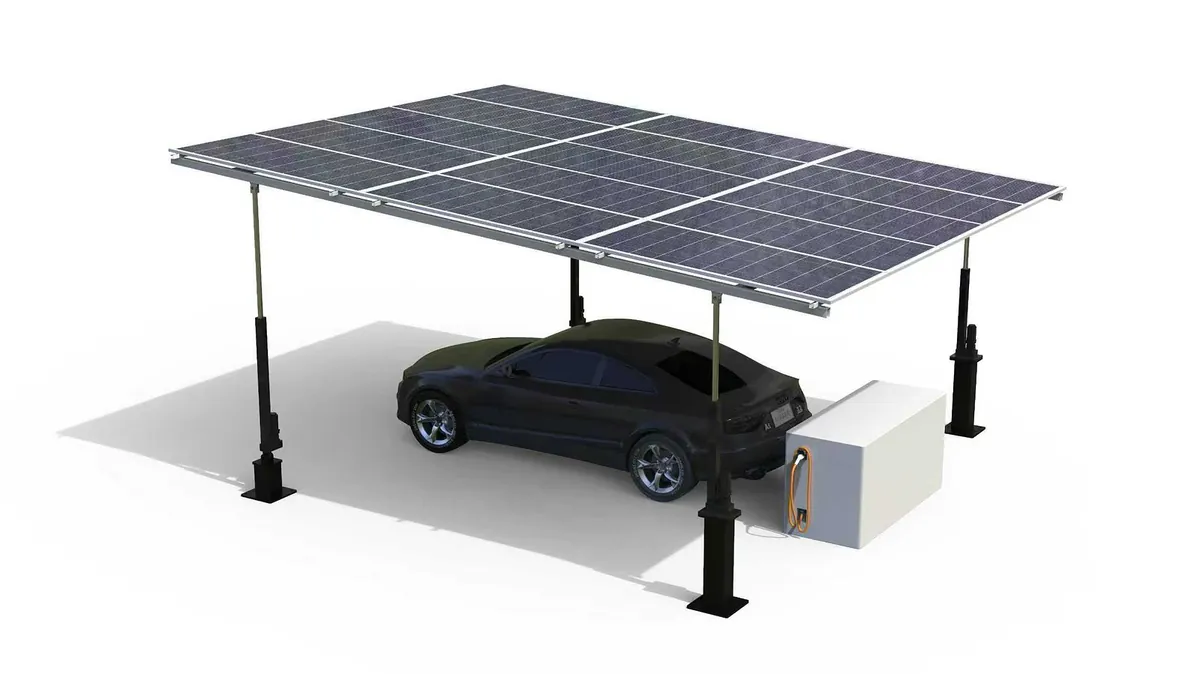
Single- and double-bay photovoltaic canopies with integrated AC charging. Generate clean power, charge the EV, and send the surplus to the home battery — one structure doing all three.
Product overview
What the residential parking station is
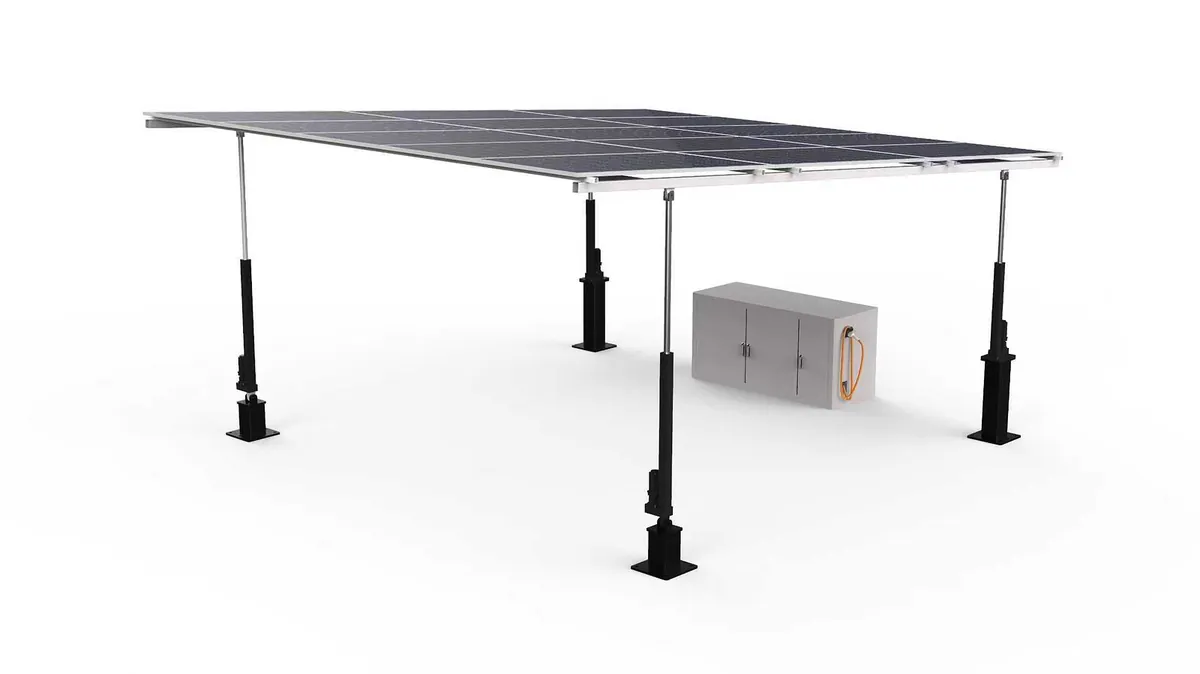
The cleanest kilowatt-hour is the one generated over the car that is about to use it. A driveway canopy removes the round trip through the grid: monocrystalline modules above, a hybrid inverter behind, a Type 2 socket at the post, and whatever is left over going to the house or the home battery instead of being exported at a tariff nobody is happy with.
Because the canopy and the charger are engineered as one structure, there is one foundation, one set of approvals and one contractor. That matters more on a domestic site than a commercial one — the difference between a weekend installation and a three-visit project with a gap in the middle where the car has nowhere to charge.
Four dispatch modes cover the way people actually use a driveway: solar-only when you want nothing from the grid, hybrid when the car has to be ready regardless, boost when it has to be ready now, and schedule when the tariff is cheapest overnight.
Key benefits
Six things this product does better
Solar-direct charging
PV power routes straight to the vehicle without round-tripping through the grid, which is both the cheapest and the lowest-loss path.
Smart control
Set charging windows, read solar forecasts and receive cost reports from a single app rather than three vendor portals.
Net-zero capable
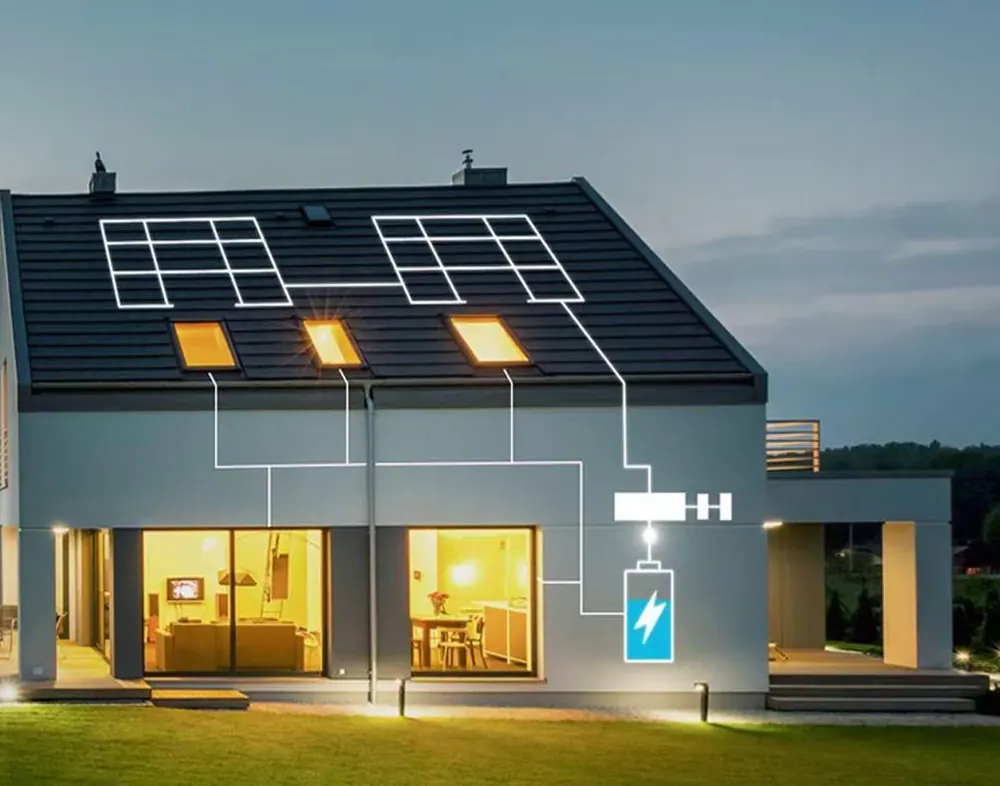
Paired with a ZCForest home battery, the household drives on stored sunshine and can target annual net-zero rather than daytime-only self-consumption.
Open protocol
OCPP-compatible, so the station works with standard chargers and back-ends instead of locking you to one supplier.
Surplus management
Excess generation charges the home battery, runs the household or feeds the grid — in that priority or any other you configure.
Architectural quality
Modules and frame are engineered as one assembly, designed to sit next to a house rather than in front of it.
Who it is for
The buyers this was designed around
Homeowners with one or two EVs
A shelter for the car that also fuels it, on a driveway that was already there.
Households with existing rooftop PV
Additional generation where the roof is full, shaded or facing the wrong way.
Small fleet and trade yards
Two to four vehicles charging overnight on self-generated power rather than a new supply.
Installers and EPCs
A packaged canopy-plus-charger assembly that quotes and installs as one line item.
Problems it solves
What it removes
Roof space that has run out
Not every house can take more modules. A driveway canopy adds 3.6–7.2 kWp without touching the roof structure.
Charging that lands on the evening peak
Scheduling and on-site generation move the load off the expensive window.
Export tariffs that undervalue your generation
Surplus that charges the home battery is worth what you would otherwise have paid, not what the utility offers.
A car park that is just weather damage
Hail, sun and frost on a vehicle every day, in exchange for nothing. The canopy pays for the shelter twice.
Technical features
How it is engineered
Monocrystalline modules
22%+ efficiency modules, so a small footprint still produces a useful figure.
Hybrid, battery-ready inverter
A 5 kW hybrid inverter that accepts a battery now or later without replacing the electronics.
Type 2 AC charging
7, 11 or 22 kW, single or dual outlet, matched to the supply and the vehicles.
Structural rating
Steel and aluminium structure engineered for 130 km/h wind and 1.5 kPa snow loading.
Four dispatch modes
Solar-only, hybrid, boost and schedule.
Long warranty on the parts that must last
12 years on the structure, 25 years on the PV modules.
Application scenarios
Specifications
The numbers
Transcribed from the ZCForest specification sheet for this product.
| PV capacity | 3.6 / 5.5 / 7.2 kWp configurations |
|---|---|
| AC charger | Type 2 · 7 / 11 / 22 kW (single or dual) |
| Bays | Single (1 vehicle) · Double (2 vehicles) |
| Module type | Monocrystalline, 22%+ efficient |
| Structure | Steel / aluminium · wind 130 km/h · snow 1.5 kPa |
| Inverter | Hybrid 5 kW, battery-ready |
| Smart modes | Solar-only · Hybrid · Boost · Schedule |
| Protocol | OCPP-compatible |
| Customisation | OEM/ODM connectors and local certifications |
| Warranty | 12 years structure · 25 years PV |
Generation figures are deliberately absent: output depends on latitude, orientation and shading, so we model it against your site rather than publish one number.
Customisation
OEM and ODM options
- Single or double bay
- PV capacity at 3.6, 5.5 or 7.2 kWp
- Charger rating at 7, 11 or 22 kW, single or dual outlet
- Connector type matched to the local standard
- Structural finish and colour
- Local certification support for the destination market
Use guide
Getting the specification right
Confirm the supply before the charger rating
A 22 kW charger needs a three-phase supply. On a single-phase domestic connection, 7 kW is usually the sensible specification.
Orient for the afternoon, not the noon peak
On a driveway, generation that lands when the car comes home is worth more than generation that peaks while it is away.
Decide the surplus priority up front
Battery first, house second, grid last is the usual order — but it is a configuration choice, so make it deliberately.
Check the foundation early
Ground conditions decide the footing design. Send site photographs and soil information with the enquiry to avoid a redesign later.
Comparison
How it compares with the alternatives
A driveway canopy is usually weighed against a rooftop array plus a separate wallbox, or against a wallbox alone.
| Residential solar parking station | Rooftop PV + separate wallbox | Wallbox only | |
|---|---|---|---|
| Generates power | Yes, 3.6–7.2 kWp | Yes, roof-dependent | No |
| Shelters the vehicle | Yes | No | No |
| Number of contractors | One | Usually two | One |
| Needs roof capacity | No | Yes | No |
| Charges from own generation | Directly | Via the house circuit | No — grid only |
| Structural warranty | 12 years structure, 25 years PV | Module warranty only | Not applicable |
FAQ
About the residential parking station
How much will a 7.2 kWp canopy generate?
Can it charge two cars at once?
Does it work without a home battery?
Is the structure rated for my climate?
What certifications does it carry?
Will it work with my existing charging app?
Industry applications
Quote the Residential Parking Station
Send the site location, the orientation and the supply you have. We confirm the PV capacity, the charger rating and the footing design before quoting.