
Oil-Free or Lubricated Stenter Guides
An oil-free guide keeps lubricant away from the fabric using graphite strips and PEEK sliders. A lubricated guide uses a grease film. The chain is different for each, and mixing them is a costly mistake.
· Yehang Stenter Parts
On This Page
Two Ways to Run a Rail
Every stenter guide has the same problem: a chain carrying fabric tension has to slide along a rail inside a hot chamber, thousands of hours a year, without seizing. There are two established answers.
A lubricated guide solves it with a grease film at the bearing surfaces. An oil-free guide solves it with self-lubricating materials, a carbon graphite strip on the rail side and PEEK sliders and bushes on the chain side. Both work. They need different chains.
Related: Stenter Chains and Chain Parts
Why Chains Are Not Interchangeable
A chain built for a lubricated guide is specified to run with a grease film. A chain built for an oil-free guide is not. Fitting one where the other belongs gives short life, and the failure looks like poor quality rather than a specification mismatch.
This is why we list a Bruckner lubrication version separately from the four oil-free Bruckner chain patterns, and why we ask, on every chain enquiry, whether your guide runs lubricated or dry.
The Case for Oil-Free
The strongest argument for an oil-free guide has nothing to do with the chain. It is that grease near fabric is a contamination risk, and on a finishing line the cost of a contaminated batch dwarfs the cost of the rail.
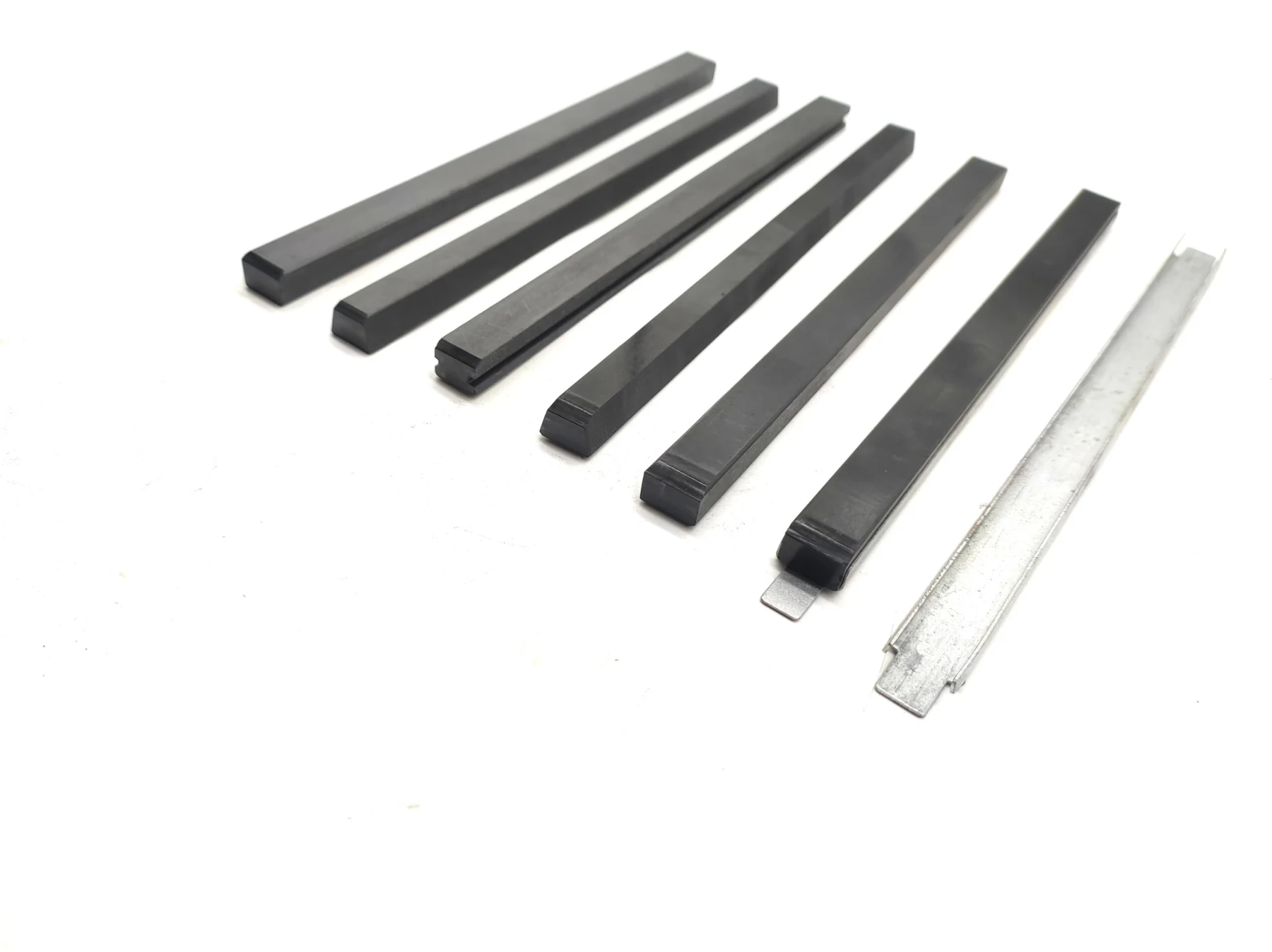
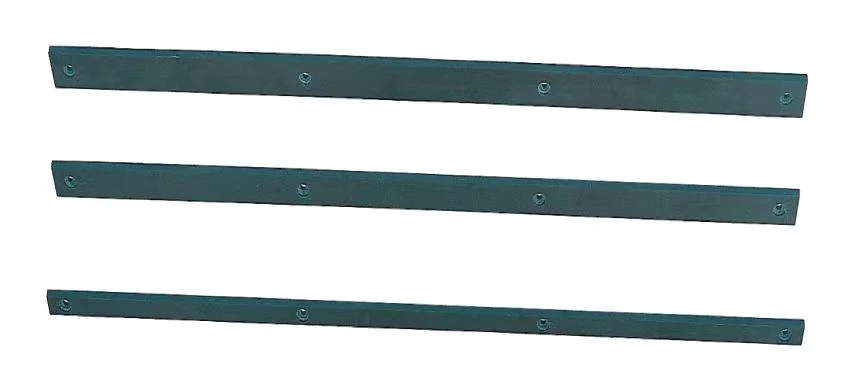
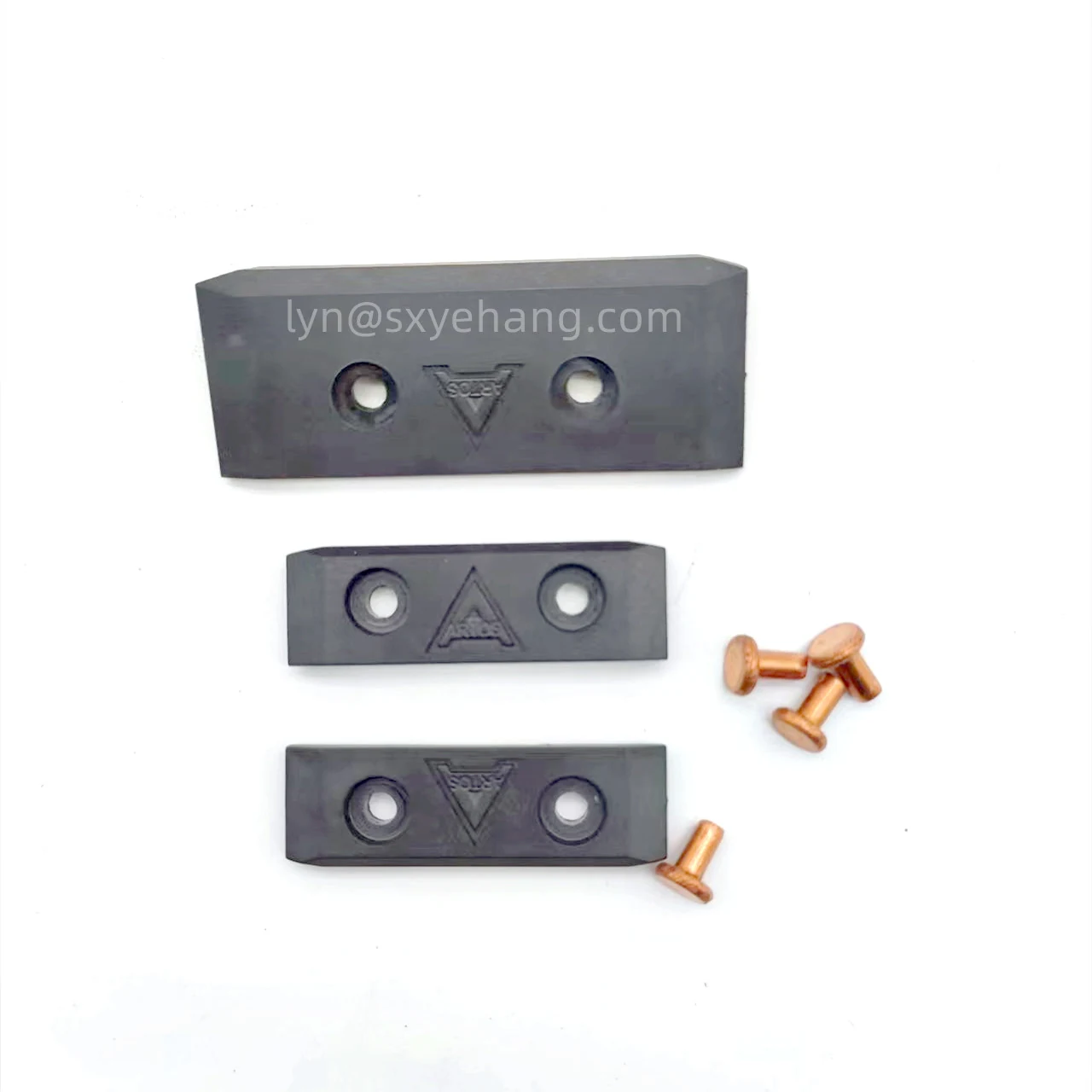
Carbon graphite is self-lubricating in its own right, so a graphite strip carries the chain without an oil film. PEEK brings the same property to the chain side: it is self-lubricating, wear resistant, high temperature resistant, corrosion resistant, low noise and strong. Between them the rail runs dry.
The Case for Lubricated
Lubricated guides are not obsolete. Grease carries higher load than a dry bearing surface, and on a machine running heavy fabric at high tension that matters. The maintenance routine is well understood, and the consumables are cheap.
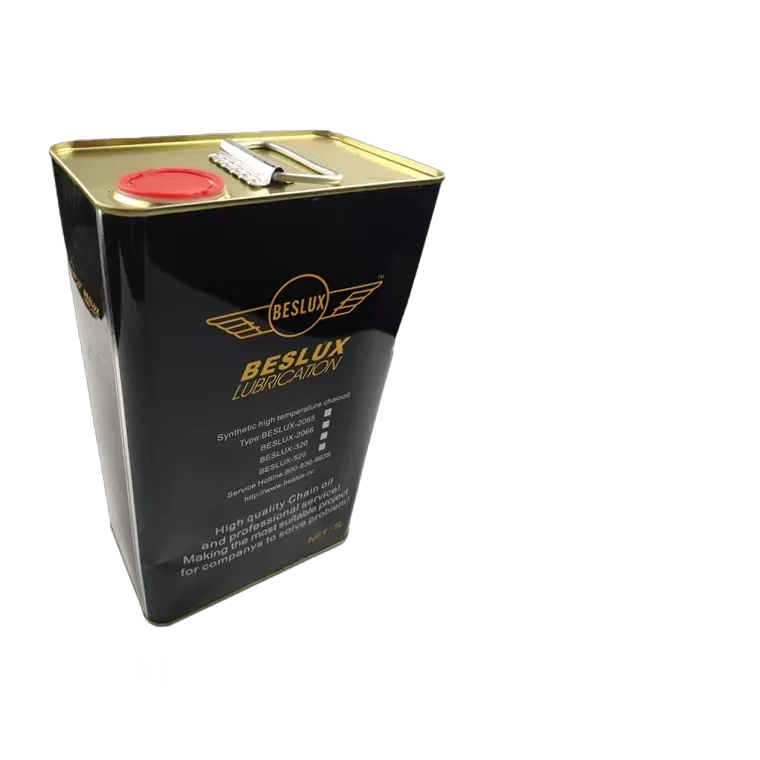
The condition is discipline. Clean the guide and the chain at least once a year, use a high-temperature grease such as DuPont, Miller or Kluber grade, and wipe off any surplus that could reach the fabric. A lubricated guide that is not serviced properly is worse than a dry one.
How to Tell Which You Have
Look for a lubrication system feeding the rail. If there is one, the guide is lubricated. If the rail runs dry with a graphite strip in the channel, or the chain carries PEEK sliders, it is oil free.
If you are not sure, photograph the rail channel and a chain link and send them to us. It takes a minute to settle and it prevents ordering the wrong chain.
Converting From One to the Other
Mills do convert, usually from lubricated to oil free, and usually because of contamination risk rather than maintenance cost. It is not a chain swap: converting means changing the guide as well as the chain.
Ask us to quote the whole conversion rather than the chain alone. Half a conversion performs worse than either arrangement done properly.
Related: Complete Stenter Rail Rebuild
Related Categories Industries and Solutions
More From the Knowledge Centre
The Major Textile Machinery Exhibitions Around the World
ITMA, ITME India, ITMA ASIA, Techtextil, SIMATEX and SaigonTex. Where the finishing industry meets, and what a spare parts buyer actually gets out of going.
Read Guide
How to Choose a Stenter Spare Parts Factory
What to ask a supplier before the first order, from material specification to how they pack a rail set, and which answers should make you walk away.
Read Guide
How to Import Stenter Spare Parts From China
Identifying parts without part numbers, proving the fit before a batch, and what a 7 day lead time does and does not mean.
Read GuideQuestions About This Guide
How do I know if my guide is oil free or lubricated?
Look for a lubrication system feeding the rail. A dry rail with a graphite strip in the channel, or a chain with PEEK sliders, is an oil-free guide.
Can I fit an oil-free chain to a lubricated guide?
You can fit it, but it will not last. The two builds are specified differently. Tell us which guide you run and we supply the right chain.
What does with grease or without grease mean on your chain listings?
Whether the chain is supplied pre-greased for a lubricated rail or dry for an oil-free guide.
Is it worth converting to oil free?
Usually for contamination reasons rather than cost. Grease near fabric is a risk, and a contaminated batch costs far more than a rail. Converting means changing the guide as well as the chain.
Put This Into Practice
Send a photo of the part with a ruler across the mounting and we will tell you what you are looking at and what it will cost to replace.