
- Composter-News
Biodegradable vs. Non-Biodegradable: Understanding the Environmental Impact
The choice between biodegradable and non-biodegradable materials has become paramount in a world increasingly concerned with environmental preservation. This article aims to delve into the intricacies of biodegradable versus non-biodegradable materials, shed light on compostable versus biodegradable packaging, and explore the role of food waste converters in sustainable waste management.
- Understanding Biodegradable and Non-Biodegradable Materials
What makes a material biodegradable?
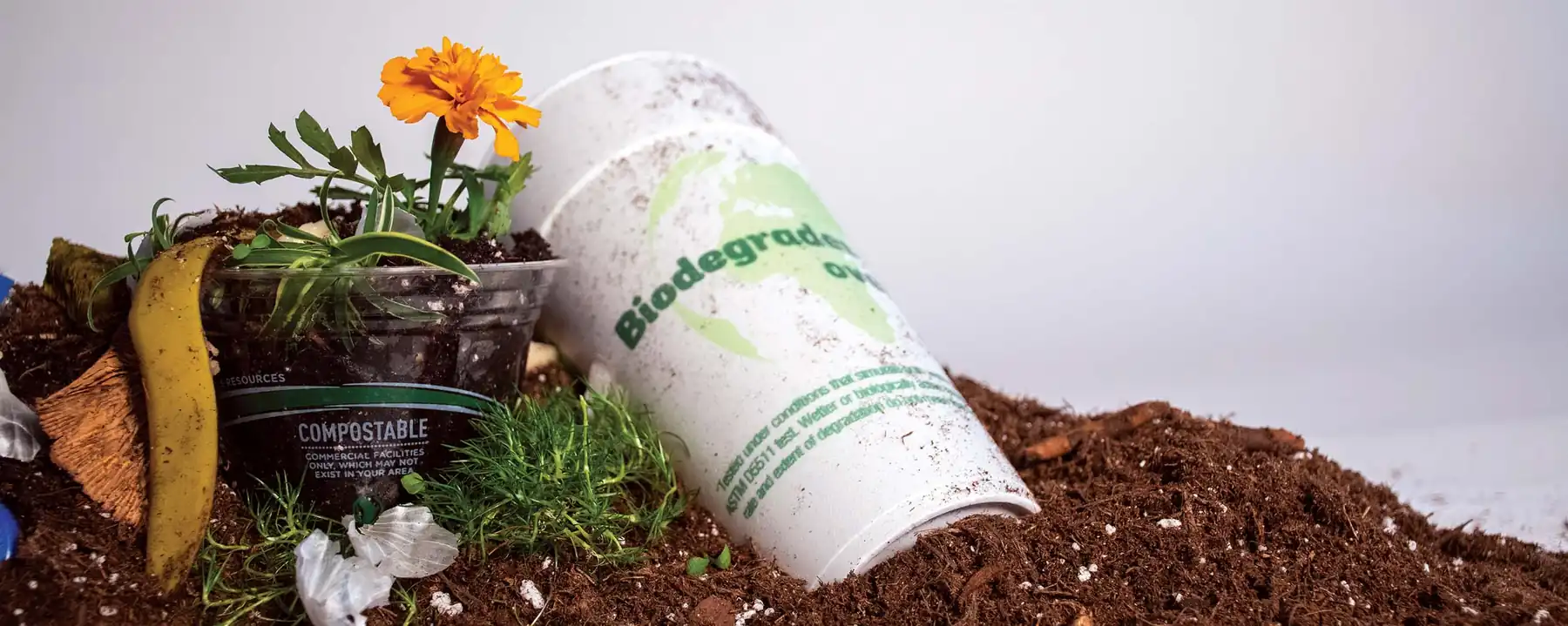
Biodegradable materials are those capable of decomposing naturally over time, thanks to the action of microorganisms such as bacteria or fungi. These materials break down into simpler, non-toxic substances, leaving minimal or no trace behind.
The problem with non-biodegradable materials
Non-biodegradable materials do not readily decompose, remaining in the environment for extended periods, potentially lasting hundreds to thousands of years. Plastics, for instance, are notorious for their non-biodegradable nature, posing a significant threat to ecosystems and wildlife.
- Environmental Impact of Biodegradable vs. Non-Biodegradable Materials
Pollution and waste accumulation
Non-biodegradable materials contribute to pollution and waste accumulation, particularly in landfills and oceans. Plastic waste, in particular, has reached alarming levels, leading to widespread environmental degradation and harm to marine life.
Effects on ecosystems
The accumulation of non-biodegradable materials can disrupt ecosystems and natural processes. From soil contamination to water pollution, the consequences of non-biodegradable waste extend far beyond mere visual pollution.
- Food Waste Converters: A Sustainable Solution
Introduction to TMK Equipment
TMK Equipment stands at the forefront of sustainable waste management solutions, offering innovative technologies to tackle organic waste effectively.
Overview of TMK Composter
TMK Composter is an automated biomechanical composting system that harnesses eco-friendly microorganism-based technology. Ranging from TMK-1 to TMK-5000, this composting solution converts segregated organic waste into nitrogen-rich compost, reducing its volume by almost 80%.
- The Role of Food Waste Converters in Environmental Conservation
Reduction of waste in landfills
Food waste converters play a crucial role in diverting organic waste from landfills, thereby reducing the burden on waste management infrastructure. By converting organic waste into compost, these machines contribute to the circular economy and promote resource efficiency.
Production of nutrient-rich compost
One of the primary benefits of food waste converters is the production of nutrient-rich compost, which can be used to enrich soil and support sustainable agriculture. This compost serves as a valuable resource, replacing chemical fertilizers and closing the nutrient loop.
Summary
Deciding between biodegradable and non-biodegradable materials carries significant environmental consequences for long-term sustainability. Compostable packaging offers a promising alternative to traditional plastics, while food waste converters provide a sustainable solution to organic waste management. By embracing these technologies and practices, businesses and individuals alike can contribute to a greener, more sustainable future.