
Commercial On Site Composting
Treating food waste where it is produced removes collection frequency, haulage distance and landfill gate fees from the cost model.
Get A Custom Solution
Where The Problems Are And How They Are Solved
Each stage below is a place where on-site composting projects usually go wrong, and what TMK does about it.
Measure
Problem. Sites buy capacity based on bin counts rather than weight, and end up queueing waste.
How we solve it. We size from measured daily kilograms and the peak service day, not the average.
Site
Problem. The only available space is often indoors or next to occupied areas.
How we solve it. Deodorizers and biofilters are part of the machine, and models like the TMK-200 run at 20 dB with no drainage connection.
Integrate
Problem. Kitchen staff cannot be expected to segregate waste perfectly.
How we solve it. 100% segregation may not be required on several models, and we set realistic input rules at handover.
Load
Problem. Manual lifting at hundreds of kilograms a day is an injury exposure.
How we solve it. Auto doors and automatic bin lifters are available on the larger commercial machines.
Operate And Report
Problem. Sustainability reporting needs numbers, not intentions.
How we solve it. Volume reduction is 80 to 90% and in-vessel models record process conditions in memory.
Equipment In This Solution
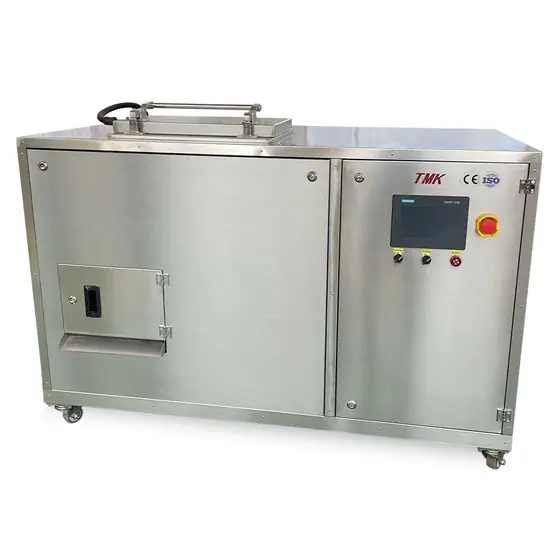
TMK-50 Kitchen Compost Machine
50 kg/day kitchen composter with a 70C hygienization stage
50 kg/dayDetails →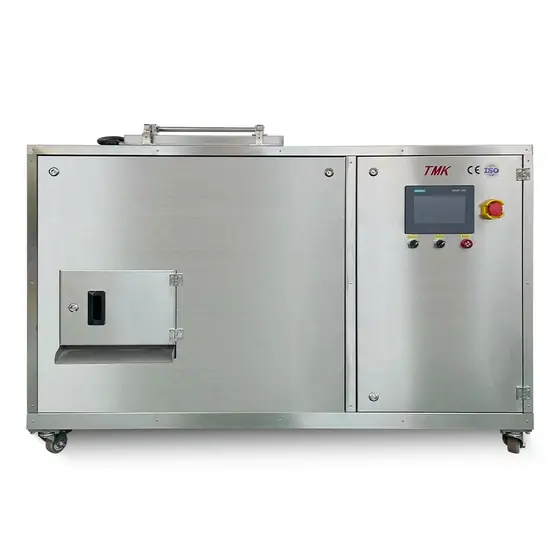
TMK-100 Food Waste Compost Machine
100 kg/day composter producing compost with over 80% organic matter
100 kg/dayDetails →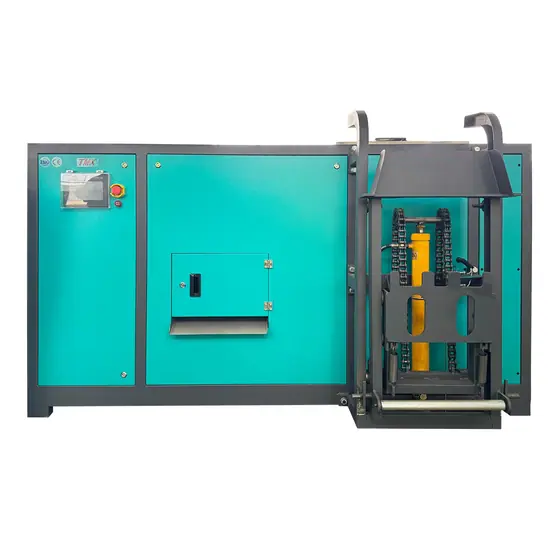
TMK-200 Kitchen Waste Compost Machine
200 kg/day PLC composter running at 20 dB in SS 304
200 kg/dayDetails →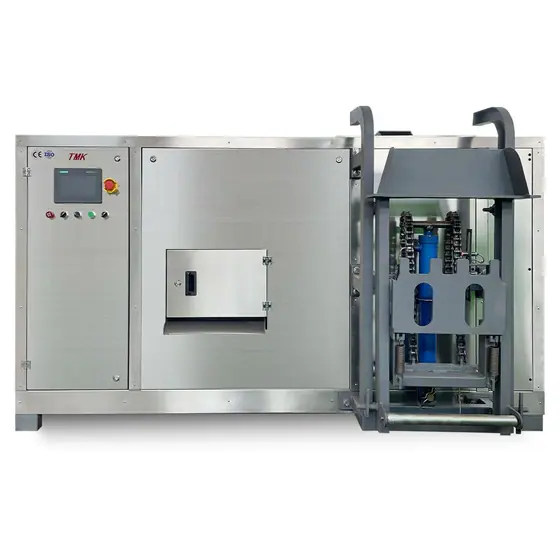
TMK-300 Organic Waste Compost Machine
300 to 320 kg per cycle composter in SS 304 with ceramic heating
300 kg/dayDetails →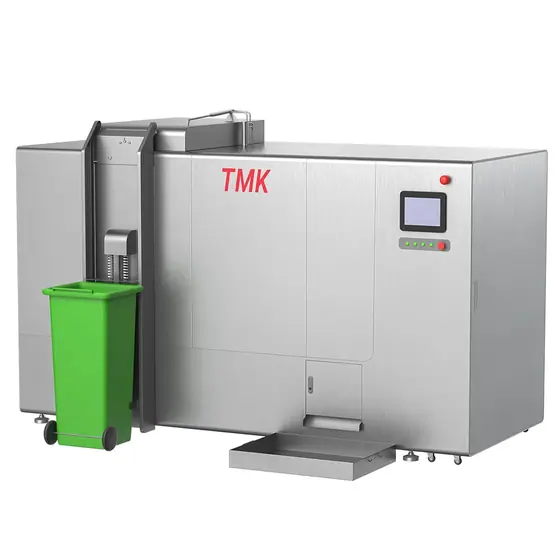
TMK-500 Waste Compost Machine
500 kg/day PLC waste composter with an inbuilt biofilter
500 kg/dayDetails →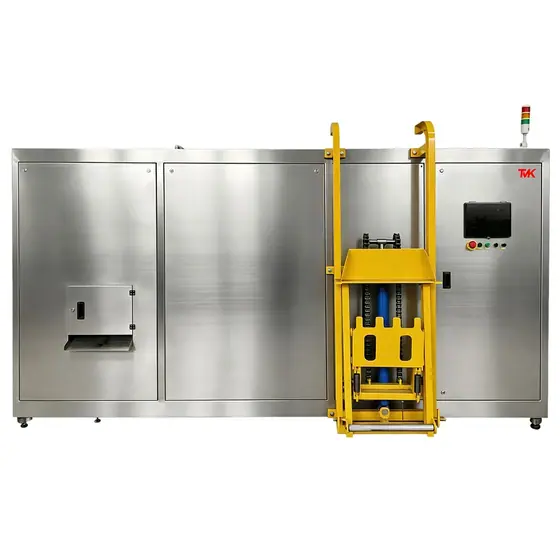
TMK-1000 Commercial Compost Machine
1000 kg/day commercial composter with humidity-triggered heating
1000 kg/dayDetails →Commercial On Site Composting Questions
How is the right machine size decided?
From measured daily kilograms and the peak day. TMK composters are designed to handle 20% excess material; beyond that the compost will not be fully cured and odour becomes likely.
What consumables does the process need?
Dry sawdust and bacterial enzyme culture. Dry garden waste can replace sawdust, although a larger quantity is needed.
How often does the microbe culture need replacing?
We recommend replenishing the microbes on an annual basis to keep the strength of the culture up.
Does the process need a water or drain connection?
No. TMK composters do not require a sewer hook-up because the steam generated during composting is extracted and absorbed by the deodorizers.
How long before the compost can be used?
The output can be used immediately, although a further curing period of two to four weeks is recommended before wider application.
Plan Commercial On Site Composting For Your Site
Send the daily volume, the site type and any space constraints. We will lay out the equipment, the consumables and the price.