
How to Read a Motor Roller Model Code
Every dimension you need to order a motor roller is already in the model code. Here is how to read one from left to right.
A Worked Example
Take the code DG50-AS-3PH380V-265L-10M-S3-DS. Each block is a decision you make when specifying the roller.
| Block | Meaning |
|---|---|
| DG50 | Alternating current, 50 mm tube diameter, 1.5 mm tube thickness |
| AS | Standard type. ASs is the short type, AU the accumulation type |
| 3PH380V | Three phase 380 V. Alternatives are 3PH220V and 1PH220V, 50 Hz |
| 265L | Tube face of 265 mm |
| 10M | Rated speed of 10 m per minute |
| S3 | SUS304 tube. S2 is SUS201, X galvanized, G chrome plated, J NR coating, P PU coating |
| DS | Double sprocket drive end |
Choose the Tube Face First
Tube face is the working width of the roller and is fixed by your product width and conveyor frame. It cannot be changed later without changing the frame, so it is decided before speed, coating or drive end.
Diameters of 50, 57, 60 and 76 mm are standard, and larger sizes are made to order.
Speed and Pulling Force Move in Opposite Directions
Within one motor size, a faster rated speed means lower tractive force and lower torque. The published tables for the AS standard type at 22 W show this clearly: at 1.8 m per minute the tractive force is 321 N, at 10.2 m per minute it is 59 N, and at 39.5 m per minute it is 15 N.
The practical rule is to select the slowest speed that still meets your throughput, because everything else — how many idlers the roller can slave, how heavy a carton it can start — improves as speed comes down.
Type: Standard, Short or Accumulation
AS standard suits ordinary transport. ASs shortens the motor section where the frame is tight at one end. AU adds an internal clutch so the roller can keep turning while product accumulates on top of it, which is what allows a line to queue product without back pressure.
Surface and Drive End
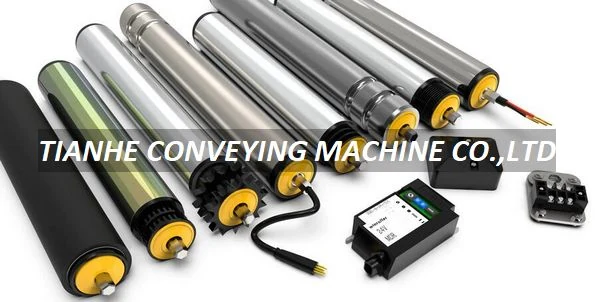
The tube surface is chosen for grip and environment: galvanized or chrome for general use, PU or NR coating to lift friction on light cartons, SUS304 or SUS201 where the roller is washed down.
The drive end decides how the roller passes motion to its neighbours: sprocket, poly-V pulley, V pulley, timing pulley or O groove. Special requests also cover brake and waterproof versions.
Components referenced in this guide
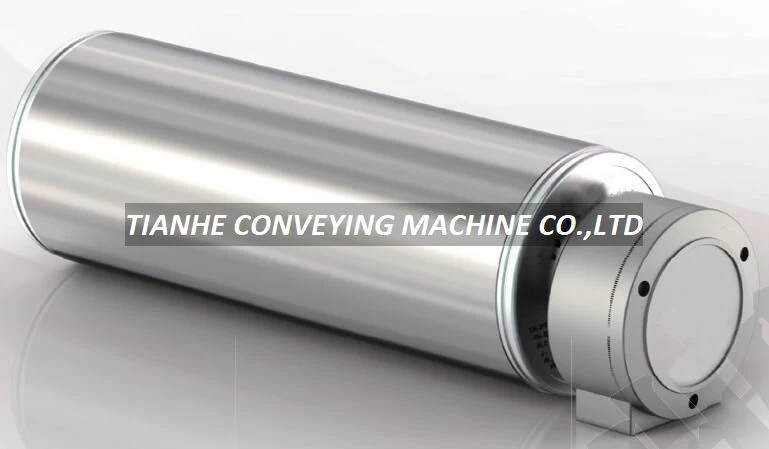
DM216 Belt Conveyor Oil Cooling Motor Roller
Material: carbon Steel & Galvanized and painting…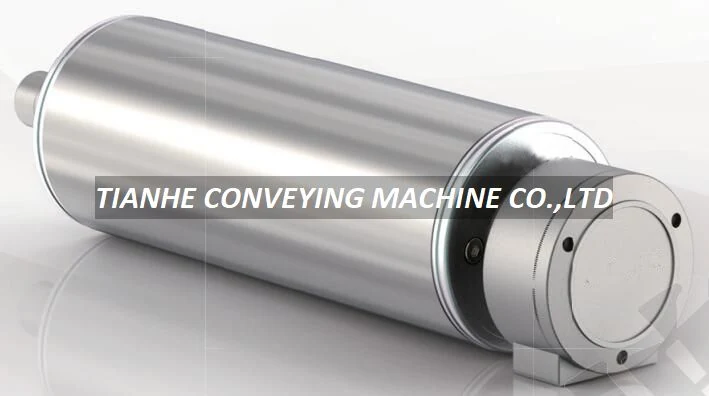
DM165 Belt Conveyor Oil Cooling Motor Roller
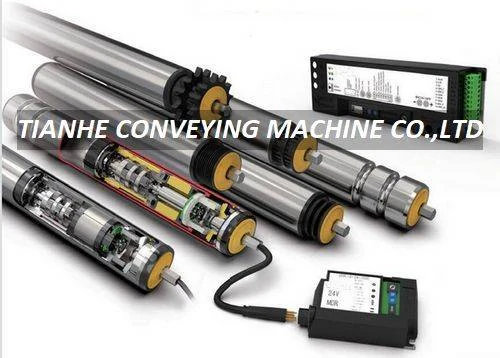
Diameter 60mm AC Motor Roller
Material: mild steel & galvanized, mild steel &…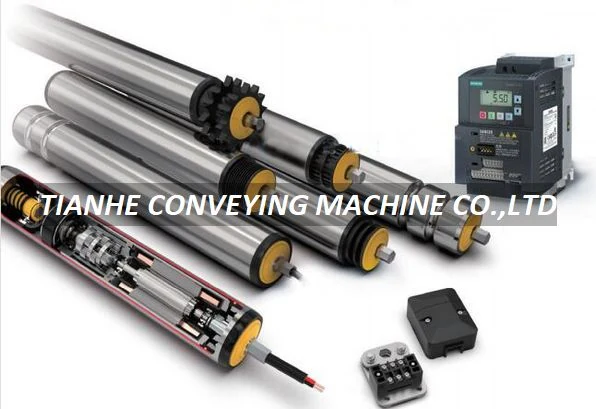
Diameter 50mm AC Motor Roller
Material: mild steel & galvanized, mild steel &…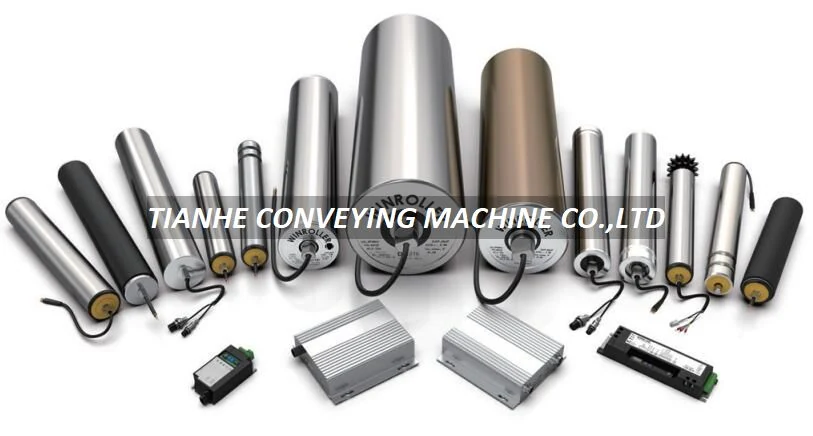
Diameter 60 Mm 76mm Direct Current 24V/48V High Torque Motor Roller
24v/48v Direct Current Brushless Gear Reduction Rubber Coated Motor Roller
Motor Power: 40WFrequently Asked Questions
What supply voltages are available?
Three phase 380 V, three phase 220 V and single phase 220 V at 50 Hz on the AC family; 24 V and 48 V on the DC brushless family.
Can the same roller drive the idlers beside it?
That is what the sprocket, poly-V, V pulley, timing pulley and O groove drive ends are for. How many idlers depends on the tractive force at your chosen speed.
Still not sure which model fits?
Send the load, dimensions and environment and we will point to the right family.