
Chain Poly-V or O-Belt Drive Between Rollers
Once one roller in a zone is powered, the rest are slaved to it. Three drive profiles do that job, and they fail in different environments.
Sprocket and Chain
The most tolerant of dirt, oil and swarf, which is why chain survives in workshops, machining areas and foundries where belts would slip or clog. It is also the loudest, needs lubrication that can contaminate product, and takes longer to change.
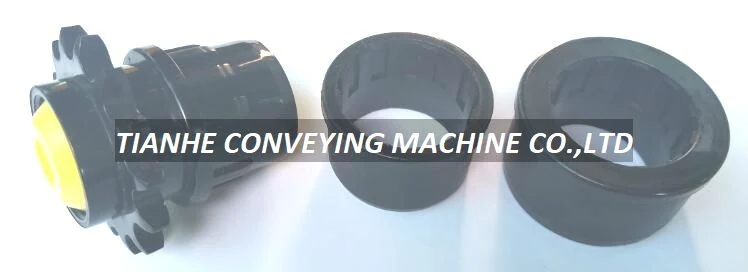
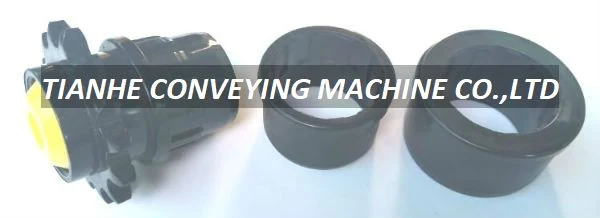
Single sprocket caps pass drive to the next roller only. Double sprocket caps — for example an 08B 14-tooth cap on a 12 mm shaft — receive and pass on drive, which is what a long chain-driven group needs at every roller.
Poly-V
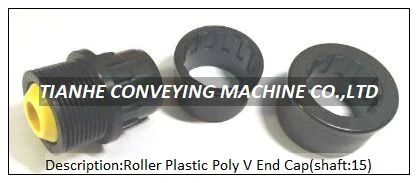
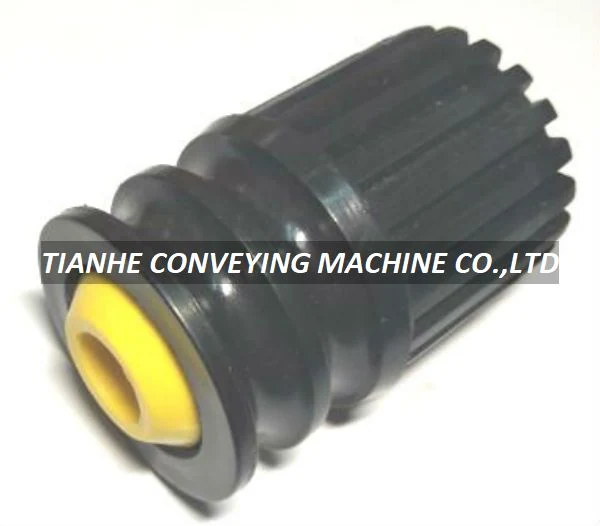
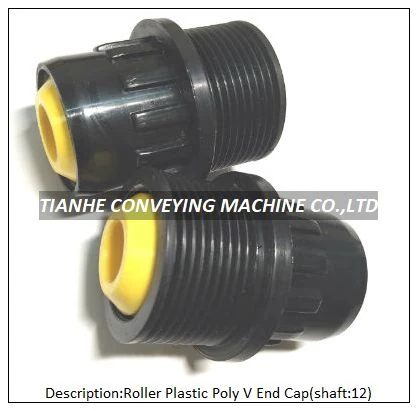
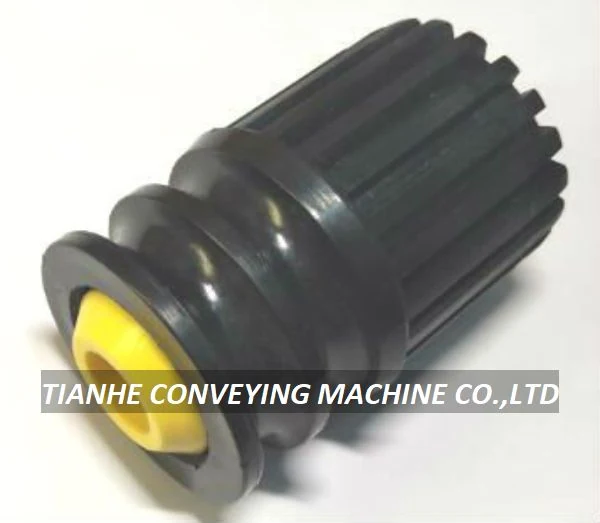
A flat ribbed belt such as a 3PJ336 running in a multi-rib pulley profile moulded into the end cap. More ribs mean more grip than a single round belt, so poly-V carries real drive torque while staying quiet and needing no lubrication. It is the common choice in packing halls and parcel lines.
Match the rib count on the cap to the belt: a 3-rib PJ profile takes a 3PJ belt. Tension only enough that the belt does not slip — over-tensioning loads the roller bearings and shortens their life.
O-Belt
A round elastic belt dropped into grooved end caps. It tensions itself, needs no tools to change and is the easiest drive for a line operator to maintain. It carries the least torque of the three, so it belongs on light carton and tray zones and short slaved groups.
Because the belt provides its own tension, roller pitch has to sit inside the belt's stretch range, which makes pitch part of the order rather than an afterthought.
Choosing Between Them
Start with the environment: oily or abrasive goes to chain. Then the load: heavy cartons go to poly-V or chain, light ones can take an O-belt. Then the people: if line operators will change belts themselves, O-belt and poly-V win over chain. Keep one profile across a whole group — mixing tooth counts or rib counts in one run does not work.
Components referenced in this guide
Frequently Asked Questions
Can I convert a chain-driven group to poly-V to cut noise?
Yes, by changing the end caps in that group to a poly-V profile and matching the belt to the roller pitch. It is a common retrofit in packing halls.
How tight should a poly-V belt be?
Only tight enough not to slip under full load. Extra tension goes straight into the roller bearings.
Still not sure which model fits?
Send the load, dimensions and environment and we will point to the right family.