
Designing a Carton Flow Lane With Roller Track
Roller track gives you a flow lane for a fraction of the weight and cost of full-width roller conveyor, provided wheel pitch, material and slope are set against the actual carton.
Why Rail Instead of Full-Width Conveyor
A pick face does not need a conveyor across its whole width. Two rails of wheels under the carton edges deliver the same flow at a fraction of the weight, cost and installation time, and they can be cut to the rack depth on site.
Wheel Pitch Comes From the Shortest Carton
Set the pitch so at least three wheels are always under the shortest carton in the lane. Any wider and small cartons drop between wheels, stall and block the lane behind them. It is worth measuring the smallest SKU that will ever go into the lane rather than the typical one.
Wheel Material Comes From the Load and the Surface
Plastic wheels are quiet, do not corrode and will not mark a printed carton, which covers most pick faces. Metal wheels, including cutting-bearing types, are for heavy, hot, sharp-based or abrasive loads that would split a moulded wheel.
The rail itself is normally formed steel in both cases; an all-plastic rail flexes between supports and the lane sags.
Lane Width and Guides
Two rails under the carton edges is the standard arrangement. Wide or flexible bases need a third rail down the centre. Side guides keep cartons square to the lane, which matters more as lanes get longer and slopes get shallower.
Slope Is Set On Site
Slope is commissioned, not calculated from a catalogue: it is adjusted until the carton flows at a controlled pace, then checked with the lane both full and nearly empty, since the last carton behaves differently from the first. Long lanes are often staged, with a shallower final section or brake wheels before the pick face.
What to Hold as Spares
A lane stops because of one seized wheel. Keep wheels and end caps for the rail types you run, and identify drive belts and caps by their printed code so replacements match exactly.
Components referenced in this guide
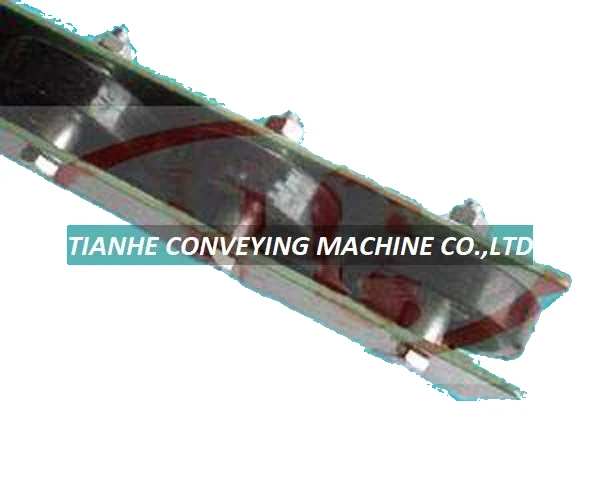
Roller Wheel & Roller Track
66 models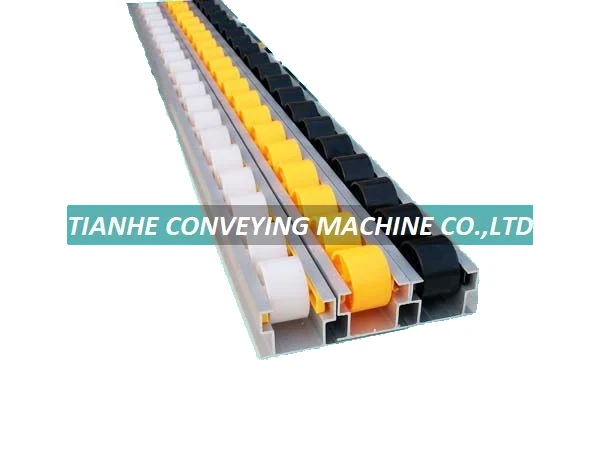
Plastic Roller Track
12 modelsMetal Roller Track
21 models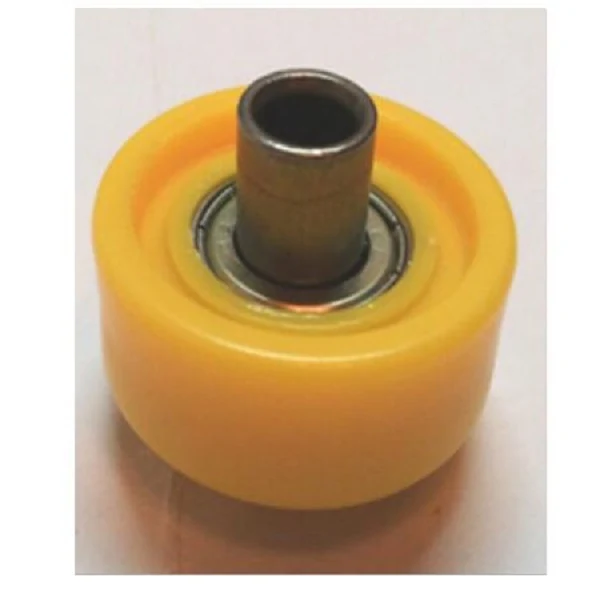
Plastic Roller Wheel
16 modelsRubber Coating Metal Wheel Conveyor W-45RS
Load Capacity: 10kgs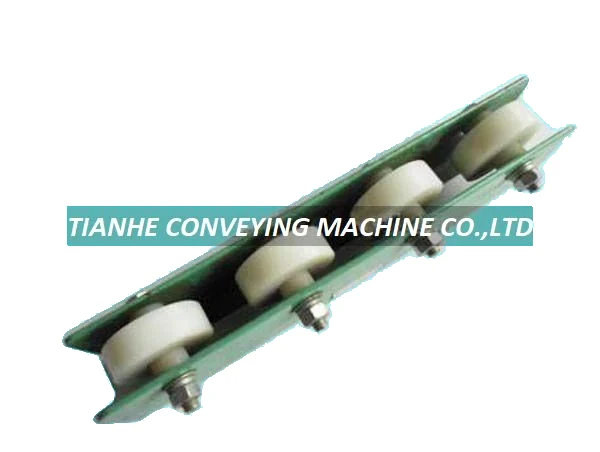
PU Coating Metal Roller Rail W-40PU
Load Capacity: 30kgsAluminum Frame Plastic Roller Rail W-38GB
Material: Carbon Steel, rubber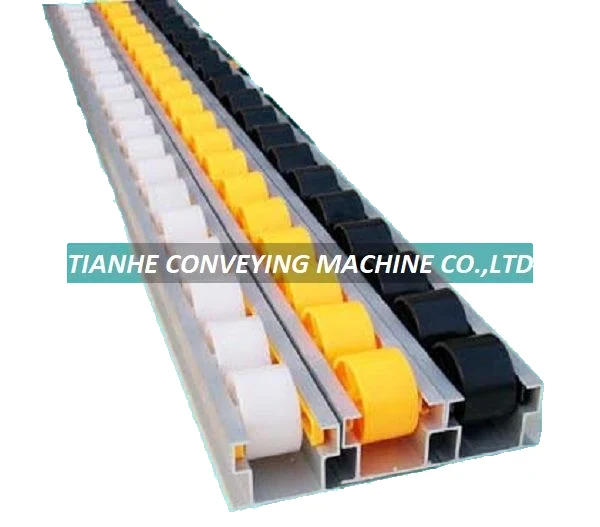
Aluminum Frame HIPS Roller Track W-38GA
Material: Carbon Steel, rubberPlastic Roller Wheel with Metal Bearing GA-01-04
Material: Carbon Steel, rubber Tianhe Conveying…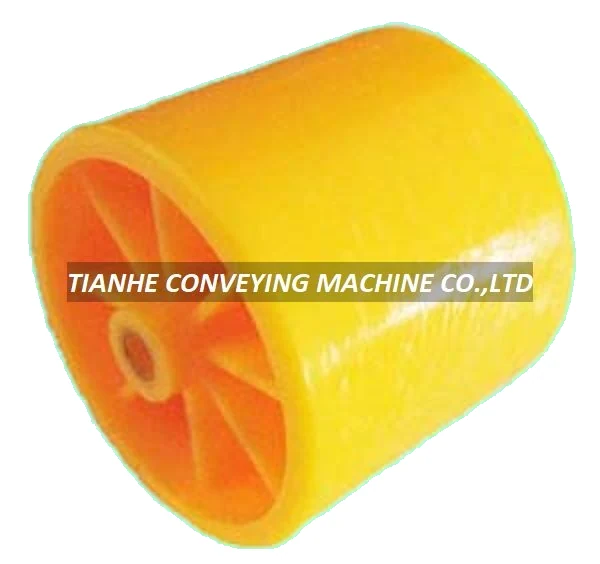
HIPS Roller Wheel W-38G
Material: Carbon Steel, rubberFrequently Asked Questions
How do I know the wheel pitch is right?
Put the smallest carton in the lane and check that three wheels are under it at every point, including at the joins between rails.
Can roller track be cut on site?
Rails are supplied in standard lengths and are commonly cut to suit the rack depth during installation.
Still not sure which model fits?
Send the load, dimensions and environment and we will point to the right family.