
Ball Transfer Units
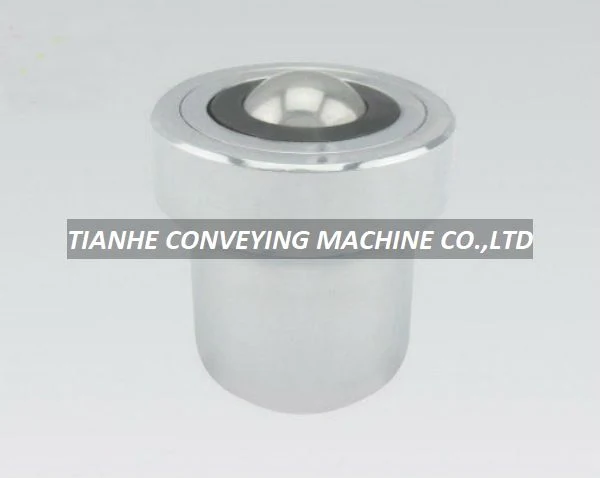
A ball transfer unit turns a fixed work surface into an omni-directional one: a large load ball rides on a bed of smaller support balls inside a housing, so an operator can push, spin and align a package in any direction without lifting it. Tianhe builds the full range in one factory — pressed steel, machined steel, stainless and nylon bodies, flange mount, press mount, bolt-down and stud mount, from light fixture balls up to heavy machined units for die and mould handling.
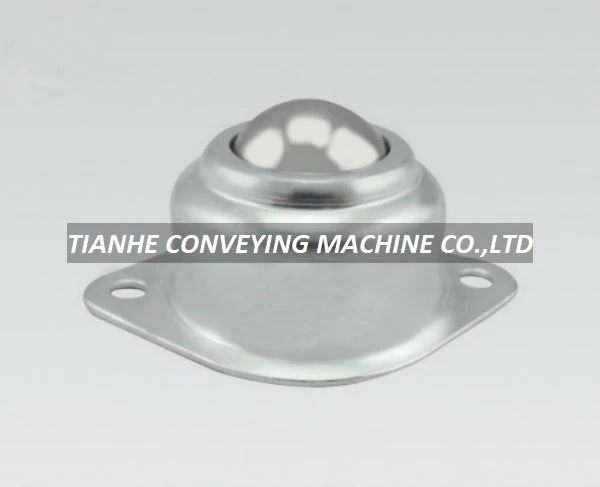
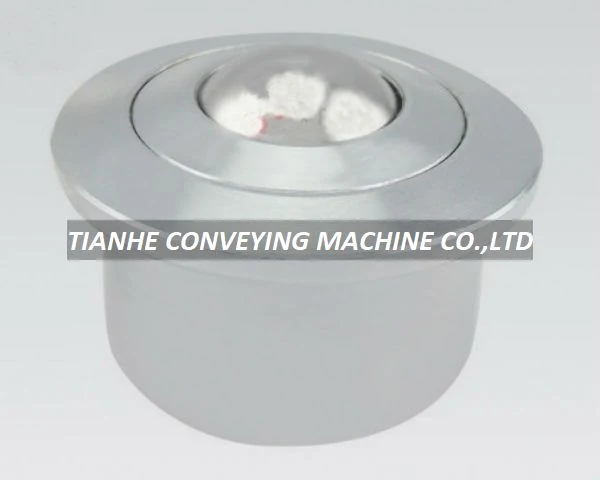
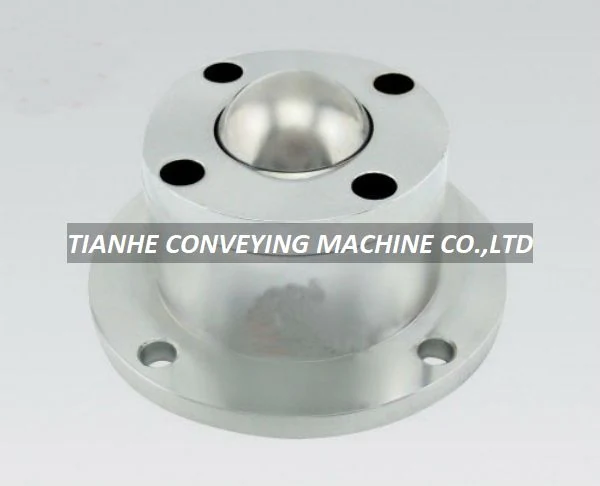
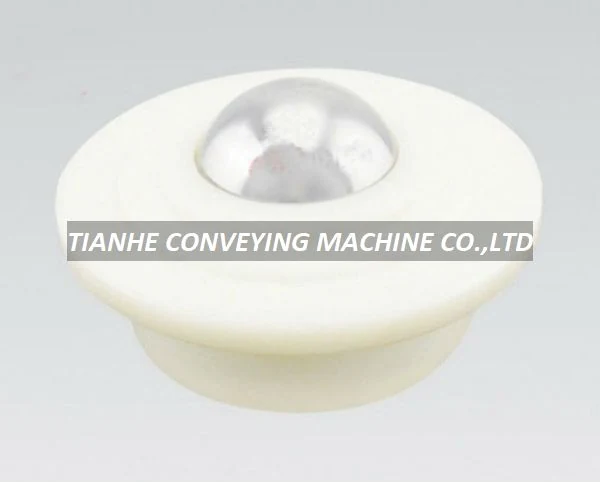
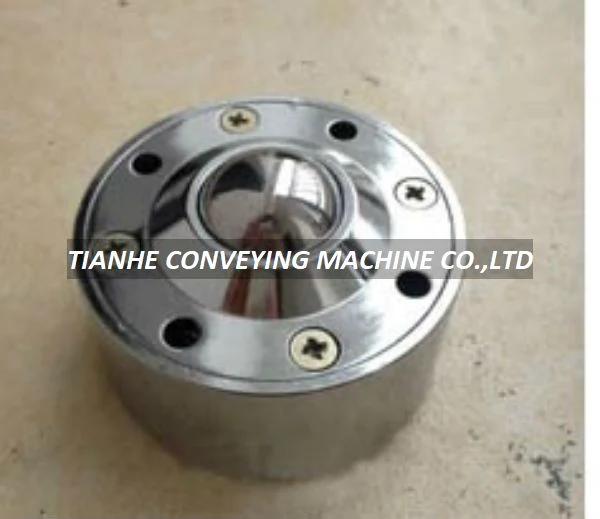
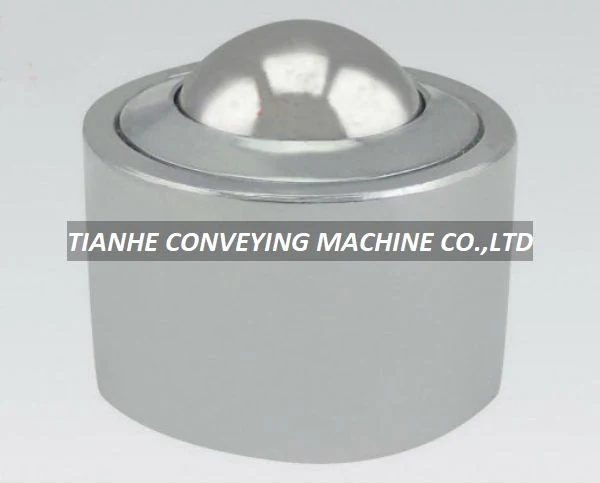
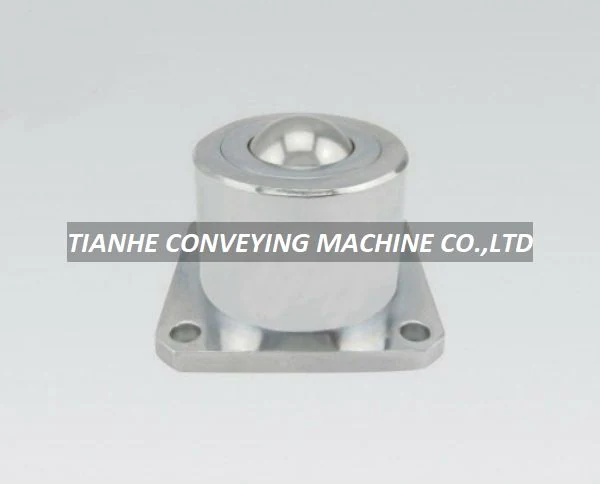
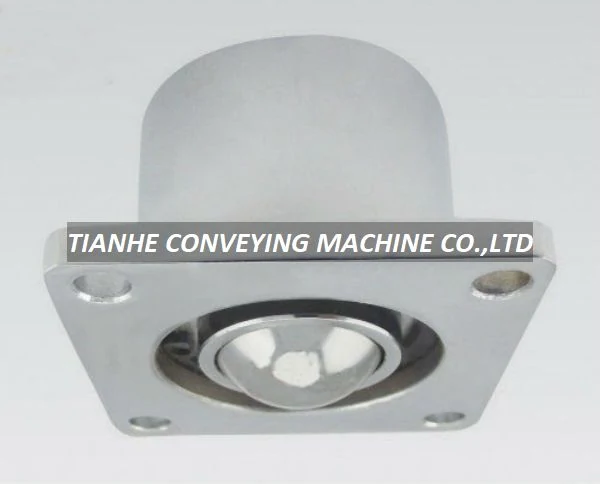
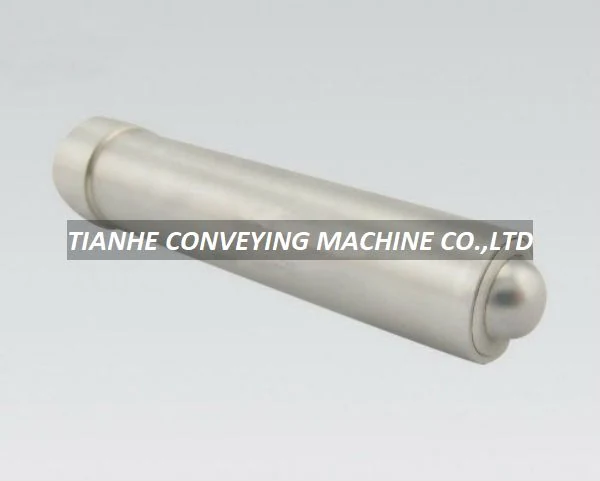
Ball Transfer Unit models listed directly in this group
The problem this group solves
Transfer plates, ball tables and end-of-line diverters fail in one of two ways: the ball seizes because dust and wash-down water reach the support bed, or the housing spreads under impact from a forklift drop. Choosing body material, mount style and rated load against the real impact case — not the static weight — is what keeps a ball table running.
How to choose
Work from the load case: divide package weight by the number of balls actually in contact, then multiply by an impact coefficient — 1 for hand placement, 1.5 to 2 when a forklift sets the load down, up to 3 for hoist or shoulder loading. Match body material to the environment: galvanized or chrome-plated steel indoors, stainless for wash-down and food contact, nylon where the conveyed surface must not be marked.
Typical applications
- Ball transfer tables at the end of roller conveyor lines, so operators can rotate and align cartons by hand
- Transfer plates between two conveyor directions where a powered turntable is not justified
- Die, mould and fixture handling on press shop and tool room benches
- Sheet metal, glass and panel feeding on cutting and inspection tables
Where Ball Transfer Unit is specified
Warehousing and Distribution
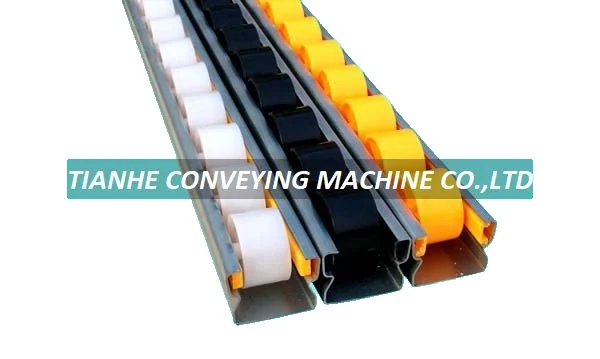
Pick faces, dispatch lanes and truck loading runs built from flow track, gravity rollers and ball transfer plates.
IndustryAirport and Baggage Handling
Check-in ball transfer plates, belt conveyor drum motors and transfer sections for baggage lines.
SolutionBall Transfer Tables and Transfer Plates
Laying out a ball table so an operator can rotate and align a load with one hand, and so the units survive the way the load arrives.
Selection GuideBall Transfer Unit Mounting Styles Explained
Flange, press, bolt-down, stud and downward mounts are not interchangeable. The plate you have usually decides which one you can use.
Frequently Asked Questions
How do I mount a ball transfer unit?
Flange mount units bolt to the top of the plate through a drilled flange; press mount units drop into a punched hole and are retained by the shoulder; stud and bolt-down units thread through the plate from underneath. The mount style you can use is usually decided by the plate thickness and whether you can reach the underside.
Can ball transfer units be used upside down or sideways?
Downward and side-facing models are built for it — the IK and UK series in particular. A standard upward-facing unit relies on the load to keep the ball seated, so it should not be inverted.
Need ball transfer unit quoted?
Send the model numbers and quantities; we reply with price, lead time and drawings.