
Gravity Flow Lanes and Pick Faces
Building a carton flow lane from rail, wheels and roller bearings that keeps moving for years.
The problem
A flow lane has one job: deliver the next carton to the picker's hand at a speed a person can catch. Lanes fail by stalling (too little slope, too much roll resistance) or by running away (too much slope, nothing holding speed).
How the specification is built
Define the load
Carton base size, weight and base material. The shortest carton sets the wheel pitch; the heaviest sets the wheel and rail choice.
Choose wheel material
Plastic wheels for cartons, quiet picking and no marking. Metal wheels for heavy, hot, sharp-based or abrasive loads.
Set wheel pitch
Close enough that at least three wheels are always under the shortest carton, so it never drops between wheels.
Set slope and length
Slope is set on site to give controlled flow, then checked at both full and empty lane conditions.
Fix the rail
Rail profile is matched to the rack beam fixing, cut to rack depth and levelled across the lane width.
Plan the spares
Hold wheels and end caps for the lanes you run; a stalled lane is usually one seized wheel.
Groups used in this solution
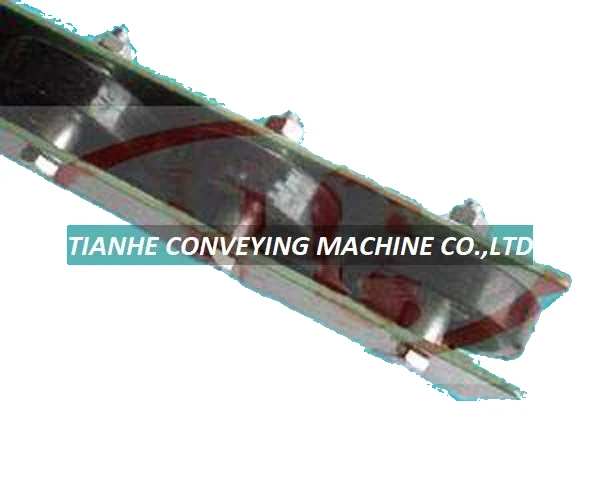
Roller Wheel & Roller Track
66 models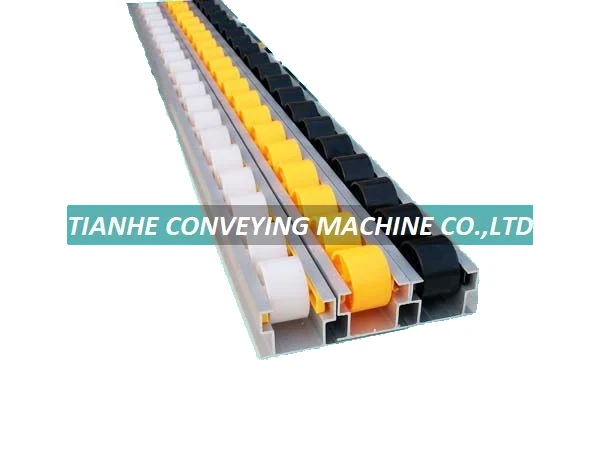
Plastic Roller Track
12 modelsMetal Roller Track
21 models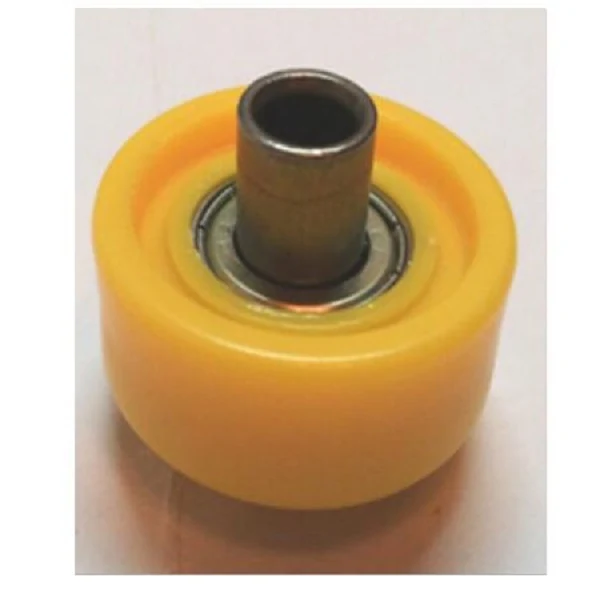
Plastic Roller Wheel
16 models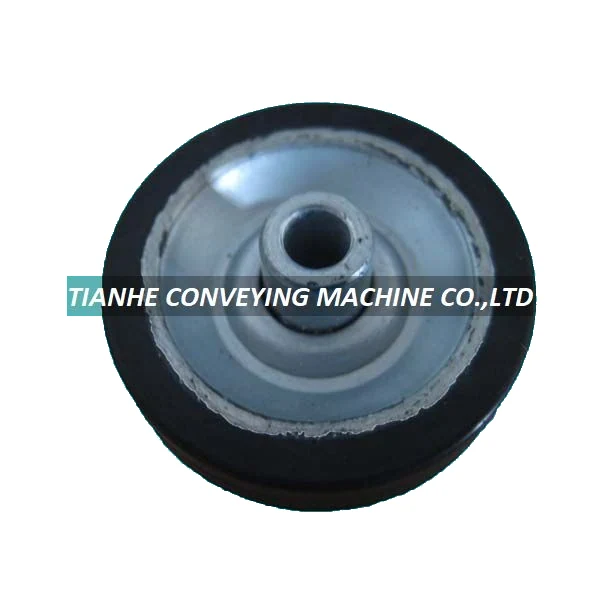
Metal Roller Wheel
17 modelsRubber Coating Metal Wheel Conveyor W-45RS
Load Capacity: 10kgs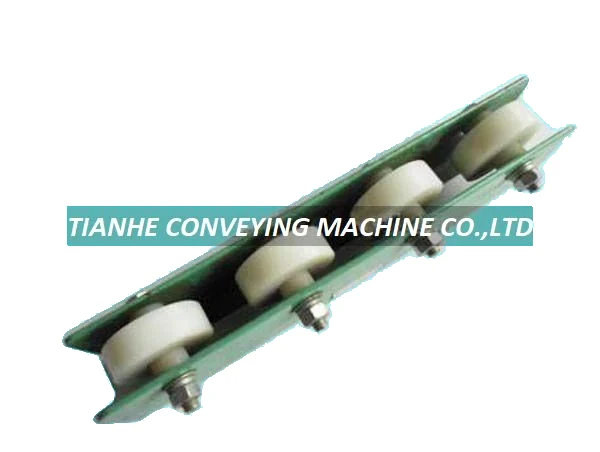
PU Coating Metal Roller Rail W-40PU
Load Capacity: 30kgsAluminum Frame Plastic Roller Rail W-38GB
Material: Carbon Steel, rubber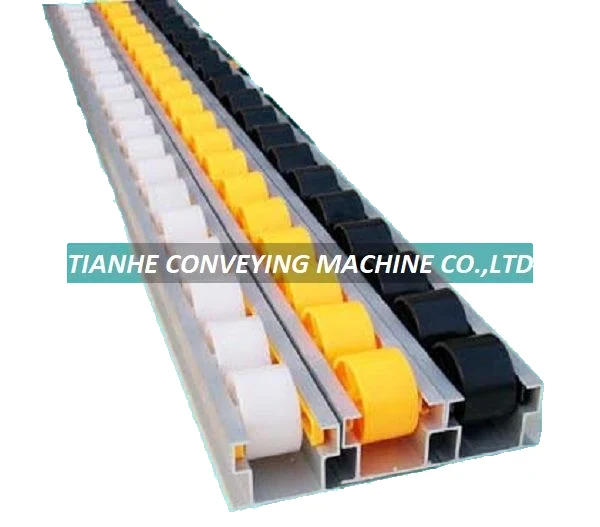
Aluminum Frame HIPS Roller Track W-38GA
Material: Carbon Steel, rubberPlastic Roller Wheel with Metal Bearing GA-01-04
Material: Carbon Steel, rubber Tianhe Conveying…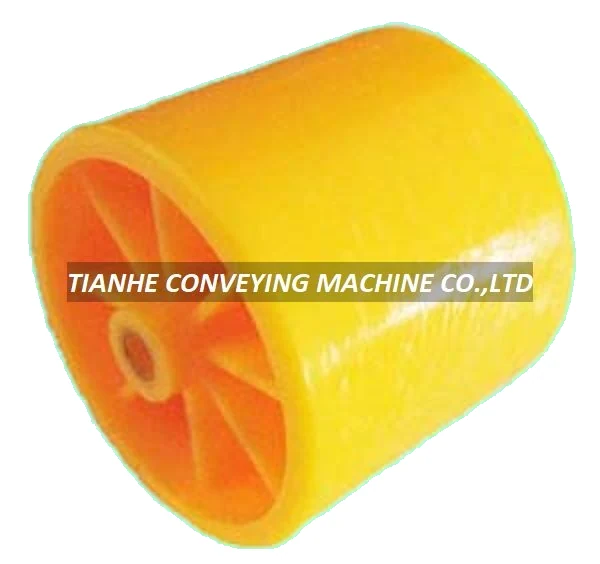
HIPS Roller Wheel W-38G
Material: Carbon Steel, rubberRubber Coating Metal Conveyor Wheel W-45RS
Load Capacity: 10kgs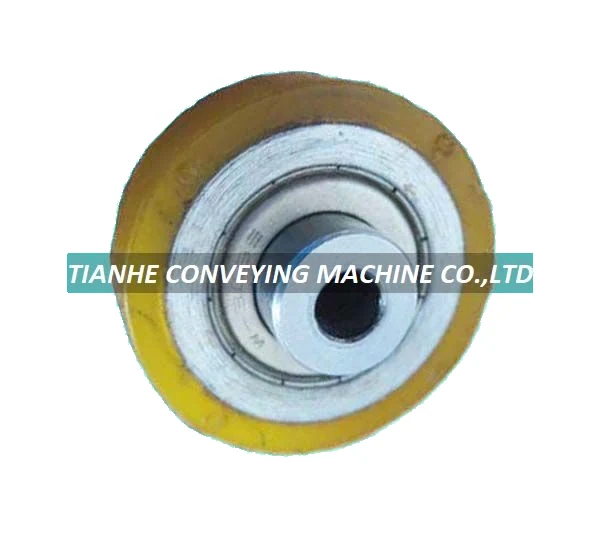
PU Coating Metal Track Roller W-40PU
Load Capacity: 30kgsFrequently Asked Questions
Two rails or three?
Two under the carton edges is standard. Add a third down the centre for wide or flexible bases that would sag between the rails.
What stops cartons accelerating in a long lane?
Reducing slope over a longer run, or fitting brake wheels in the last section before the pick face.
Send us the layout
Give the load, product size and line length and we will specify the components.