
Metal Abrasive Material Guide
Which alloy suits which substrate, based on the density, hardness and chemistry Sukie publishes for each range.
Start With What The Media Is Allowed To Touch
The single decision that matters most is ferrous or non-ferrous. Carbon steel media and steel balls are ferrous. If they hit aluminium, zinc, brass or stainless, they leave iron on the surface. That iron oxidises days later and the plant has to add an acid pickling step to get rid of it.
Sukie states that after processing with stainless steel media the surface is bright with no rust and no discolouration, and that no further acid treatment is needed. That is the practical reason the non-ferrous ranges exist.
The Six Ranges Side By Side
| Range | Size available | Grades |
|---|---|---|
| Stainless steel | 0.05 mm to 2.5 mm | SUS304 · SUS302 · SUS202 · SUS201 · SUS430 · SUS410 |
| Aluminum | 0.6 mm to 3.5 mm | A1070 · A1050 · 5056 · 1100 |
| Zinc | 0.4 mm to 3.5 mm | 0#Zn 99.99% · 45-60 HV · 80-100 HV (shot ball) |
| Copper | 0.3 mm to 3.0 mm | Brass Cu 62% · Red copper Cu 99.9% · 180-250 HV |
| Carbon steel | 0.2 mm to 2.5 mm | New steel wire 30 HRC · Spring wire 45-55 HRC and 55-65 HRC |
| Steel balls | 0.5 mm to 30 mm | AISI 1015 · 1010 · Q235 · G10 to G1000 · 55-62 HRC |
Density And Hardness Decide The Impact
Density sets how much energy a grain of a given size carries. Hardness sets whether it cuts the surface or works it. Aluminium sits at 2.7 g/cm³ and 65 to 125 HV, which is why it suits thin and delicate work. Zinc is 7.1 g/cm³ at 45 to 60 HV, dense enough to break a burr but soft enough not to wear the casting. Copper and brass are 8.6 g/cm³ at 180 to 250 HV. Stainless is 7.4 to 7.9 g/cm³ at 300 to 600 HV. Carbon steel is 7.84 g/cm³ at 30 HRC on new steel wire and 45 to 65 HRC on spring wire.
What Each Range Is Built For
- Stainless steel. Non-ferrous castings, stainless fabrication and any part where iron pick-up is unacceptable. Abrasion resistance 3 to 5 times cast steel shot. See Stainless Steel Shot and Cut Wire.
- Aluminium. Aluminium, zinc and tenuous workpieces, with the obvious white effect. See Aluminum Shot and Cut Wire.
- Zinc. Deburring and deflashing die castings, and advanced electro galvanizing. See Zinc Shot and Cut Wire.
- Copper. Valves, electric fittings and decorative work that must keep its colour. See Copper Shot and Cut Wire.
- Carbon steel. Steel parts, peening gears, bearings and springs. See Carbon Steel Cut Wire Shot.
- Steel balls. Bearings, valves, slides and polishing. See Steel Balls.
Products Referenced
 Stainless steel
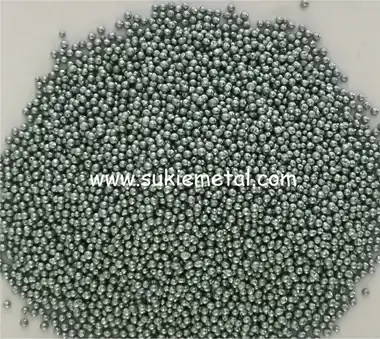
Cast Stainless Steel Shot
Atomized, 0.05 mm to 1.2 mm, SUS304 / 302 / 202 / 201 / 430
Stainless steel
Cast Stainless Steel Shot
Atomized, 0.05 mm to 1.2 mm, SUS304 / 302 / 202 / 201 / 430
 Stainless steel
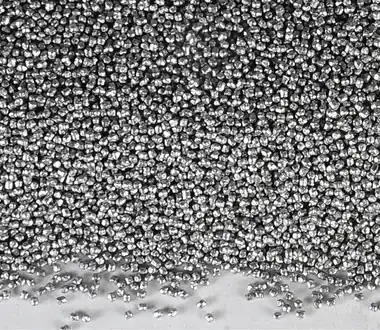
Stainless Steel Shot Conditioned
SUS304 / 302 / 202 / 201 / 430 / 410, 0.2 mm to 2.5 mm, 300-600 HV
Stainless steel
Stainless Steel Shot Conditioned
SUS304 / 302 / 202 / 201 / 430 / 410, 0.2 mm to 2.5 mm, 300-600 HV
 Stainless steel
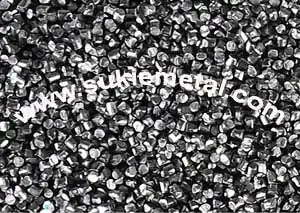
Stainless Steel Cut Wire Shot
SUS304 / 302 / 202 / 201 / 430 / 410, 0.2 mm to 2.5 mm
Stainless steel
Stainless Steel Cut Wire Shot
SUS304 / 302 / 202 / 201 / 430 / 410, 0.2 mm to 2.5 mm
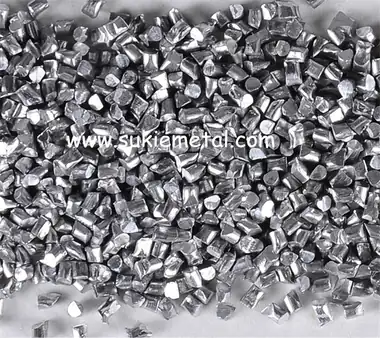 Aluminum
 Cut Wire Shot
A1070 / A1050 / 5056 / 1100, 0.6 mm to 3.5 mm, 65-125 HV
Aluminum
Aluminum Cut Wire Shot
A1070 / A1050 / 5056 / 1100, 0.6 mm to 3.5 mm, 65-125 HVRelated Guides
Frequently Asked Questions
Where do the figures in this guide come from
Every size, hardness, density and chemistry figure is taken from the specification Sukie publishes for its own products, so it matches what would be shipped.
Can you advise on a case that is not covered here
Yes. Send the part material, the current media, the finish you need and the machine type and we will recommend the alloy, shape and grain size.
Do you supply samples
Send the alloy, shape and grain size you want to trial on WhatsApp or by email and we will confirm what we can send.
Talk To Sukie About Your Blast Line
Tell us the substrate, the finish you need and your monthly volume. We will come back with the alloy, the grain size and a price.
Minimum order from 500 kg. Packed 25 kg per bag, 40 bags per pallet. Quotes in USD, terms T/T.