
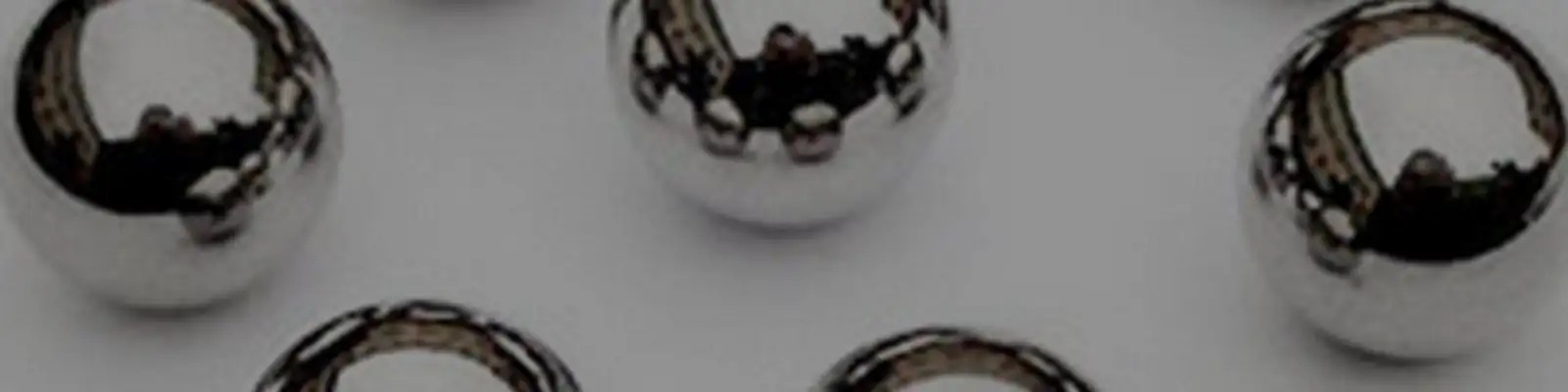
Preventing Iron Contamination on Non Ferrous Parts
Rust spots that appear days after blasting usually come from the media, not the part.
The Symptom
Aluminium or zinc parts leave the blast machine looking clean, and days later carry brown spots. The spots are not the part corroding. They are particles of the media embedded in the surface, rusting.
The Cause
Carbon steel media is iron. Every impact drives a small amount of it into a softer surface. On a steel part that does not matter. On aluminium, zinc, brass or stainless it does.
The Fix
- Switch the alloy. Cast Stainless Steel Shot makes the casting shiny and highlights the metal colour, with no rusting and no discolouration.
- Or go softer still. Zinc Shot is denser than aluminium and softer than steel, so it deburrs without wearing down the surface.
- Or match the substrate. Aluminum Round Shot on aluminium work gives the obvious white effect with nothing foreign left behind.
- Clean the machine down. Residual steel media in the hopper and separator will contaminate the first non-ferrous batch through it.
The Step You Get Back
With stainless media the surface is bright after processing and no further acid treatment is required. That removes the pickling tank, the chemistry and the effluent from the process.
Products Referenced
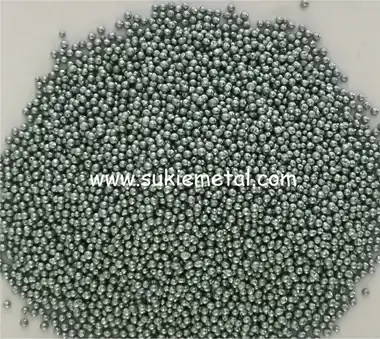 Stainless steel
Cast Stainless Steel Shot
Atomized, 0.05 mm to 1.2 mm, SUS304 / 302 / 202 / 201 / 430
Stainless steel
Cast Stainless Steel Shot
Atomized, 0.05 mm to 1.2 mm, SUS304 / 302 / 202 / 201 / 430
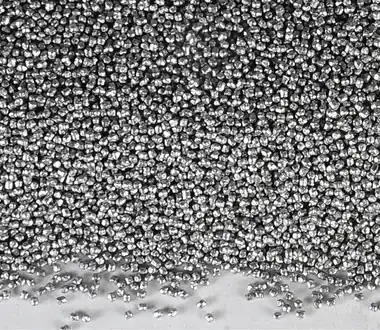 Stainless steel
Stainless Steel Shot Conditioned
SUS304 / 302 / 202 / 201 / 430 / 410, 0.2 mm to 2.5 mm, 300-600 HV
Stainless steel
Stainless Steel Shot Conditioned
SUS304 / 302 / 202 / 201 / 430 / 410, 0.2 mm to 2.5 mm, 300-600 HV
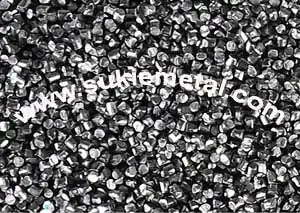 Stainless steel
Stainless Steel Cut Wire Shot
SUS304 / 302 / 202 / 201 / 430 / 410, 0.2 mm to 2.5 mm
Stainless steel
Stainless Steel Cut Wire Shot
SUS304 / 302 / 202 / 201 / 430 / 410, 0.2 mm to 2.5 mm
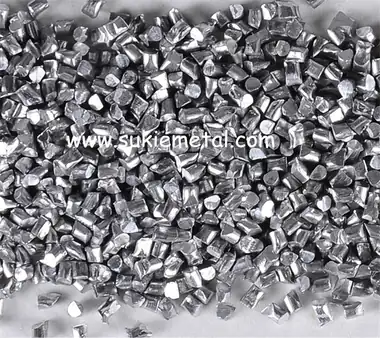 Aluminum
 Cut Wire Shot
A1070 / A1050 / 5056 / 1100, 0.6 mm to 3.5 mm, 65-125 HV
Aluminum
Aluminum Cut Wire Shot
A1070 / A1050 / 5056 / 1100, 0.6 mm to 3.5 mm, 65-125 HVRelated Guides
Frequently Asked Questions
Where do the figures in this guide come from
Every size, hardness, density and chemistry figure is taken from the specification Sukie publishes for its own products, so it matches what would be shipped.
Can you advise on a case that is not covered here
Yes. Send the part material, the current media, the finish you need and the machine type and we will recommend the alloy, shape and grain size.
Do you supply samples
Send the alloy, shape and grain size you want to trial on WhatsApp or by email and we will confirm what we can send.
Talk To Sukie About Your Blast Line
Tell us the substrate, the finish you need and your monthly volume. We will come back with the alloy, the grain size and a price.
Minimum order from 500 kg. Packed 25 kg per bag, 40 bags per pallet. Quotes in USD, terms T/T.