
Five Ways to Judge the Quality of an Industrial Metal Keyboard
What Sets an Industrial Metal Keyboard Apart
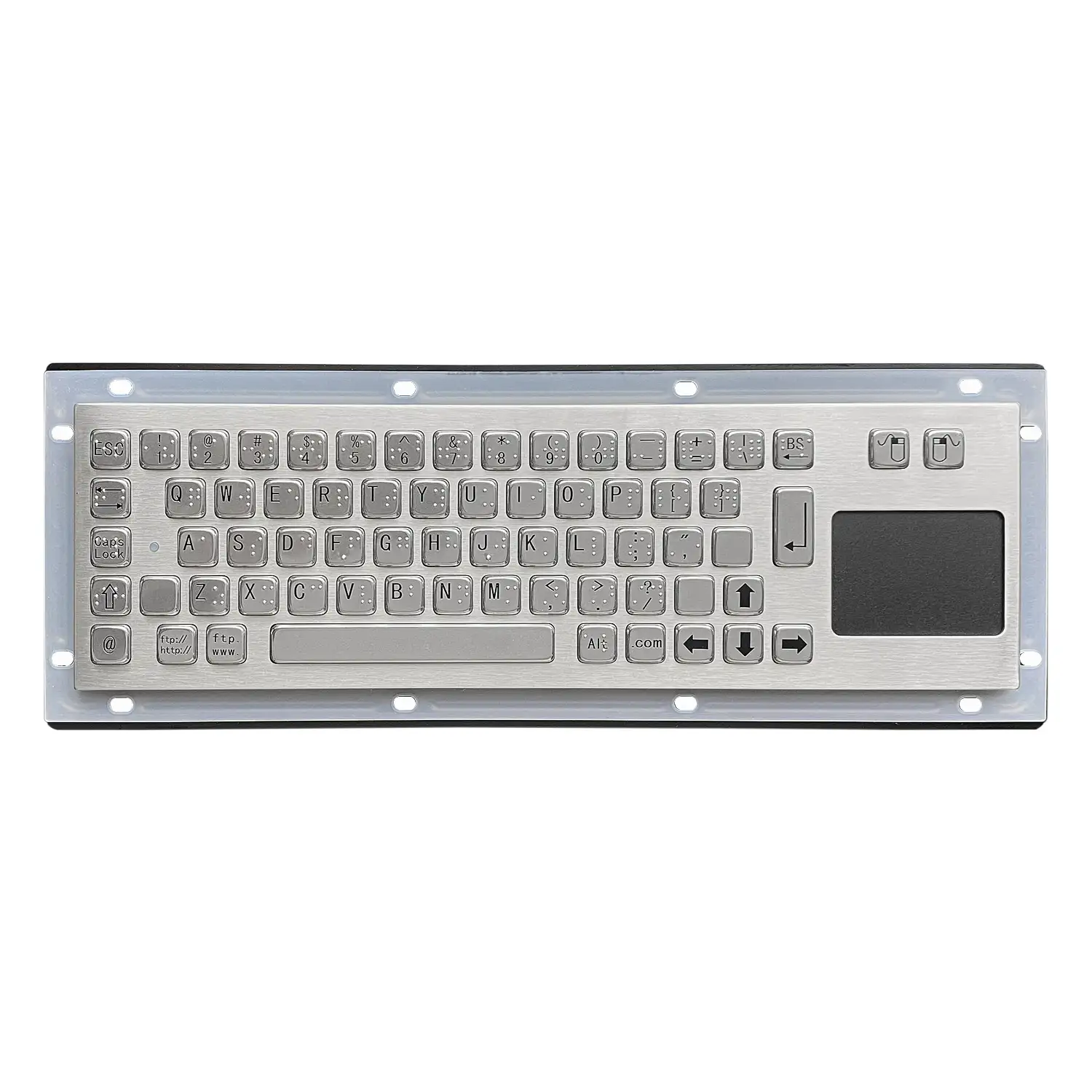
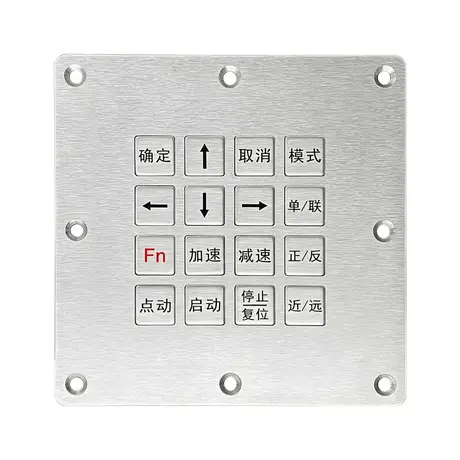
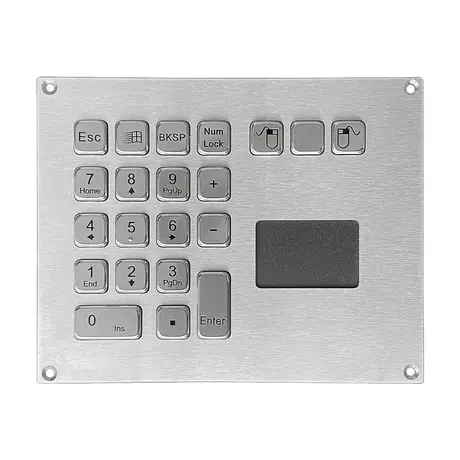
An industrial metal keyboard is the variant of the industrial keyboard family built for the harshest positions. Most are panel mounted, fixed into the equipment itself so the unit cannot be lifted, moved, or easily vandalised. Waterproof silicone behind the keys typically seals the assembly to around IP65. Those two characteristics, fixed mounting and sealing, are why metal keyboards appear on self service terminals and in finance, communications, military, industrial control, petrochemical, and railway equipment. When a machine sits unattended in a public place or in a wet plant area, the input surface is the most exposed component on it.
Keyboard or Touch Screen
Metal keyboards and touch screens are the two main data entry options for equipment builders, and the choice is driven by the environment the machine works in rather than by preference. A touch screen gives flexible on screen layouts but depends on a clean, dry, glove free contact surface and on the display surviving impact. A metal keyboard gives fixed keys that work with wet hands, gloves, and grit, and it keeps working if the display is damaged. Deciding between them early is important, because it determines the panel design, the sealing strategy, and the service plan for the whole machine.
Test the Stainless Steel Grade
Most industrial metal keyboards on the market are built from 304 stainless steel, and a buyer can verify that claim rather than take it on trust. Stainless steel test solutions are sold through ordinary online suppliers, and applying one to the panel according to the instructions gives a quick indication of the material grade. This is worth doing on the first sample from any new supplier, because the panel material determines corrosion resistance and mechanical stiffness, and it is the one substitution that is invisible to inspection by eye. Testing the sample sets a clear baseline you can refer back to if production units differ.
Inspect the Characters and the Surface
Run your fingers over the key faces. On a well made panel the overall surface feels smooth and evenly finished, but each character has a distinct raised or recessed texture under the fingertip, because it has been laser engraved by machine rather than printed. That difference matters beyond appearance: engraved characters are part of the metal and will not rub away under years of contact, cleaning chemicals, or sunlight, whereas printed legends fade and eventually leave an unlabelled key. Also check that engraving depth and alignment are consistent across the whole layout, since variation points to loose process control.
Judge Appearance in Its Working Position
Appearance is a functional requirement on equipment the public sees or operators use all day. A metal keyboard has to meet the function specification and also suit the look of the machine it is mounted in, because the panel is part of the product the end customer sees. Evenness of the brushed or polished finish, consistent key gaps, and a clean bezel line all read as build quality on a finished terminal. For the operator, a panel that looks and feels well finished contributes to a comfortable working experience across a full shift, which in turn supports steady work output.
Check Key Feel and Noise
Press keys across the whole layout rather than just a few in the middle. Force should be even from key to key, travel should be moderate rather than mushy or hard, and no key should feel loose in its aperture. Uneven force or a rocking key indicates poor assembly and predicts early failure. Then listen. Key noise should be modest. A metal keyboard that is loud in use disturbs people working or resting nearby and becomes a complaint in shared control rooms, service counters, and quiet environments, so low noise is a genuine selection criterion rather than a cosmetic one.
Questions On This Topic
How can I verify the stainless steel grade?
Why do laser engraved characters matter?
What sealing level do metal keyboards normally reach?
Should I choose a metal keyboard or a touch screen?
Put This Into A Specification
Send us the application and we will tell you which of these choices actually matter for your terminal.