
Heat Resistant Castings
Heat Treatment Trays and Fixtures
A furnace tray is a consumable that carries your product. When it sags, the load shifts and the parts inside it distort, so tray design is quality control as much as it is cost control.
- 1.4837 and 1.4848 and GB/T 20878 equivalents
- Trays, baskets, grids and fixtures to drawing
- Rib design reviewed against the load and the cycle
- Composition verified and reported
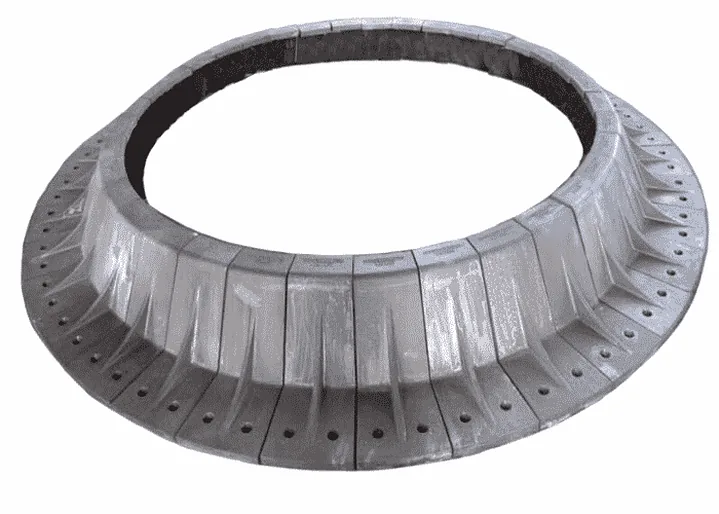
Product Overview
About This Programme
Heat treatment trays cycle through furnaces every working day, carrying load at temperature. They are exposed to creep, to scaling and to thermal fatigue at the same time, and they are usually the part nobody specifies carefully until they start failing.
The two variables that decide tray life are the alloy and the rib design. Nickel and chromium control creep strength and scaling resistance. Rib layout controls how much the tray deflects under load at temperature. A well ribbed tray in a mid grade alloy often outlasts a flat tray in a higher grade.
Key Benefits
Key Benefits
Why buyers move this part to us, in their words rather than ours.
Rib design reviewed
We look at the load, the span and the cycle before quoting, and will suggest rib changes that add life for very little cost.
Alloy chosen for the cycle
Higher nickel where the tray runs hot and long, lower where the cycle is short and cooler.
Repeatable production
Composition and dimensions checked per batch so a replacement tray behaves like the one it replaces.
Application Scenarios
Application Scenarios
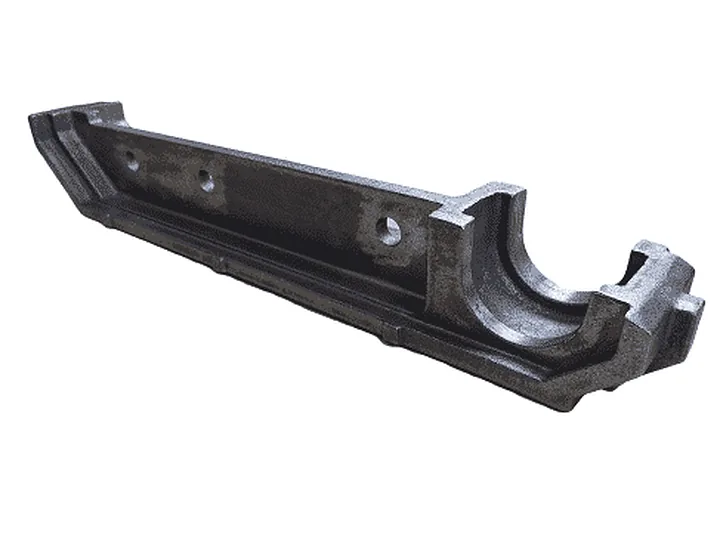
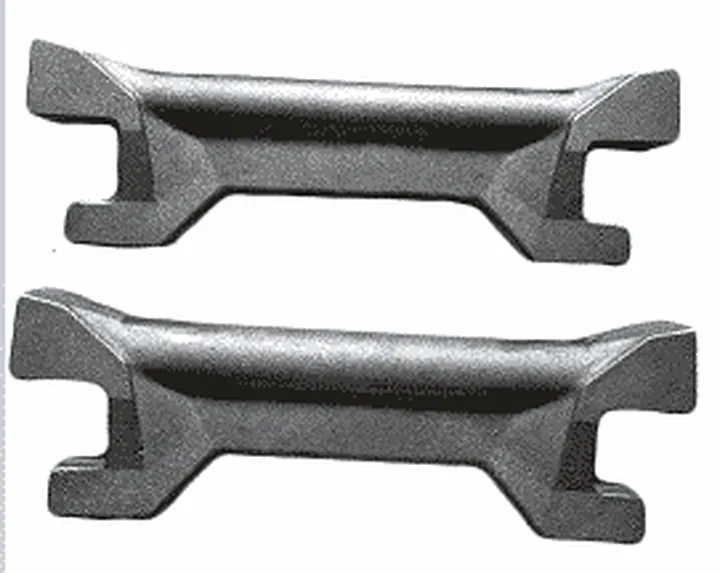
- Carburising and hardening furnace trays
- Baskets and grids for batch furnaces
- Continuous furnace fixtures and pusher plates
- Support castings and furnace internals
Who It Is For
Who It Is For
Commercial heat treatment shops
Replacing trays across a batch furnace fleet.
Captive heat treatment lines
Automotive and bearing plants running fixed cycles daily.
Furnace builders
Supplying tray and fixture sets with new equipment.
Problems It Solves
Problems It Solves
If one of these is happening on your plant, send us the part and the current life figures.
- Trays sagging after a few dozen cycles so parts distort inside them
- Scaling that thins the section until the tray cracks
- Load capacity dropping so the shop has to run smaller batches
- Replacement trays that do not match the existing fixture spacing
- Alloy substituted downward by a supplier competing on price
Technical Features
Technical Features and Materials
Grades
1.4837 and 1.4848 to EN 10295, 06Cr25Ni20, ZG40Cr25Ni20Si2 and ZG40Cr25Ni12Si2 to GB/T 20878.
Service temperature
Normally used under 1100 degrees Celsius.
Design review
Rib layout, span and section reviewed against your load and cycle before quotation.
Verification
Spectrometer composition analysis and dimensional check per batch.
Manufacturing Process
Manufacturing Process
The moulding route is chosen for the part. It is confirmed in writing with the quotation, together with the tolerance class and the machining allowance.
| Process | Best Suited For | Tolerance | Piece Weight |
|---|---|---|---|
| Green sand process | Small and medium parts with low dimensional requirement | CT11–CT14 | 0.2–200 kg |
| Resin sand process | Medium and large parts with high dimensional requirement | CT10–CT11 | 100–3000 kg |
| Shell molding process | Small and medium parts with strict dimensional requirement | CT7–CT9 | ≤50 kg |
| Lost foam process | Small and medium parts with complex structure | CT7–CT9 | ≤100 kg |
| Vacuum process | Medium and large parts needing good surface roughness | CT7–CT9 | ≤10000 kg |
Quality Control
Quality Control and Certification
Inspection is planned at the stages where a problem is still cheap to fix.
- Chemical composition by optical emission and handheld spectrometer
- Hardness tested and reported on every batch
- Dimensions checked against your drawing or the master sample
- Non destructive testing by magnetic particle, penetrant or ultrasonic method where the drawing requires it
Certification documents are issued by the producing factory for the specific order. Ask for the certificate package that applies to your part before you place the order.
Customization
Customization Options
Material and grade
Any grade in the programme, or a grade you nominate with the local equivalent confirmed before production.
Geometry and fixing
Produced to your drawing or reverse engineered from a worn sample, including bolt and seat geometry.
Marking and packing
Part number marking, position marking for sets, and export packing agreed before production.
Use Guide
How to Order
STEP 01
Send the drawing or the worn part
A drawing, a 3D file, or photographs with overall dimensions and the machine details. Add the annual quantity.
STEP 02
Confirm material and construction
We propose the grade and, where relevant, the construction, and explain the trade off against your current part.
STEP 03
First article
Tooling is made and the first article is measured and tested before the batch is released.
STEP 04
Batch and inspection
Stage inspections during production and a final inspection to the agreed standard with the reports you need.
STEP 05
Packing and shipment
Export packing marked with your part numbers, with the shipping documents you require.
FAQ
Questions About Heat Treatment Trays and Fixtures
Which grade for a carburising furnace tray?
Why do my trays sag?
Can you copy our existing trays?
How many cycles will a tray last?
Do you supply baskets and grids as well?
Send the Part and We Will Quote It
Photographs of the worn part with dimensions and the machine details are usually enough to start. Our engineers reply with the material, the construction and a price.