
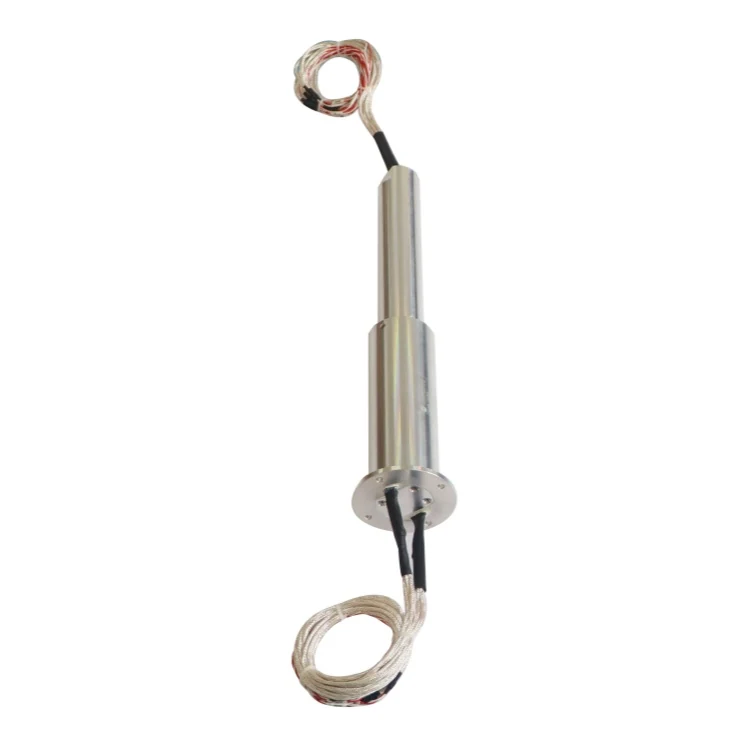
Capsulated Slip Rings
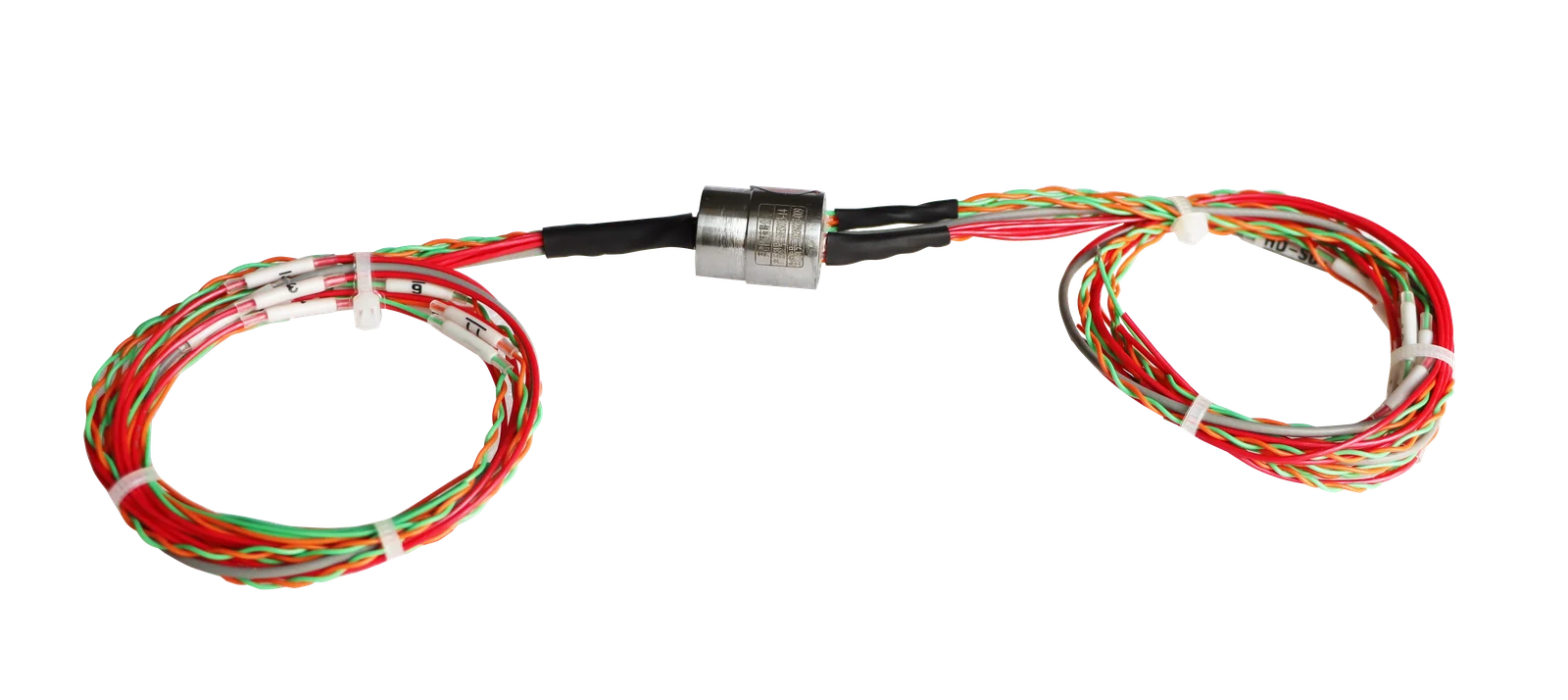
Solution
How to Choose Between Capsule Through Bore and Separate Slip Rings
The three mechanical formats solve three different installation problems. Choosing the format first makes every other decision easier.
Step by Step
Slip Ring Selection Guide
Capsule
Solid shaft, smallest envelope, leads at both ends. Use it when nothing has to pass through the centre and space is the binding constraint.
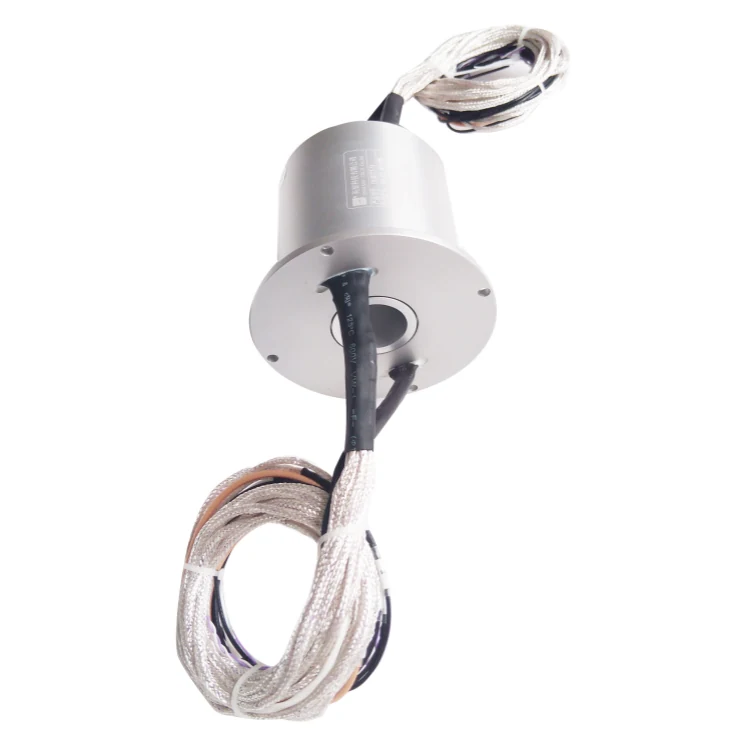
Through bore
Hollow centre with a flange. Use it when a shaft, cable bundle, air line or optical fibre has to pass straight through the axis.
Separate assembly
Rotor rings and brush block mounted independently. Use it at very large diameters, in very thin axial space, or where the machine already provides the bearing.
Then the channels
Add the channel mix: power rings, low frequency signal rings, Gigabit Ethernet, USB, HD-SDI, optical fibre, RF coaxial, pneumatic and hydraulic passages.
Then the environment
Set the IP grade, the operating temperature range and the speed. Catalogue units run 0–600 rpm at -40 °C to +65 °C with IP54 as the standard grade.
Then the life
Pick the quality grade — S Standard, I Industrial or P Premium — against the revolutions the machine will accumulate.
Products
Models Referenced Here
Representative models across the main families.
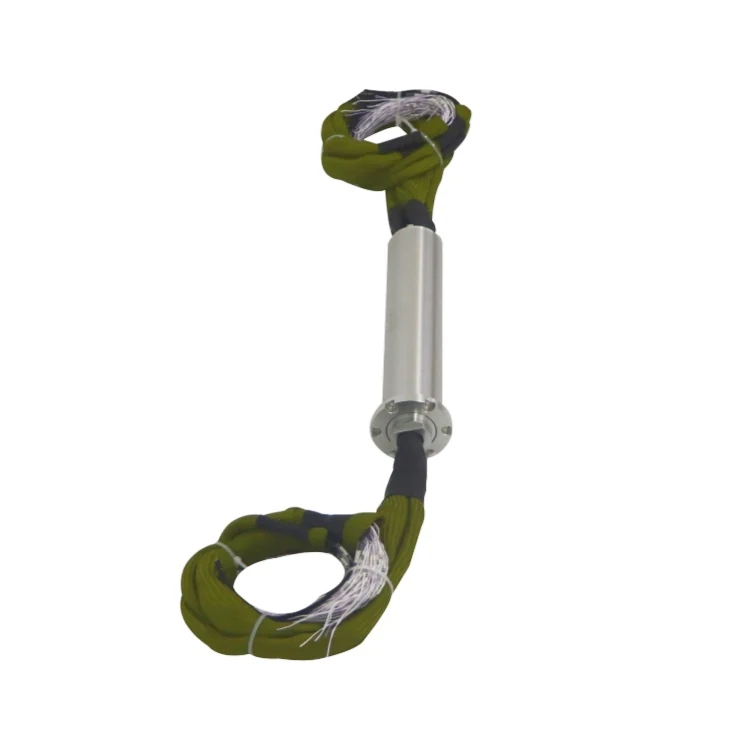
Capsulated Slip Rings
DHS045-95 DHS045-95 Ingiant OD 45mm rotor flange slip ring transmits 81…
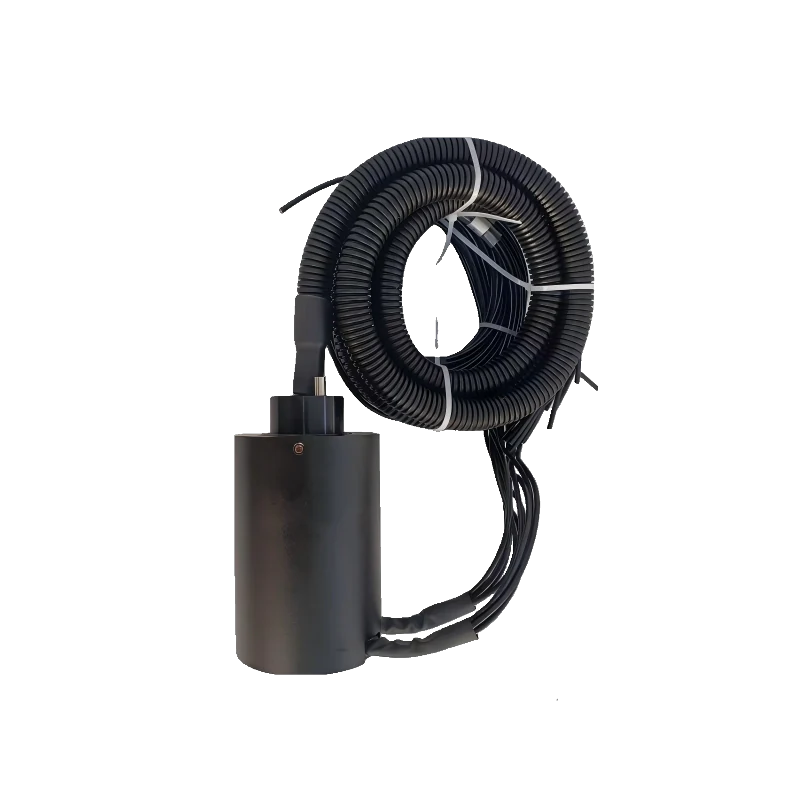
Customized Slip Rings
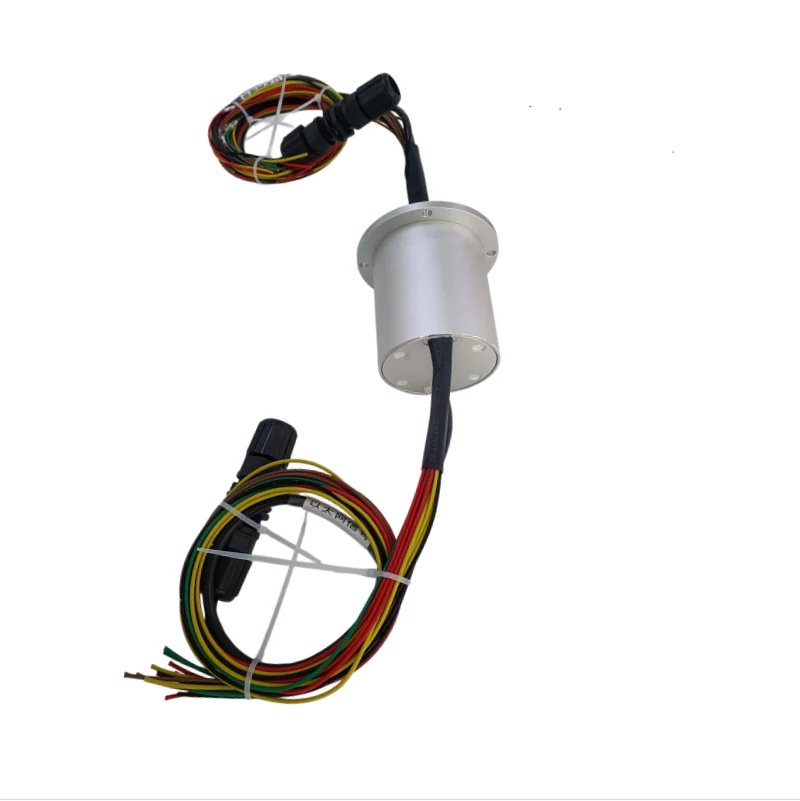
Waterproof Slip Ring Ø78mm OD IP65/IP68 – Custom Sealed Rotary Joint for…
Customized Slip Rings
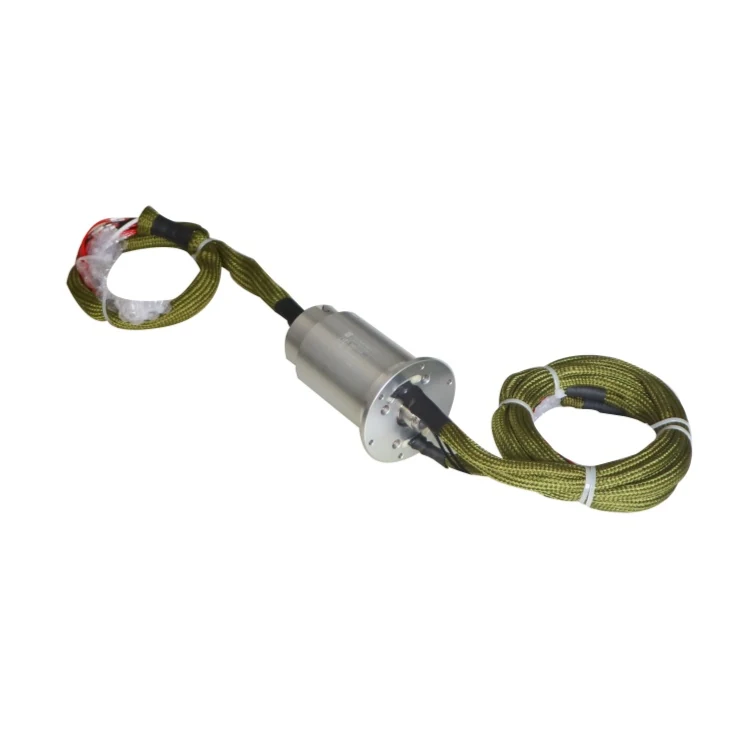
Ingiant DHS078 Solid Shaft Ethernet Slip Ring 78mm OD Gigabit Data & Power…
Fiber Optic Rotary Joints
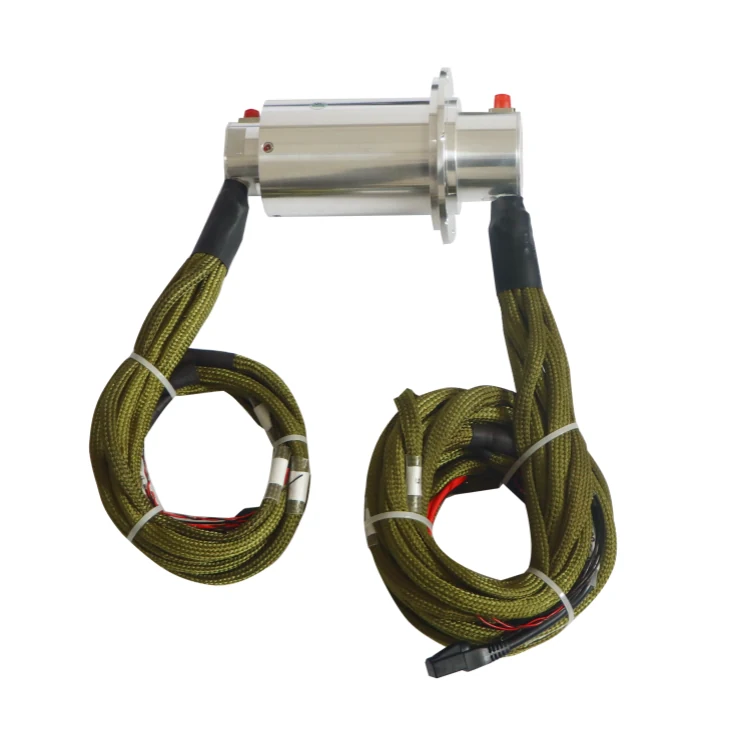
DHS055-11-2F Ingiant Photoelectric Slip Ring OD 55mm with 2 channels optical…
Fiber Optic Rotary Joints
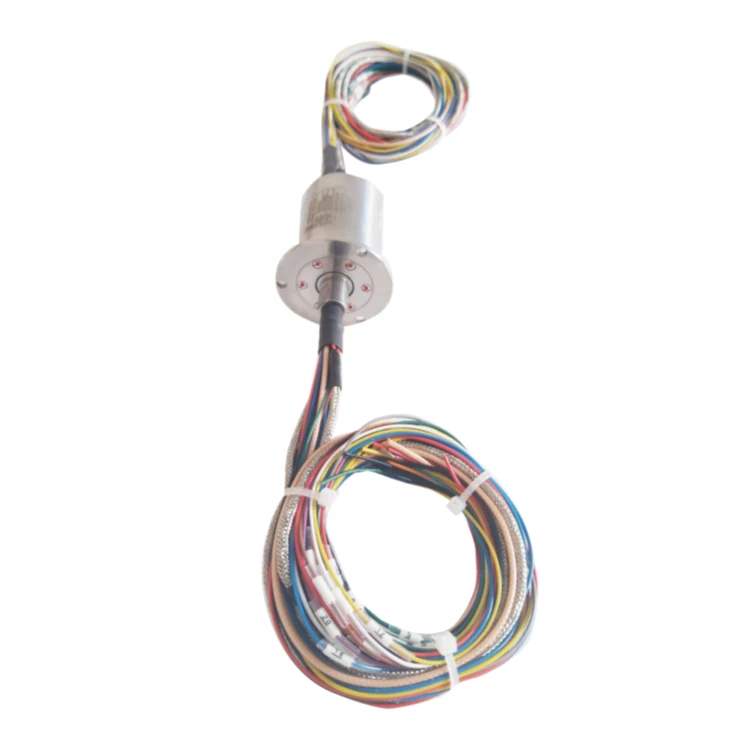
DHS066-39-1F Ingiant Optoelectronic slip ring OD 66mm with 1 single mode…
Knowledge
Background Reading
2026-06-24
Deepening Global Rotary Connection Market Layout | Jiujiang Ingiant Technology Concludes 2026 Moscow International Packaging & Printing Exhibition, Upcoming Attendance at Top South African Mining Equipment Expo
1. Review of Moscow Packaging & Printing Exhibition From June 16 to 19, 2026, the international packaging and printing industry…
2025-11-06
Primary Applications of Slip Rings in Karting
Primary Applications of Slip Rings in Karting The fundamental role of a slip ring is to transmit signals, data, and power…
2025-09-16
“Ascend Celestial Peak · Unite Hearts and Minds · Forge Top Talents” — 2025 Jiujiang Ingiant Technology Autumn Outing Chronicles
“Ascend Celestial Peak · Unite Hearts and Minds · Forge Top Talents” — 2025 Jiujiang Ingiant Technology Autumn Outing Chronicles…
FAQ
Slip Ring Selection Guide Questions
How do I count circuits?
Count the single wires that have to cross the joint, beside the cable itself. That number is what appears after the diameter in the model code.
What if two formats both fit?
Choose the one that keeps the cable route straight. Most field failures start at a cable that had to be bent around the joint.
What speed can standard units reach?
Standard catalogue units are rated 0–600 rpm, with lower and higher speed designs built to order.
Start With Your Requirement Not a Model Number
Rotating speed, installation size, circuit count, voltage and current per ring, signal types, operating temperature and IP grade — send those eight and you get a design back.