
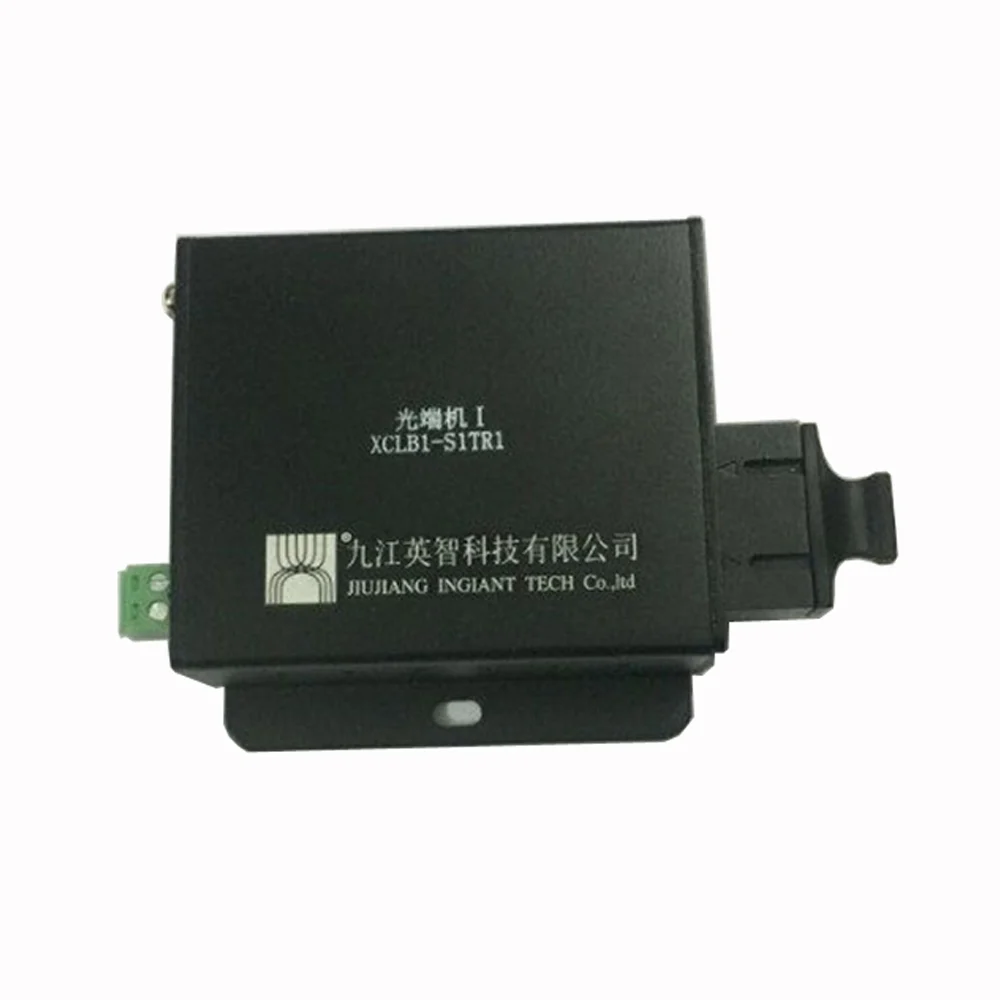
Optical Transceivers for Fibre Links on Rotating Equipment
Optical transceivers convert between electrical and optical signals at each end of a fibre link, and are supplied with INGIANT fibre optic rotary joints so the rotating optical path arrives as a usable electrical interface.
All 1 Optical Transceivers Models
Listed in full, each with its own parameter table.
What This Family Is For
The constraint
A fibre optic rotary joint solves the rotating half of the problem. The equipment at each end still needs the optical signal converted, matched and terminated.
How INGIANT answers it
INGIANT supplies the matching transceiver with the rotary joint so the optical budget, the wavelength and the connector type are specified together rather than sourced separately.
Who buys this family
System integrators building rotating video, data and sensor links around a fibre optic rotary joint.
Standard Values Across This Family
These are the catalogue values that appear on most models in this family. Every one of them can be changed on a customised build.
Rotating speed
Catalogue units are rated 0–600 rpm. Lower and higher speed designs are built to order.
Working temperature
-40 °C to +65 °C on standard builds, with wider ranges designed against the application.
Protection level
IP54 as standard, with sealing grades up to IP68 where the environment demands it.
Insulation
Insulation resistance ≥1000 MΩ at 500 VDC, insulation strength 1500 VAC at 50 Hz for 60 s.
Contact system
Precious metal ring and brush pairs with dynamic resistance variation below 10 mΩ.
Lead wire
Colour-coded Teflon insulated tinned stranded flexible wire, 500 mm + 20 mm as standard.
Articles About Optical Transceivers
The difference between electric slip rings and fiber optic slip rings
Facebook Twitter LinkedIn The difference between electric slip rings and fiber optic slip rings Electric slip rings and fiber…
The difference between fiber optic slip ring and photoelectric slip ring —Advantages of fiber optic slip ring
Facebook Twitter LinkedIn The difference between fiber optic slip ring and photoelectric slip ring —Advantages of fiber optic…
Optical Transceivers Questions Engineers Ask
Do I have to buy the transceiver with the rotary joint?
No, but specifying them together means the wavelength, the connector type and the optical budget are matched from the start.
What do you need to know to specify a transceiver?
The interface on your equipment, the data rate, the wavelength, the link distance and the connector type.
Can you supply the whole optical path?
Yes — the rotary joint, the transceiver and the cable assembly can be quoted as one item.
Need Help Narrowing 1 Models Down to One
Send the rotating speed, the installation size, the circuit count, the voltage and current per ring, the signal types, the temperature range and the IP requirement. You get a model number and a drawing back.