
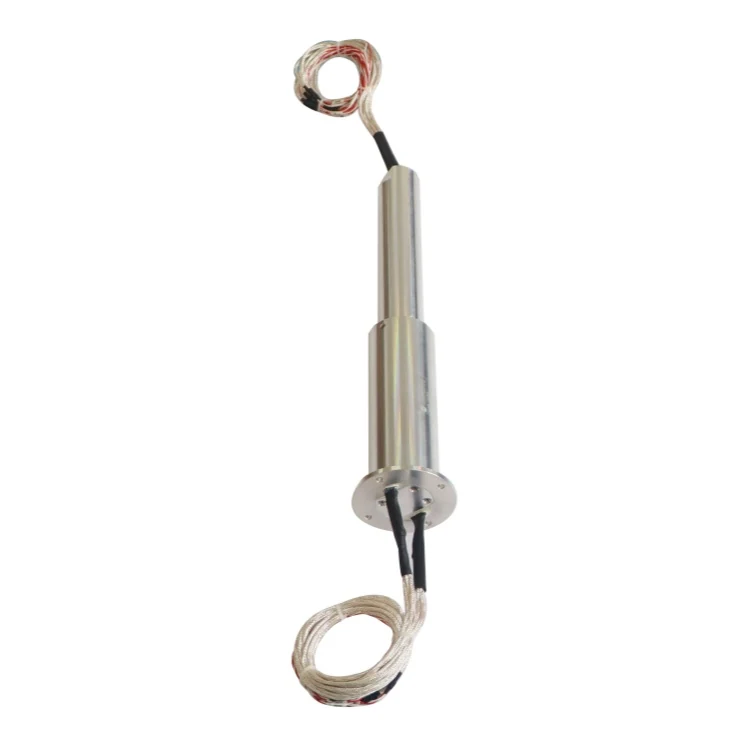
Capsulated Slip Rings
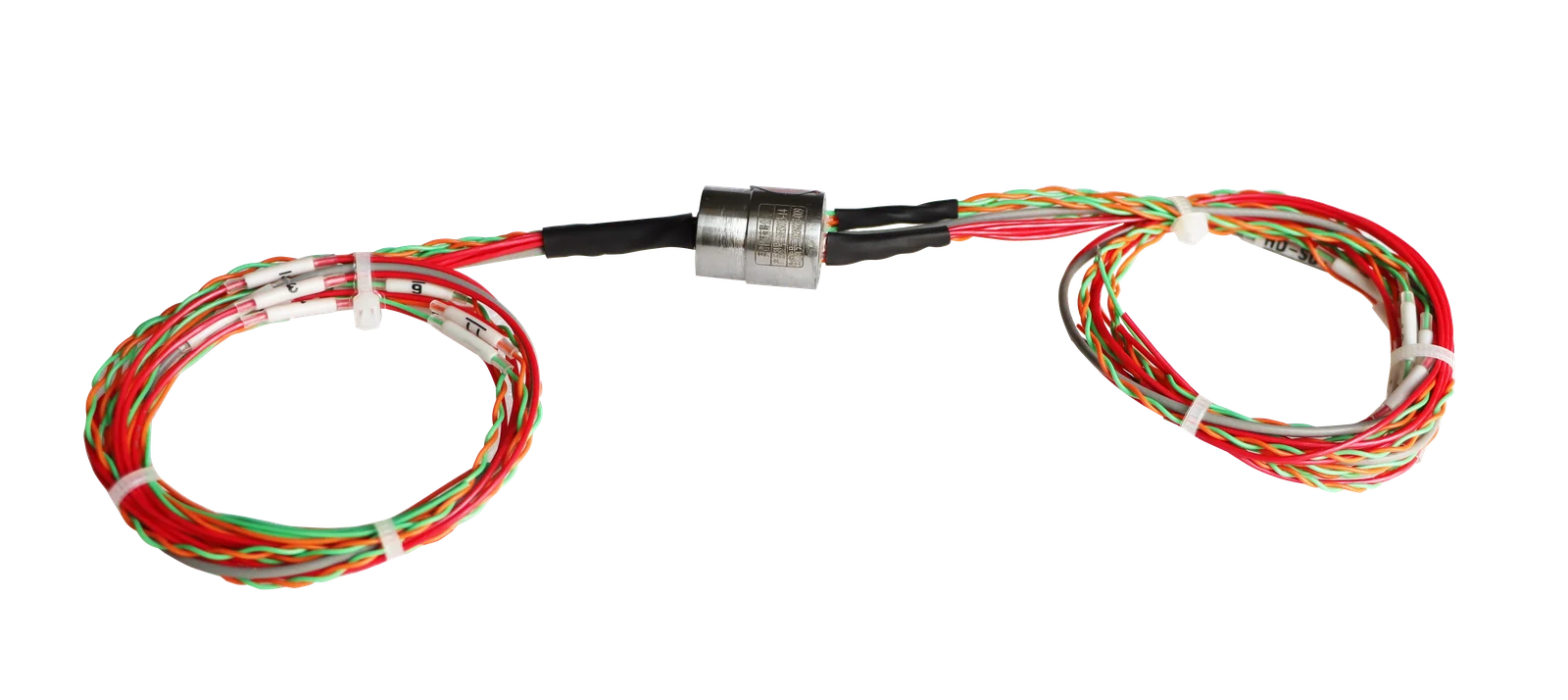
Solution
Ethernet USB HD-SDI and Fibre Across a Rotating Joint
Passing data through a rotating interface is a transmission line problem, not a wiring problem. Insertion loss, return loss and crosstalk decide whether the link holds.
Step by Step
High Speed Data Transmission
Gigabit Ethernet
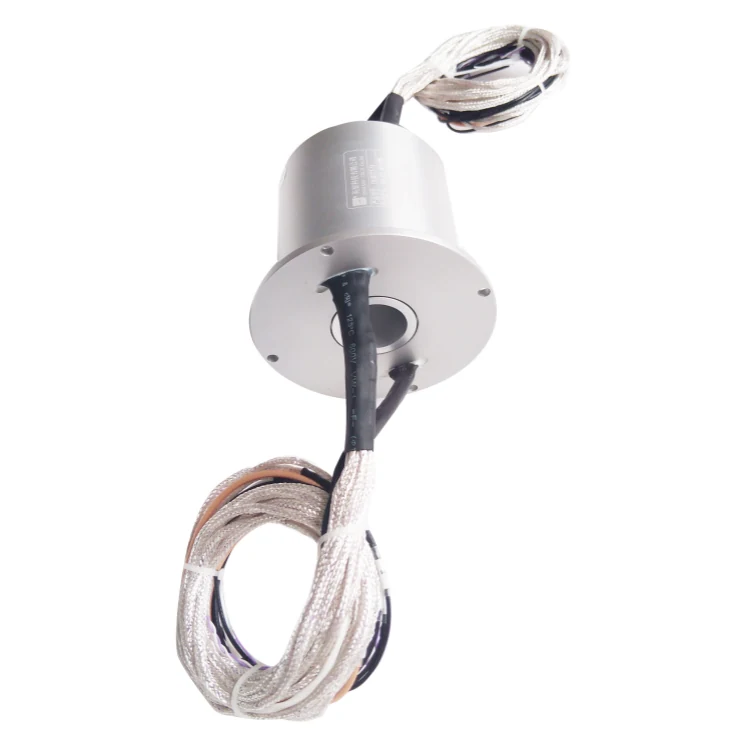
The DHS series is developed for 250 MHz transmission and carries 1–2 Gigabit channels with 1–30 power rings at 2–20 A, with RJ45 male and female connectors and M12, CAT5E or CAT6 cable options.
Contact system
Fibre brush bundle contacts on precious metal rings give stable transmission with no packet loss, anti-crosstalk behaviour, large return loss and low insertion loss.
USB
Data pairs run on dedicated channels beside the power rings so a device on the rotating side stays enumerated through continuous rotation.
HD-SDI
Uncompressed video channels are combined with power and control rings so a camera head needs only one rotating interface.
Optical fibre
Where distance, bandwidth or electrical noise rules out copper, a fibre optic rotary joint carries the link, and can be combined with electrical rings in a photoelectric body.
Housing
Aluminium alloy housings and IP51 to IP68 sealing options keep the transmission path stable in the machine's real environment.
Products
Models Referenced Here
Representative models across the main families.
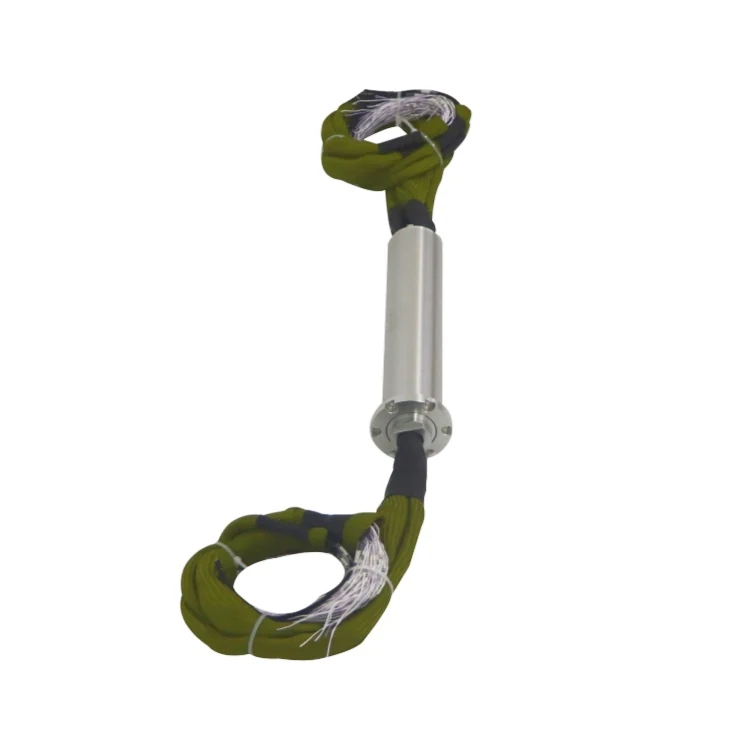
Capsulated Slip Rings
DHS045-95 DHS045-95 Ingiant OD 45mm rotor flange slip ring transmits 81…
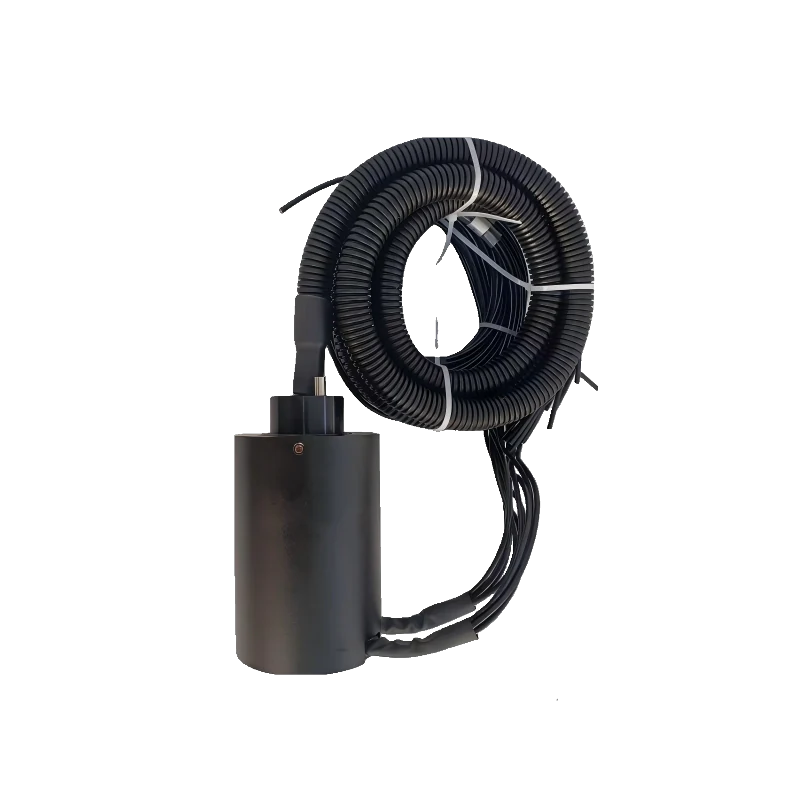
Customized Slip Rings
Waterproof Slip Ring Ø78mm OD IP65/IP68 – Custom Sealed Rotary Joint for…
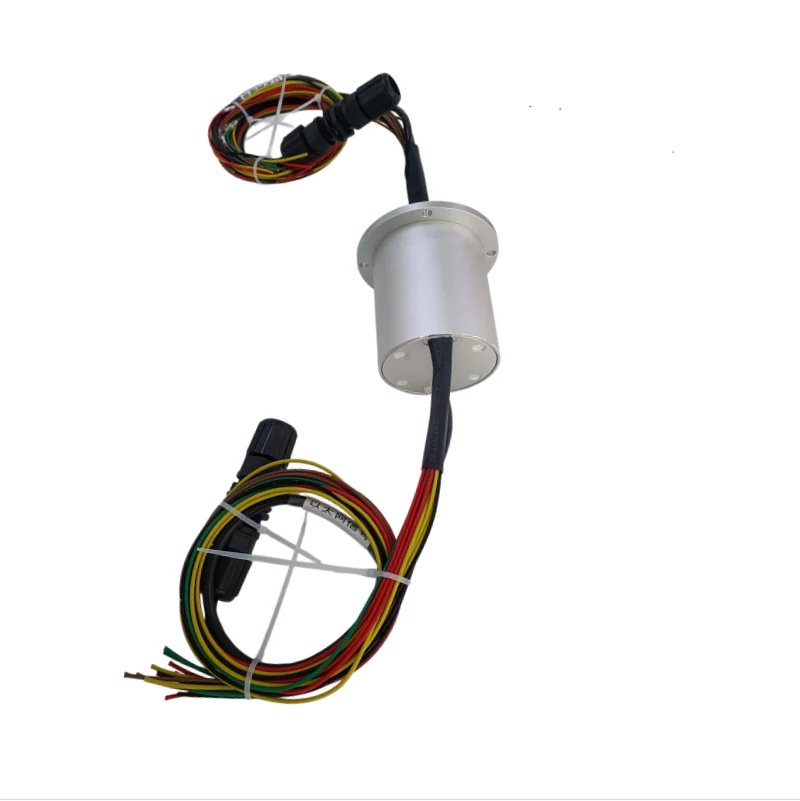
Customized Slip Rings
Ingiant DHS078 Solid Shaft Ethernet Slip Ring 78mm OD Gigabit Data & Power…
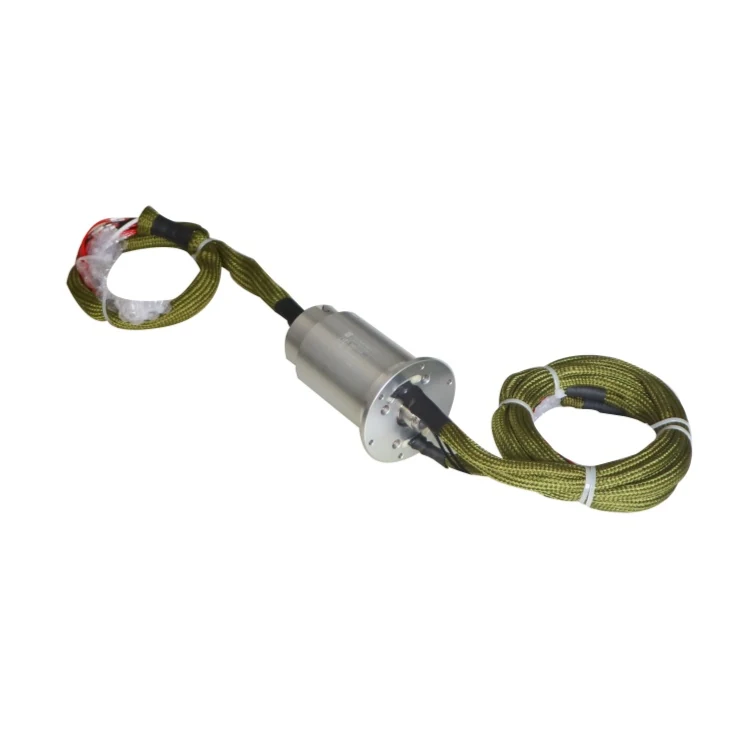
Fiber Optic Rotary Joints
DHS055-11-2F Ingiant Photoelectric Slip Ring OD 55mm with 2 channels optical…
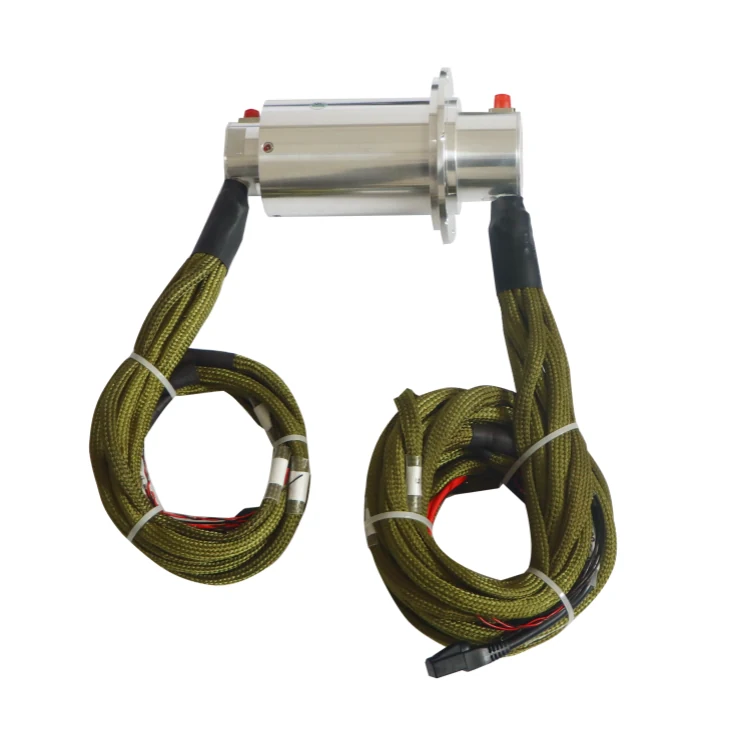
Fiber Optic Rotary Joints
DHS066-39-1F Ingiant Optoelectronic slip ring OD 66mm with 1 single mode…
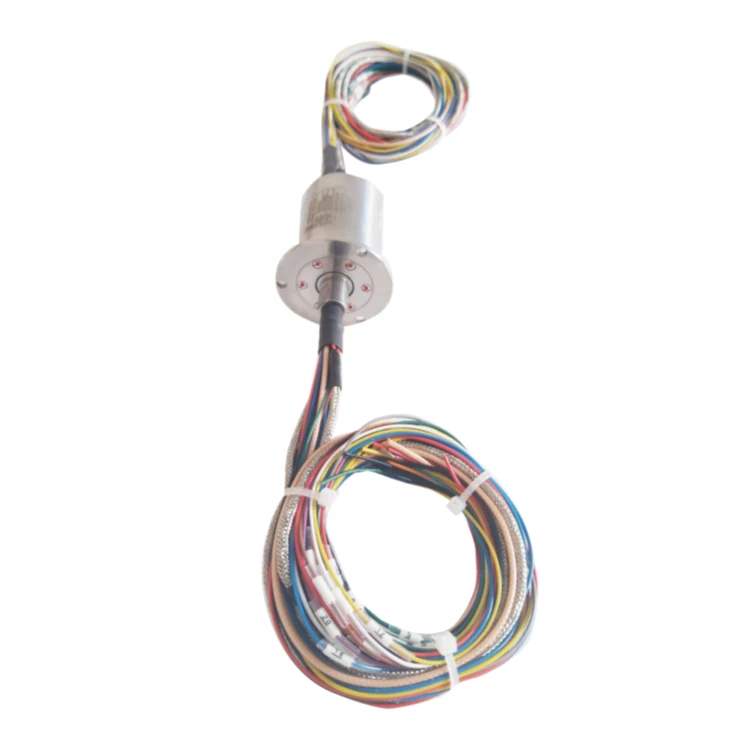
Knowledge
Background Reading
2026-06-24
Deepening Global Rotary Connection Market Layout | Jiujiang Ingiant Technology Concludes 2026 Moscow International Packaging & Printing Exhibition, Upcoming Attendance at Top South African Mining Equipment Expo
1. Review of Moscow Packaging & Printing Exhibition From June 16 to 19, 2026, the international packaging and printing industry…
2025-11-06
Primary Applications of Slip Rings in Karting
Primary Applications of Slip Rings in Karting The fundamental role of a slip ring is to transmit signals, data, and power…
2025-09-16
“Ascend Celestial Peak · Unite Hearts and Minds · Forge Top Talents” — 2025 Jiujiang Ingiant Technology Autumn Outing Chronicles
“Ascend Celestial Peak · Unite Hearts and Minds · Forge Top Talents” — 2025 Jiujiang Ingiant Technology Autumn Outing Chronicles…
FAQ
High Speed Data Transmission Questions
Which three parameters matter most for an Ethernet slip ring?
Insertion loss, return loss and crosstalk. They decide whether the link stays at Gigabit rate under rotation and vibration.
Is fibre always better than copper?
No. Copper is simpler and cheaper where the rate and the distance allow it. Fibre wins on long links, very high bandwidth and electrically noisy sites.
Can several data types share one unit?
Yes. Ethernet, USB, HD-SDI, fibre and RF paths can be combined with power rings in one hybrid body.
Start With Your Requirement Not a Model Number
Rotating speed, installation size, circuit count, voltage and current per ring, signal types, operating temperature and IP grade — send those eight and you get a design back.