
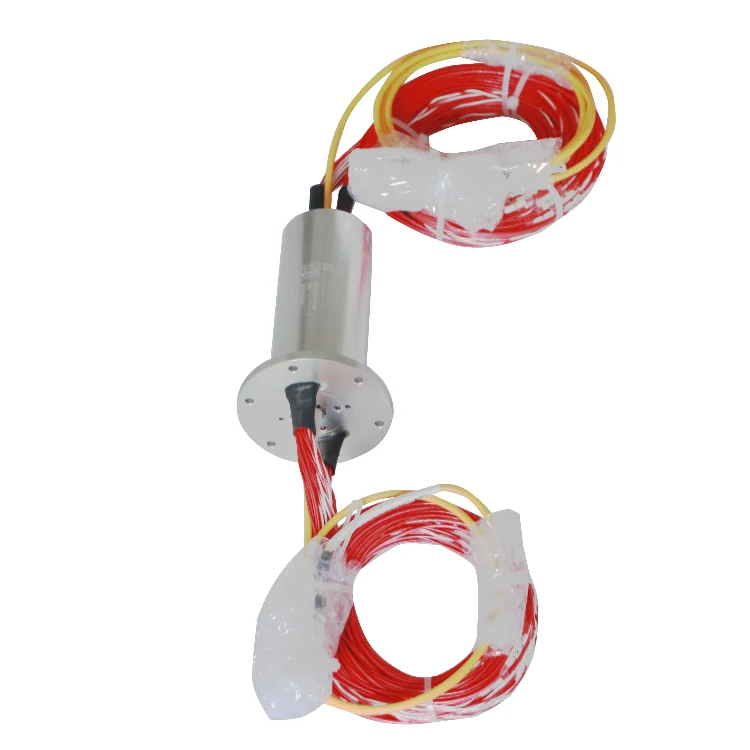
Fiber Optic Rotary Joints
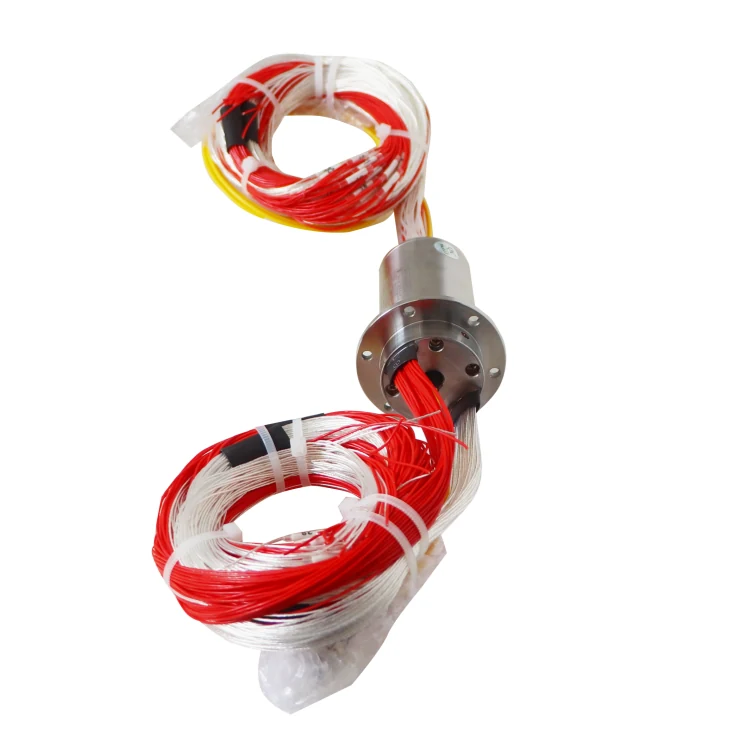
Fiber Optic Rotary Joints
DHS036-53-1F Ingiant Single channel photoelectric slip ring 36mm transmit 1 optical fiber and 1~53 electrical channels
This is a capsule unit with a 36 mm body, carrying 53 circuits across a continuously rotating joint. Power and signals cross the joint through sliding precious metal contacts, so the moving assembly can turn indefinitely in either direction. On this model it…
Product Overview
DHS036-53-1F at a Glance
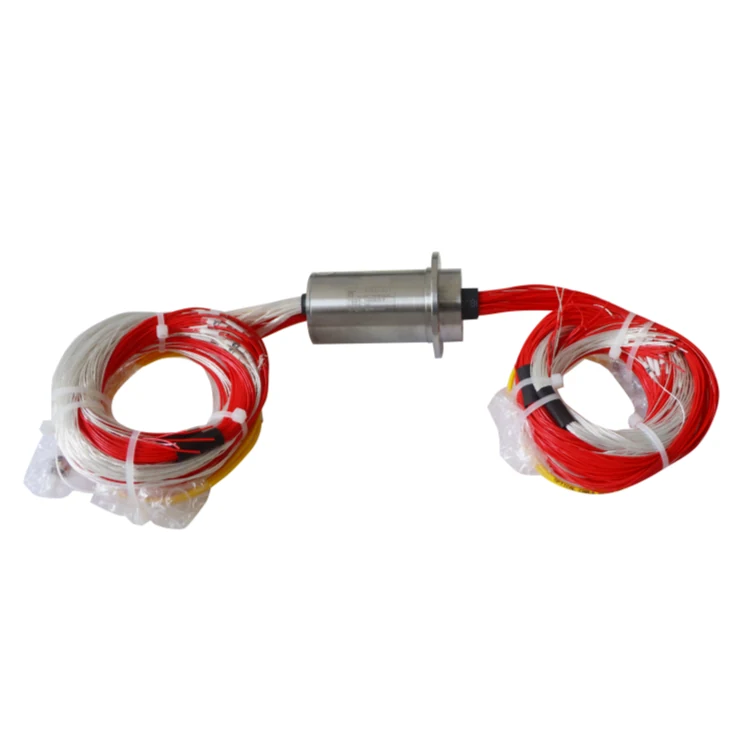
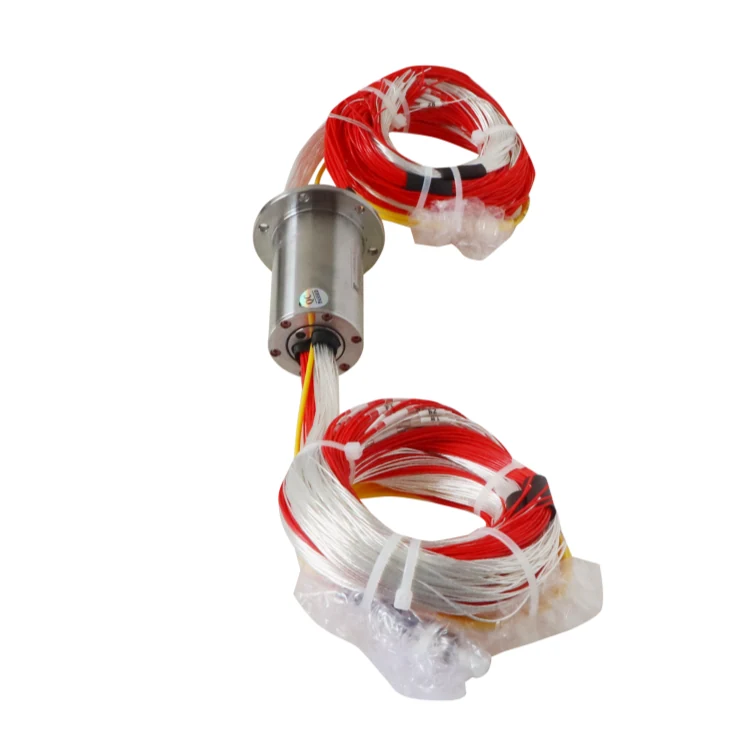
This is a capsule unit with a 36 mm body, carrying 53 circuits across a continuously rotating joint. Power and signals cross the joint through sliding precious metal contacts, so the moving assembly can turn indefinitely in either direction. On this model it combines 1 optical fiber channel with the electrical rings in one body, sealing is rated IP54, rated speed is 0~600rpm.
- 53 circuits
- Ø36 mm
- IP54
- 0~600rpm
- -40℃~+65℃
Key Benefits
What This Model Gives the Machine
Unlimited rotation without cable wind-up
The rotating side keeps its electrical connection through continuous 360° turning, so the machine never has to stop and unwind. Rated speed is 0~600rpm.
Maintenance-free contact system
Precious metal contact pairs are designed to run without lubrication or servicing for the rated life, so there is nothing to schedule on this axis. Dynamic resistance variation stays <10MΩ.
Fits a 36 mm interface
The 36 mm envelope keeps the joint inside the space the assembly already has, so the surrounding design does not have to change.
One axis carries 1 optical fiber channel
Stacking separate rotary joints on one shaft costs length, alignment and reliability. Combining them in a single body removes those interfaces.
Backed by a 12 month warranty
12 months from date of sale; free repair or replacement for quality problems not caused by human damage
Who It Is For
Engineers Who Specify This Part
Designers of subsea ROV and winch systems, radar and communications antennas, drilling and logging tools, broadcast and surveillance platforms, and defence electro-optical systems.
Application scenarios
Problems It Solves
Three Failures It Removes
Failure 1
A twisted harness inside a rotating assembly chafes against the housing until an intermittent fault appears that nobody can reproduce.
Failure 2
A rotating joint that is not sealed for its environment lets dust or wash water reach the contact surfaces, and the symptom looks like an electrical fault.
Failure 3
Sourcing several rotating joints for one axis multiplies lead times and alignment tolerances.
Technical Features
Materials Contacts and Construction
Contact system
Precious metal rings and brushes, selected for low contact resistance and long wear life.
Housing
Aluminum Alloy housing, machined in-house on a CNC centre.
Insulation
Insulation resistance ≥1000MΩ @500VDC. Insulation strength 1500 VAC@50Hz,60s,2mA.
Lead wire
Colored Teflon insulated & tinned stranded flexible wire, 500mm + 20mm Fiber Optic Slip Ring Parameters: Number of channels: 1 as standard.
Operating environment
Working temperature -40℃~+65℃. Working humidity <70%. Protection level IP54.
Specifications
Full Parameter Table
Values published for this model. Anything in this table can be changed on a customised build.
| Model code | DHS036-53-1F |
|---|---|
| Body diameter | 36 mm |
| Product family | Fiber Optic Rotary Joints |
| Manufacturer | JiuJiang Ingiant Technology Co., Ltd, Jiujiang, Jiangxi, China |
| Standard lead time | 7–15 days |
| Warranty | 12 months from date of sale |
| Number of circuits | 53 |
| Rated voltage | 0~240 VAC/VDC |
| Rated current | can be customized |
| Rotating speed | 0~600rpm |
| Working temperature | -40℃~+65℃ |
| Working humidity | <70% |
| Protection level | IP54 |
| Insulation resistance | ≥1000MΩ @500VDC |
| Insulation strength | 1500 VAC@50Hz,60s,2mA |
| Dynamic resistance variation | <10MΩ |
| Housing material | Aluminum Alloy |
| Electrical contact material | Precious metal |
| Lead wire specification | Colored Teflon insulated & tinned stranded flexible wire |
| Lead wire length | 500mm + 20mm Fiber Optic Slip Ring Parameters: Number of channels: 1 |
Manufacturing and Quality Control
How the Unit Is Built and Checked
Machining runs on the in-house CNC centre across roughly 6000 m² of research and production space, and assembly is done by the production team in Jiujiang.
Before despatch each unit is checked for insulation resistance, insulation strength, dynamic resistance variation and functional signal performance, using the test equipment and procedures held under the ISO 9001 and GJB9001C quality systems.
Certifications
- ISO 9001
- GJB9001C
- GB/T 19001-2008 / ISO 9001:2008
Customization Options
What Can Be Changed on This Build
- Circuit count, and the current and voltage rating of each ring
- Body diameter, overall length and mounting interface
- Added channels — Ethernet, USB, HD-SDI, optical fibre, RF coaxial, pneumatic or hydraulic passages
- Sealing grade from IP51 to IP68, and housing material
- Lead length, lead specification, connector termination and outlet direction
- Quality grade S Standard, I Industrial or P Premium against the revolutions expected
Simple customisation 10–20 days. Complex customisation 15–40 days.
Comparison
How It Compares With the Other Formats
A through bore unit keeps the centre of the axis clear but needs more radial space and a flange. Choose the capsule format when nothing has to pass through the middle and the envelope is the binding constraint. Against separate single-purpose joints, this hybrid build puts 1 optical fiber channel and the electrical rings on one axis, which removes an interface and a set of tolerances.
Use Guide
Fitting and Commissioning
Mount the stator, not the load
Fix the stator to the frame through the flange or the anti-rotation arm and couple the rotor to the rotating part. The slip ring must never be used as a bearing — the machine's own bearing carries the load.
Respect the lead route
Standard lead length is 500mm + 20mm Fiber Optic Slip Ring Parameters: Number of channels: 1. Leave a service loop at both ends and keep the bend radius above the cable's own minimum. Most field failures start at a lead that was pulled straight.
Separate power and signal runs
Route the power leads and the signal leads apart from each other after they leave the unit, and ground the shield at one end only.
Commission at low speed
Rated speed is 0~600rpm. Turn the assembly by hand first, check continuity on every circuit, then run up to speed and confirm the signal quality before the machine goes into production.
Products
Related Models
Other models in the same family and nearby sizes.
Fiber Optic Rotary Joints
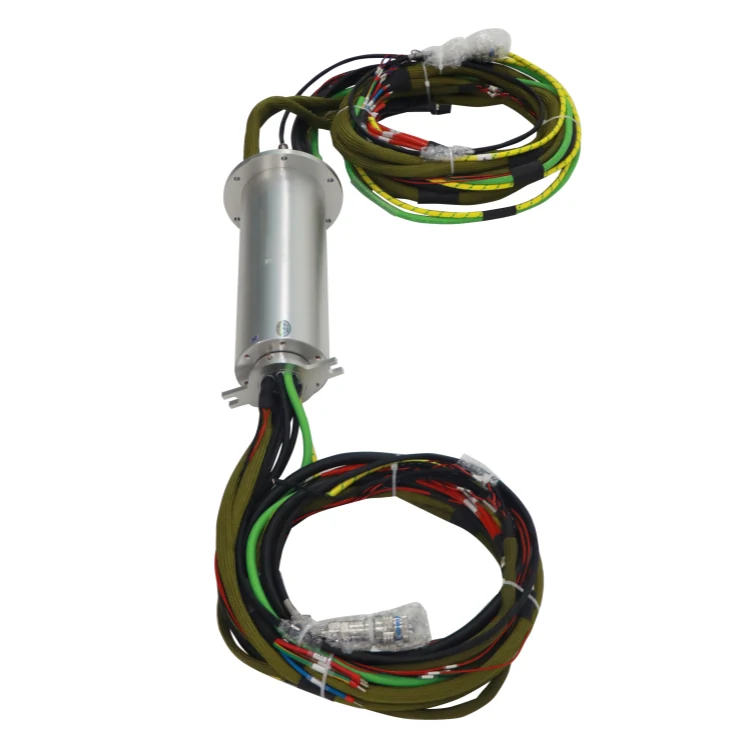
DHS040-31-1F Optoelectronic slip ring optoelectronic rotary joint with an…
Fiber Optic Rotary Joints
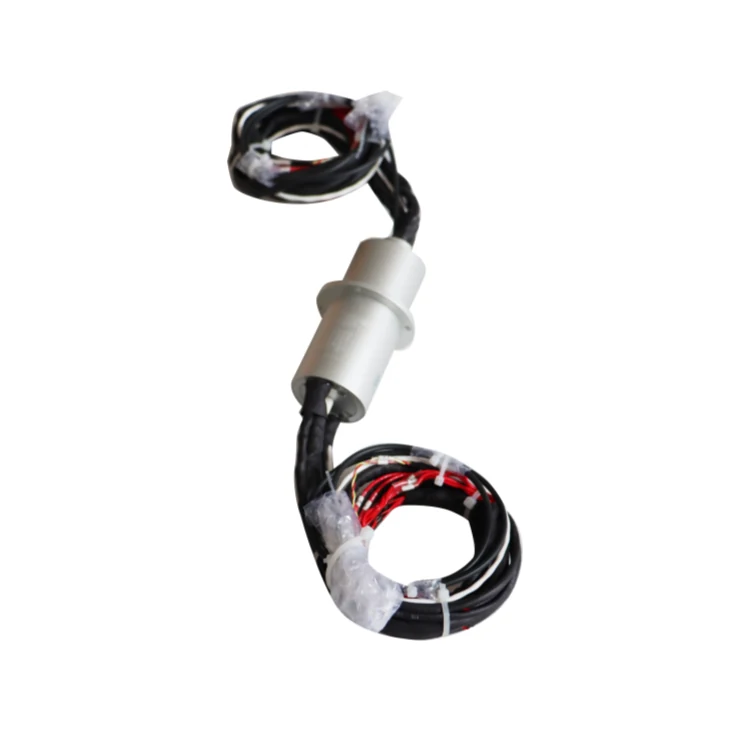
DHS040-28-1F integral precision optoelectronic slip ring transmit 1 optical…
Fiber Optic Rotary Joints
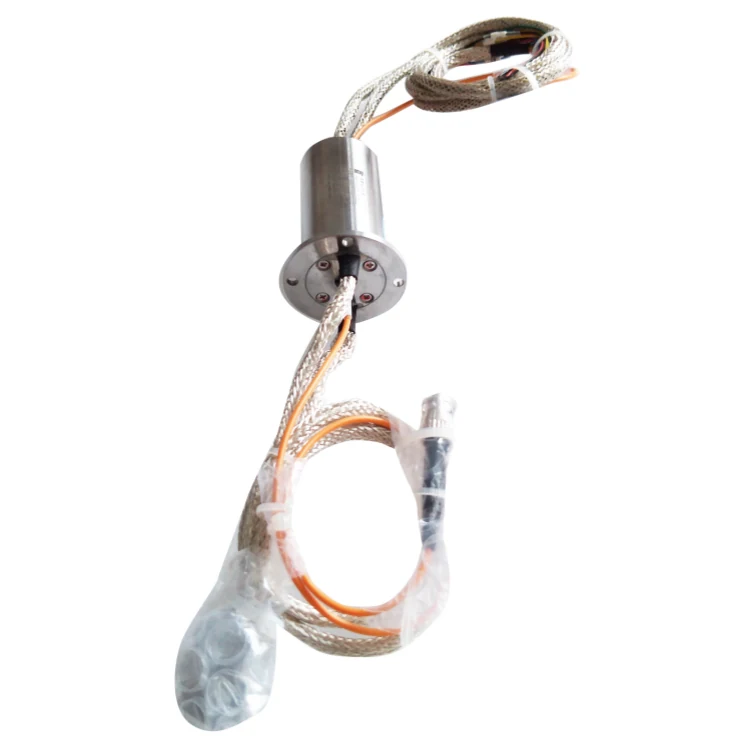
DHS030-25-2A-1F Photoelectric slip ring combination 25-channel 2A electrical…
Fiber Optic Rotary Joints
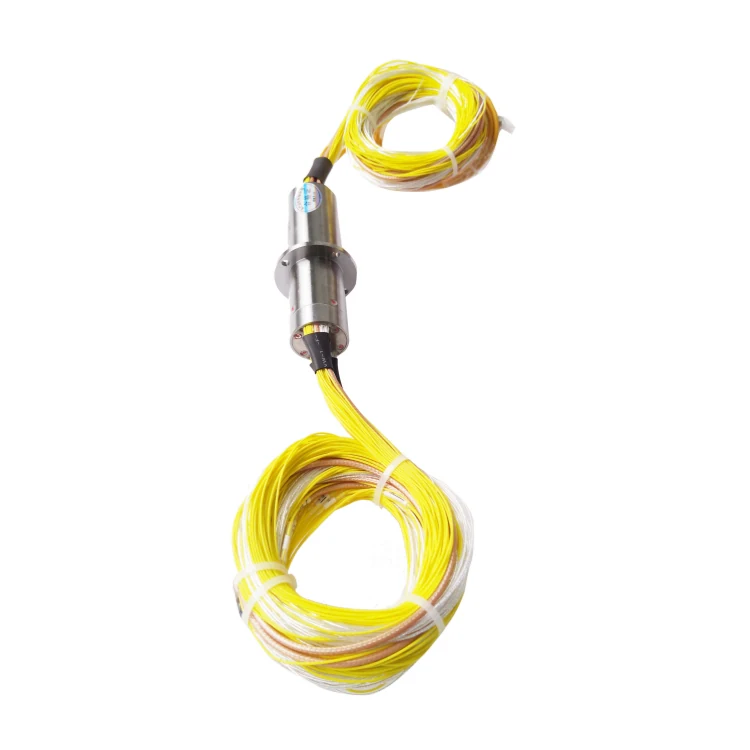
DHS028-47-1F Ingiant Photoelectric slip ring diameter 28mm 47channels…
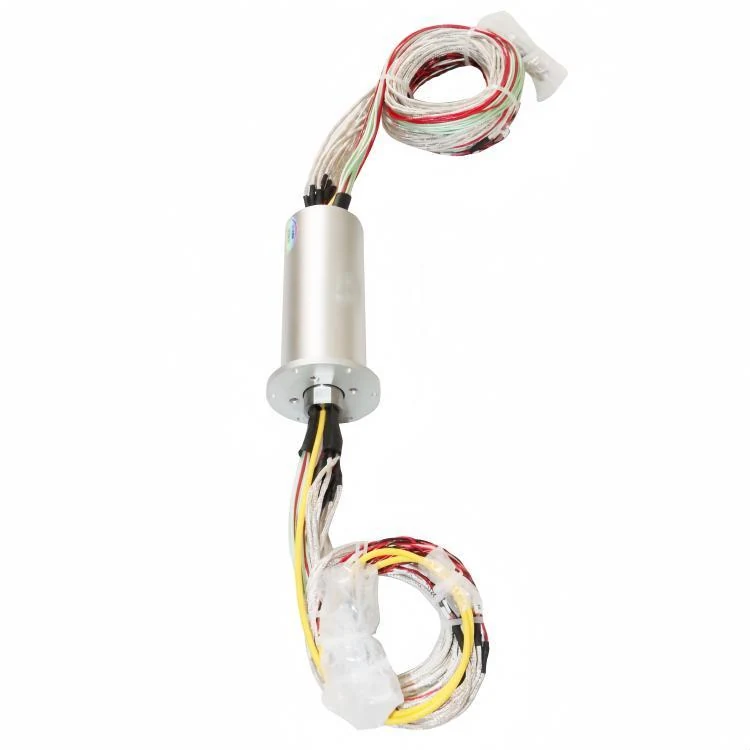
Fiber Optic Rotary Joints
DHS045-43-1F Non-standard customizable photoelectric combination slip ring…
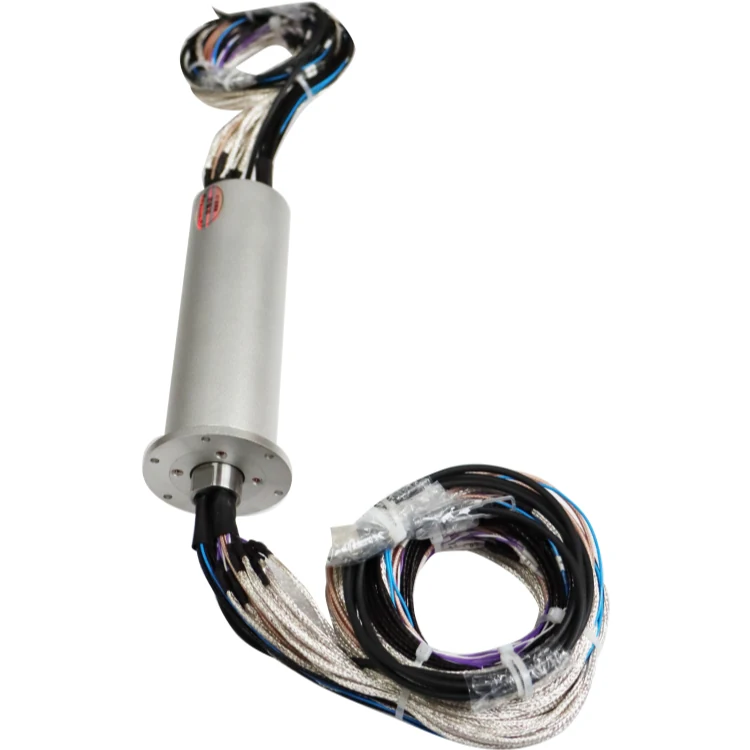
Fiber Optic Rotary Joints
DHS045-51-1F photoelectric combination rotary joint 51channels combination…
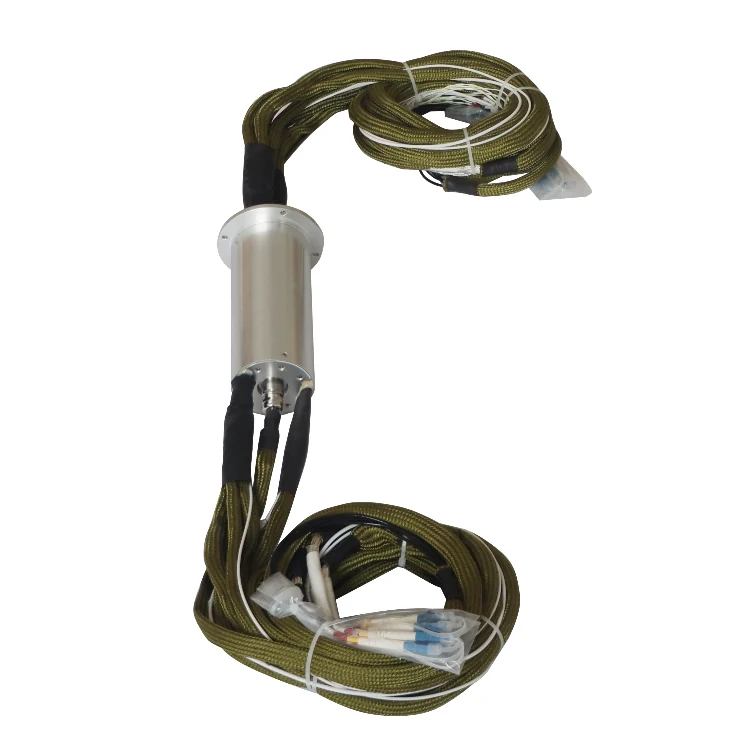
Fiber Optic Rotary Joints
DH46E-5F-D76-L141-001 Optoelectronic rotary joint 76mm 5channels fiber optic…
Knowledge
Related Reading
2025-08-12
INGIANT RF Rotary Joint: High-Fidelity Signal Transmission in Demanding Rotating Systems
JiuJiang INGIANT Technology Co., Ltd. (est. 2014), based in Jiujiang National Economic & Technological Development Zone,…
2024-10-15
Main application areas and functions of textile machine slip rings
Facebook Twitter LinkedIn Main application areas and functions of textile machine slip rings Main application areas and…
2024-10-11
Principle and structure of micro conductive slip rings
Facebook Twitter LinkedIn Principle and structure of micro conductive slip rings Micro conductive slip rings, also known as…
FAQ
About DHS036-53-1F
How many circuits does DHS036-53-1F have?
This build has 53 circuits, rated 0~240 VAC/VDC at can be customized. The ring count can be changed on a customised build — send the number of single wires that have to cross the joint.
What does the 36 mm in the model number refer to?
It is the outside diameter of the body. In DHS036-53-1F the digits after the series letters give that dimension in millimetres, and the number after the dash is the circuit count.
Is IP54 enough for my application?
IP54 is the rating on this build. Tell INGIANT the real exposure — dust, splash, washdown, outdoor weather or immersion — and the sealing grade is set against it, with options available up to IP68.
How long does delivery take?
Standard products ship in 7–15 days. Simple customised products take 10–20 days and complex customised products take 15–40 days. The delivery port is Jiujiang, China Mainland.
Can this model be modified for my machine?
Yes. Send the rotating speed, the installation type and size, the circuit count, the voltage and current per ring, the signal types and their parameters, the operating temperature and the IP requirement, and the unit is redesigned around them.
Get a Price and Lead Time for DHS036-53-1F
Tell us the application and the quantity. A standard unit ships in 7–15 days; a modified build comes back with a drawing first.