Why The Limit Exists
A single point cell carries the whole platform on one aluminium parallel beam. The manufacturer compensates the strain gauge bridge so that a load placed off centre still reads correctly, but only within a defined platform geometry. Beyond it, the moment applied to the beam exceeds what the compensation covers and each corner reads differently.
The Published Limits
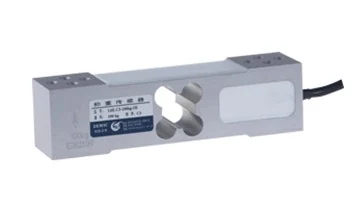
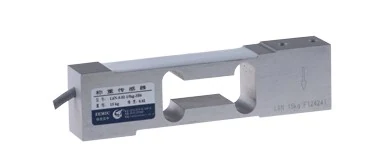
In this catalogue the L6D family covers 2.5 kg to 50 kg with a maximum platform of 250 x 350 mm. The L6E and L6N families cover 50 kg to 300 kg and 3 kg to 100 kg respectively with a 400 x 400 mm limit. The L6E3 covers 50 kg to 300 kg with a 450 x 450 mm limit. The L6T covers 50 kg to 1000 kg and the L6G covers 50 kg to 600 kg, both with a 600 x 600 mm limit.
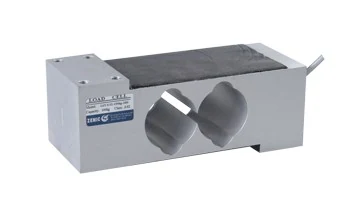
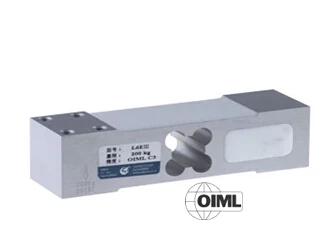
L6G single point load cell, 50 kg to 600 kg →
Corner Correction Is Not A Cure
The datasheets quote corner correction at 0.02 percent of load value per 100 mm. That figure describes the residual behaviour of a correctly sized build, not a licence to stretch the platform. Once the deck is oversized, the corner error grows with the moment arm and trimming simply redistributes the problem.
Choosing Between Families
Start with capacity, then platform size, then construction detail. All six families share aluminium parallel beam construction, silicon adhesive sealing, anodised surfaces, 2.0 mV/V output and OIML R60 C3 approval, so the real differentiators are capacity range and permitted deck size. If your deck sits close to a limit, step up to the next family rather than accepting marginal corner behaviour.
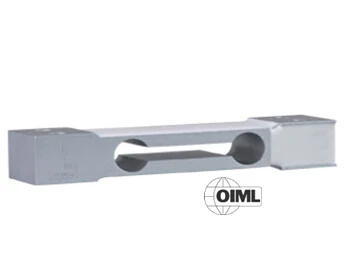
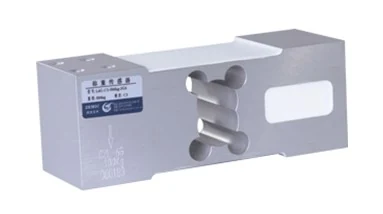
L6D single point load cell, 2.5 kg to 50 kg →
Mounting Matters As Much
Single point cells need a rigid mounting block and a deck that does not flex. A thin deck that bows under an off centre load behaves exactly like an oversized platform. Mount the cell on a machined flat surface, keep the fixing torque even, and make sure nothing touches the platform except the cell.
When To Stop Using Single Point
Above roughly 600 x 600 mm or above 1000 kg, move to four shear beam cells and a summing box. The build costs a little more but corner behaviour becomes a trimming exercise rather than a design constraint.