Of all the questions a prospective EV buyer asks, the first and loudest is range. Every other concern — charging, fast-charging, battery health — is a second-order question. In 2026, the Chinese EV market has quietly broken through the 700 km CLTC barrier at multiple price points, and 900+ km CLTC is now in production. Here's what's actually available for export.
CLTC vs WLTP — read the fine print
Before discussing numbers, a quick disclaimer. Chinese manufacturers usually quote range in CLTC (China Light-duty vehicle Test Cycle). European homologation uses WLTP. US uses EPA. None agree.
Approximate conversions we use internally:
- CLTC × 0.80 ≈ WLTP (sometimes a bit more generous, sometimes a bit less)
- CLTC × 0.70 ≈ EPA
- CLTC × 0.65 ≈ real-world mixed driving at 80-100 km/h
When we quote a specific vehicle to a specific export market, we give both the CLTC factory number and our estimated real-world range. All numbers below are CLTC unless noted.
900+ km CLTC — the new flagship tier
Zeekr 007 — up to 905 km CLTC
The long-range trim of the Zeekr 007 executive sedan clears 900 km CLTC in certain configurations — the exact number depends on wheel size, trim, and homologation spec. 800V architecture means 10%→80% fast charging in under 15 minutes on a suitable charger. For the GCC and Europe, the 007 (badged 7GT in EU) is the credible alternative to a Mercedes EQE or a BMW i5 at materially lower pricing.
700–900 km CLTC — where most long-range EVs live
Zeekr 001 — 710 to 810 km CLTC
The shooting-brake body and long platform give the 001 excellent packaging efficiency. Range depends on trim: the 95 kWh pack delivers approximately 710 km, the 103 kWh long-range pack delivers up to 810 km CLTC. AWD models trade some range for 2.83-second 0-100 km/h. Popular in Europe, UAE, Australia.
Li Auto L-series EREV — 1,000+ km combined (when range-extender operating)
Li Auto's L6, L7, L8, L9 are extended-range electric vehicles — BEV motor driving the wheels, with a small ICE generator for long trips. Pure-EV range is 200-250 km CLTC; with the range-extender operating, the combined range exceeds 1,000 km. Strictly speaking not a long-range BEV, but solves the same buyer problem. Relevant for markets without reliable highway charging.
Geely Galaxy L7 PHEV — 1,370 km total (EV + ICE)
Listed as an earlier-generation alternative to the 2026 Starray EM-i. Similar concept — 115 km EV range, 1,240+ km combined. Popular in PHEV-friendly markets like Nigeria, Pakistan.
500–700 km CLTC — the mainstream
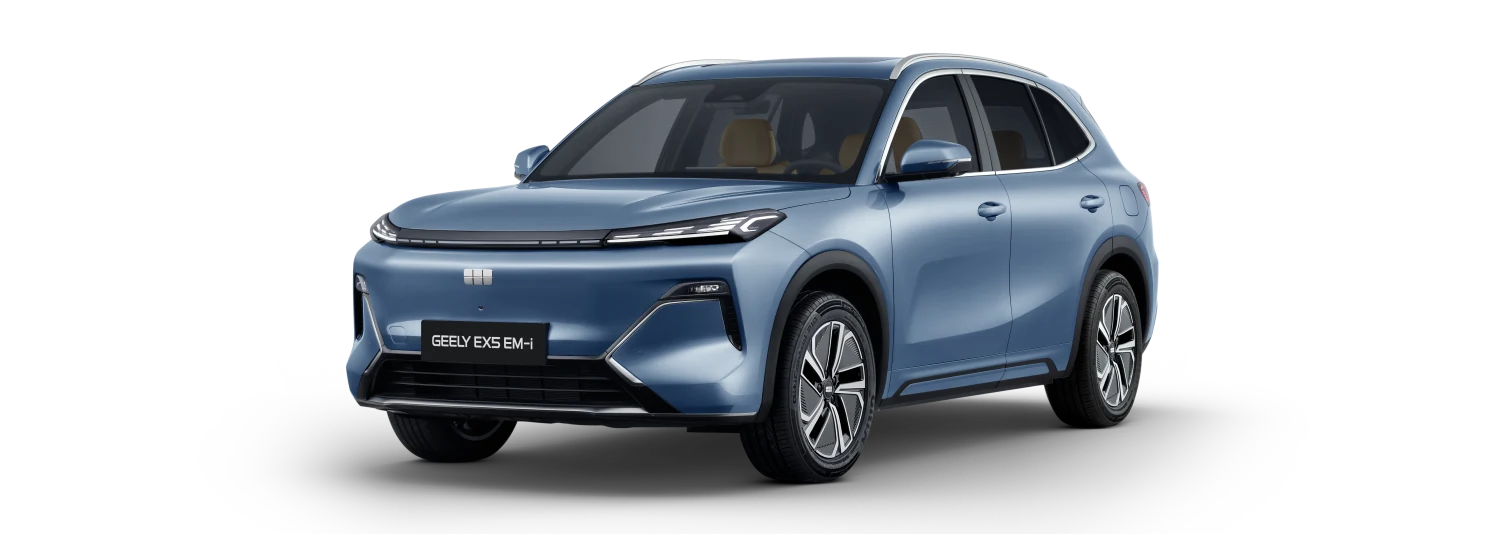
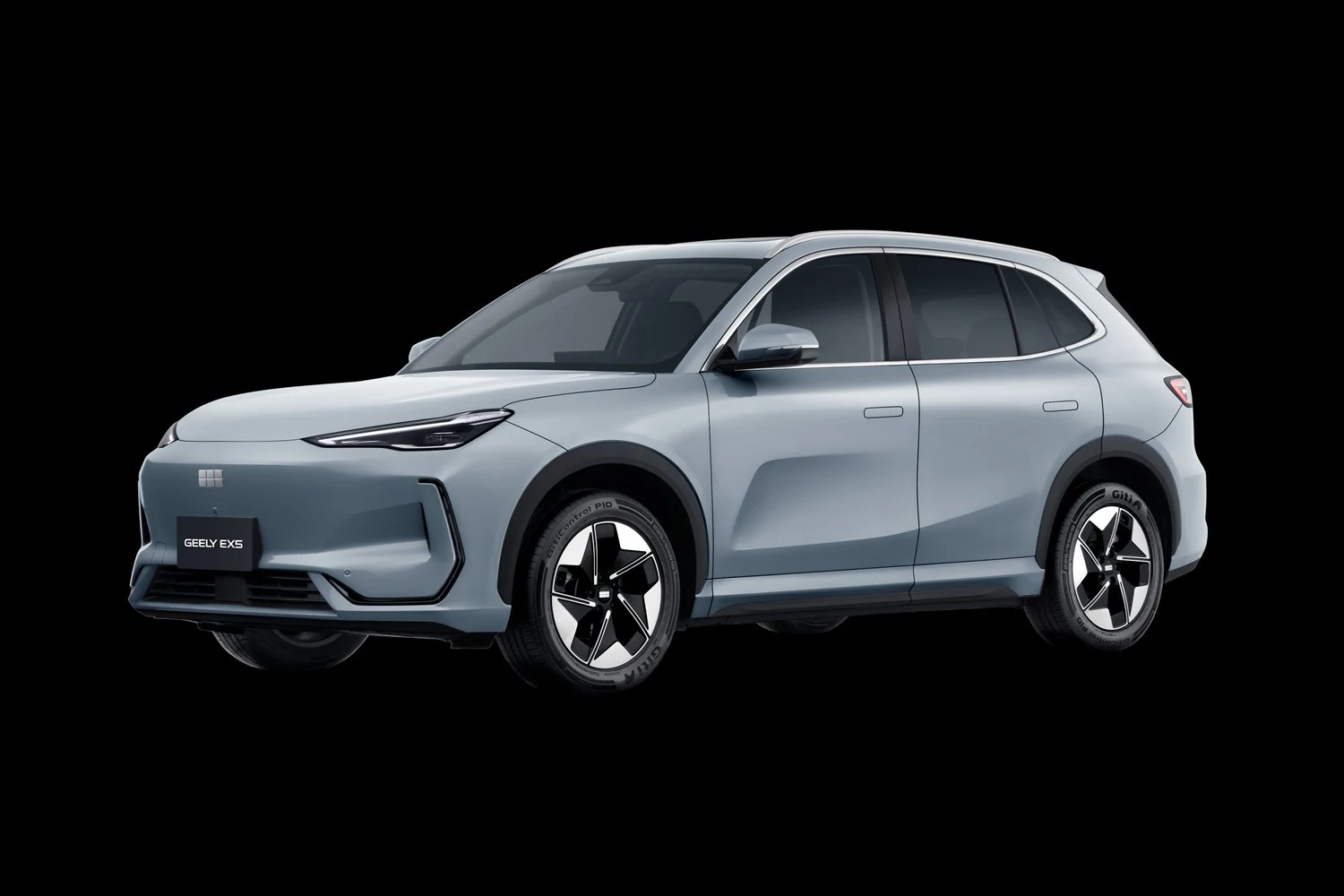
Geely EX5 — 530 to 610 km CLTC
The 68.4 kWh LFP pack delivers up to 610 km CLTC. Already in 35+ export markets. Not a 900V architecture — standard ~150 kW DC fast charging — but for a mainstream family SUV, range and pricing are sharply competitive. In Malaysia it's rebadged as the Proton eMas 7.
Zeekr X — 530 km CLTC
Compact premium crossover. The 69 kWh pack delivers around 530 km CLTC. Factory-built RHD (UK, Australia, New Zealand, Malaysia). For buyers who want premium-feel in a smaller footprint, it's our recommendation.
BYD Seal, BYD Atto 3, Geely Galaxy E5, XPeng G6 — all fall in this range
The 500-700 km CLTC band is the most crowded. Model-to-model differences are often smaller than market-to-market pricing differences.
PHEV — when total range matters more than EV range
Geely Starray EM-i — 125 km EV + 1,400 km combined
The 2026 super-hybrid. 18.4 kWh LFP pack delivers 125 km pure EV on CLTC — enough for a daily commute on electricity alone. 1.5L hybrid engine with 46.5% thermal efficiency takes over for highway. Total combined range clears 1,400 km. Six exterior colors (Alpine White, Polar Black, Jungle Green, Glacier Blue, Volcanic Grey, Cloudveil Silver) and two trims (Complete, Inspire).
We think the Starray EM-i will be the defining export PHEV of 2026. Thermal efficiency at 46.5% is industry-leading for a 1.5L-class hybrid. In Pakistan, Nigeria, Central Asia — any market where charging infrastructure is still maturing — it's the EV that's easy to sell.
What this means for your business
The range anxiety conversation has shifted. A decade ago, 300 km was impressive. In 2026, any Chinese EV priced for export has at least 450 km of CLTC range; mainstream cars have 500-600; premium long-range is 700-900+.
For most export buyers, the binding constraint is not the car's range — it's the charging network on the ground. A 900 km Zeekr 007 with no DC fast charger available on a given highway is worse in practice than a 500 km BEV that has one. When matching vehicle to market, think about the charging corridor, not just the battery spec.
Ask us for your market's charging reality before you finalize the model shortlist.