Not every emerging market is ready for pure electric vehicles. Charging infrastructure is uneven, grid reliability varies, and many buyers still think of a car as an all-range, anywhere-refuellable machine. This is a problem for pure BEV imports — and an opportunity for Chinese PHEVs and range-extended EVs.
China has quietly opened a durable lead in the hybrid/PHEV segment. Thermal efficiency numbers that were industry-leading for any manufacturer just three years ago are now baseline for Chinese super-hybrid powertrains. For export dealers serving markets where pure BEV is a harder sell, this is the segment that moves right now.
What "super hybrid" actually means
Chinese marketing uses the term "super hybrid" liberally. The underlying technology varies. Three distinct architectures sit under the umbrella:
Parallel-series PHEV. Engine drives the wheels directly at highway speeds, and generates electricity for an electric motor that drives the wheels at low speeds. Complex but efficient. This is what Geely's EM-i system is built around. BYD's DM-i is similar.
EREV (extended-range electric). Engine never drives the wheels — it's purely a generator. Electric motor does all the driving. Simpler than PHEV mechanically but with some efficiency penalty at highway speed. Li Auto's L-series and Changan's Deepal EREV use this architecture.
Traditional full hybrid. Smaller battery, no external charging, driven primarily by the engine with electric assist. Getting rarer in China as PHEV prices come down.
Our export picks
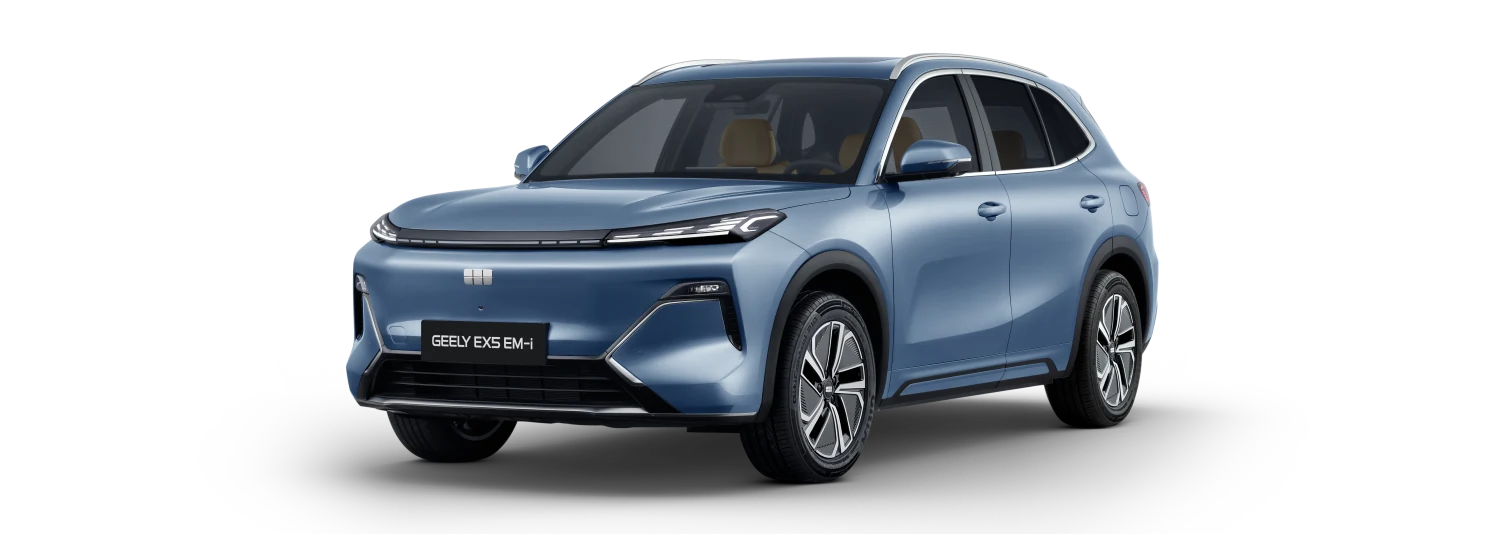
Geely Starray EM-i — the 2026 flagship super-hybrid
This is the car we'd recommend to any export dealer looking at PHEV in 2026. Published specs:
- 125 km pure-EV range on CLTC (approximately 100 km WLTP, 80-90 km real-world urban)
- 1,400+ km total combined range
- 18.4 kWh LFP battery
- 46.5% thermal efficiency on the 1.5L hybrid engine — class-leading
- 5-seat mid-size SUV, 0-100 km/h 8.5s
- Six exterior colors: Alpine White, Polar Black, Jungle Green, Glacier Blue, Volcanic Grey, Cloudveil Silver
- Two trims: Complete (15.4" display, wireless CarPlay, surround monitor, 18" wheels) and Inspire (13.8" HUD, 16-speaker Flyme Sound system, panoramic sunroof, 19" wheels)
Why it works for export: the 125 km EV-only range covers essentially all daily urban driving on electricity alone — most buyers will plug in at home overnight and run the hybrid engine only on weekend trips. Meanwhile the combined 1,400 km removes range anxiety completely. For a market with developing charging infrastructure, that's the perfect profile.
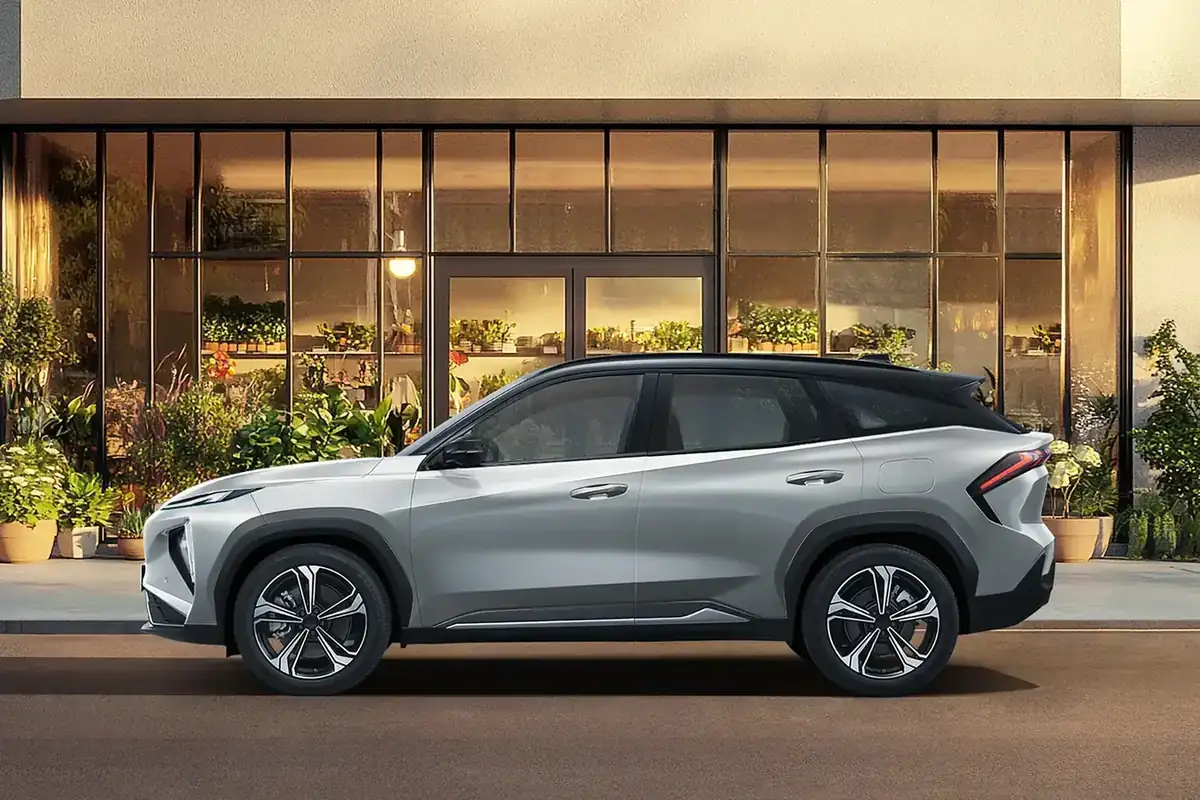
Geely Galaxy L7 — earlier PHEV alternative
Available as an alternative to the Starray EM-i. Similar concept — 115 km EV range, 1,240+ km combined. Generally slightly lower FOB than the 2026 Starray. Still current and suitable for buyers where 2025-spec technology is sufficient.
Chery Tiggo 8 PHEV
Seven-seat SUV for family and small-fleet markets. ~100 km EV range, ~1,200 km combined. Strong fit for West Africa and Southeast Asia where seven-seat family vehicles are the dominant segment.
Changan Deepal S07 EREV
Extended-range electric. Approximately 200 km pure EV plus 1,120 km combined with the range-extender engaged. Different architecture from Geely's PHEVs — the engine never drives wheels — which some buyers prefer for its simplicity.
Markets where PHEV wins over BEV
Pakistan. Charging infrastructure still maturing, grid reliability varies, gasoline accessible everywhere. Super-hybrid removes the most common "but where will I charge it?" objection.
Nigeria and West Africa. Same pattern, amplified. Lagos has charging but the rest of the country does not. PHEV is the only category that sells confidently country-wide.
Central Asia. Cold winters stress battery range; long distances between major cities. PHEV works in both constraints.
Bangladesh. SKD-import economics favor PHEV over BEV for CBU-heavy tariffs. See Bangladesh market notes .
Parts of Latin America. Chile and Uruguay have good charging; Peru, Bolivia, and Colombia are more mixed. For rural dealers, PHEV is the easier conversation.
Markets where BEV still wins
PHEV is not universally preferable. In markets where charging is strong and EV-friendly policy is active — UAE premium retail, Albania urban dealers, Eastern European early-adopters, Chile urban — a pure BEV is both cheaper to run and often cheaper to tax. Don't default to PHEV just because it's "safer" — work from the market's actual infrastructure.
Pricing and sourcing
All our Chinese PHEV and hybrid models are quoted on RFQ. FOB Shanghai depends on trim, quantity, and homologation spec for your market. Send us your target market and quantity and we'll come back with a specific quote.