A ride-hail platform buying 50 Geely Galaxy E5s operates very differently from a single-unit retail importer. Fleet pricing, fleet service infrastructure, and fleet homologation all have their own logic. This post covers how fleet sourcing from China actually works for operators who aren't the manufacturer's direct-account customer.
What counts as " fleet " for sourcing purposes
Three rough tiers, each with different economics:
Small fleet (5-50 units). Most ride-hail and taxi operators in emerging markets start here. Pricing is close to retail multi-unit FOB with modest volume discount. Service and warranty are typically handled through the dealer's retail channel. This is our most common fleet customer.
Medium fleet (50-500 units). Corporate fleet replacement, rental car operators, larger ride-hail operations. Pricing moves into meaningful volume-discount territory. Service is often structured with dedicated fleet support — a named contact at the supplier, a parts consignment arrangement with a local partner, possibly mobile service support.
Large fleet (500+ units). Usually addressed by manufacturer direct accounts or by larger import distributors. At this scale the manufacturer often wants to sell directly rather than through an intermediary, and the economics favor a corporate-to-corporate deal. If you're at this scale, contact the manufacturer directly in most cases.
FOBEV primarily serves small and medium fleet — the segment where independent dealers and aggregators can still add real value between the manufacturer and the buyer.
Why fleet buyers choose Chinese EVs
Three structural reasons drive fleet buyers toward Chinese EVs specifically:
Low per-unit capex. A ride-hail operator replacing 30 vehicles is buying depreciation. Chinese EV pricing at roughly 60-75% of European or Korean equivalents creates a significant capex advantage for equivalent specification.
Competitive TCO (total cost of ownership). EV operating cost (electricity, maintenance) at fleet scale is 40-60% below gasoline. Combined with lower capex, the 3-year TCO gap against an ICE fleet can be 25-35%.
LFP battery cycle life. Fleet use is the stress test that kills batteries. LFP chemistry's 3,000+ cycle rating means the battery outlasts the fleet duty cycle — typically 4-5 years of intensive ride-hail use before replacement.
Our recommended fleet models
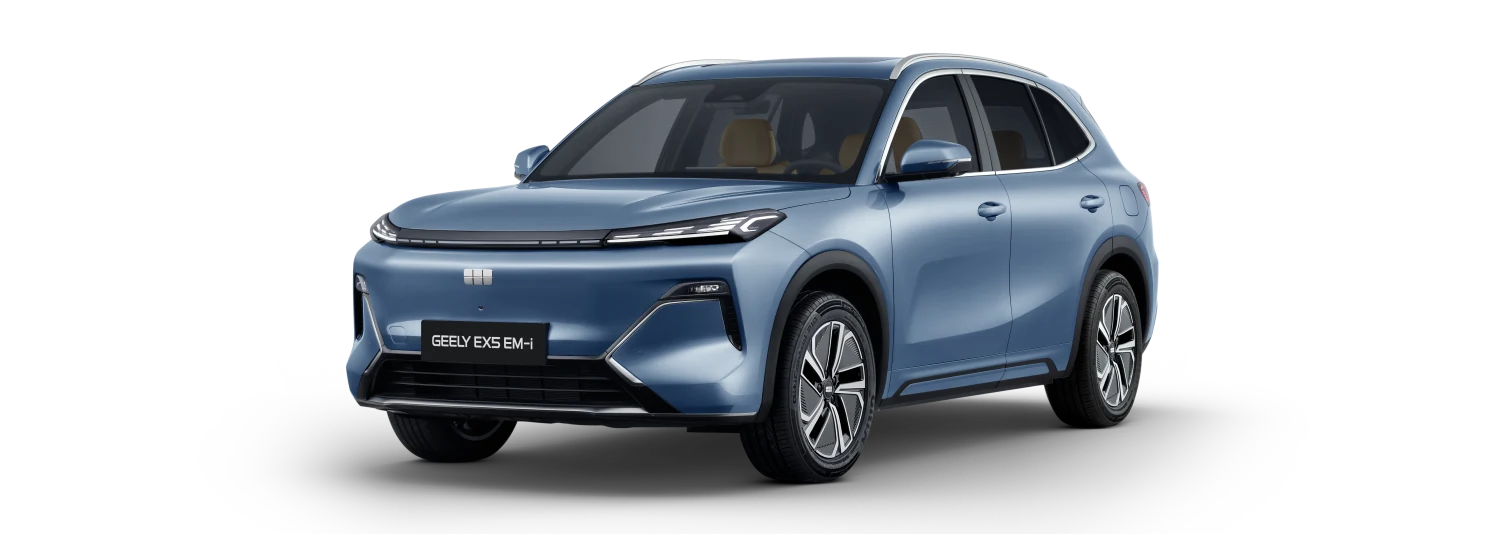
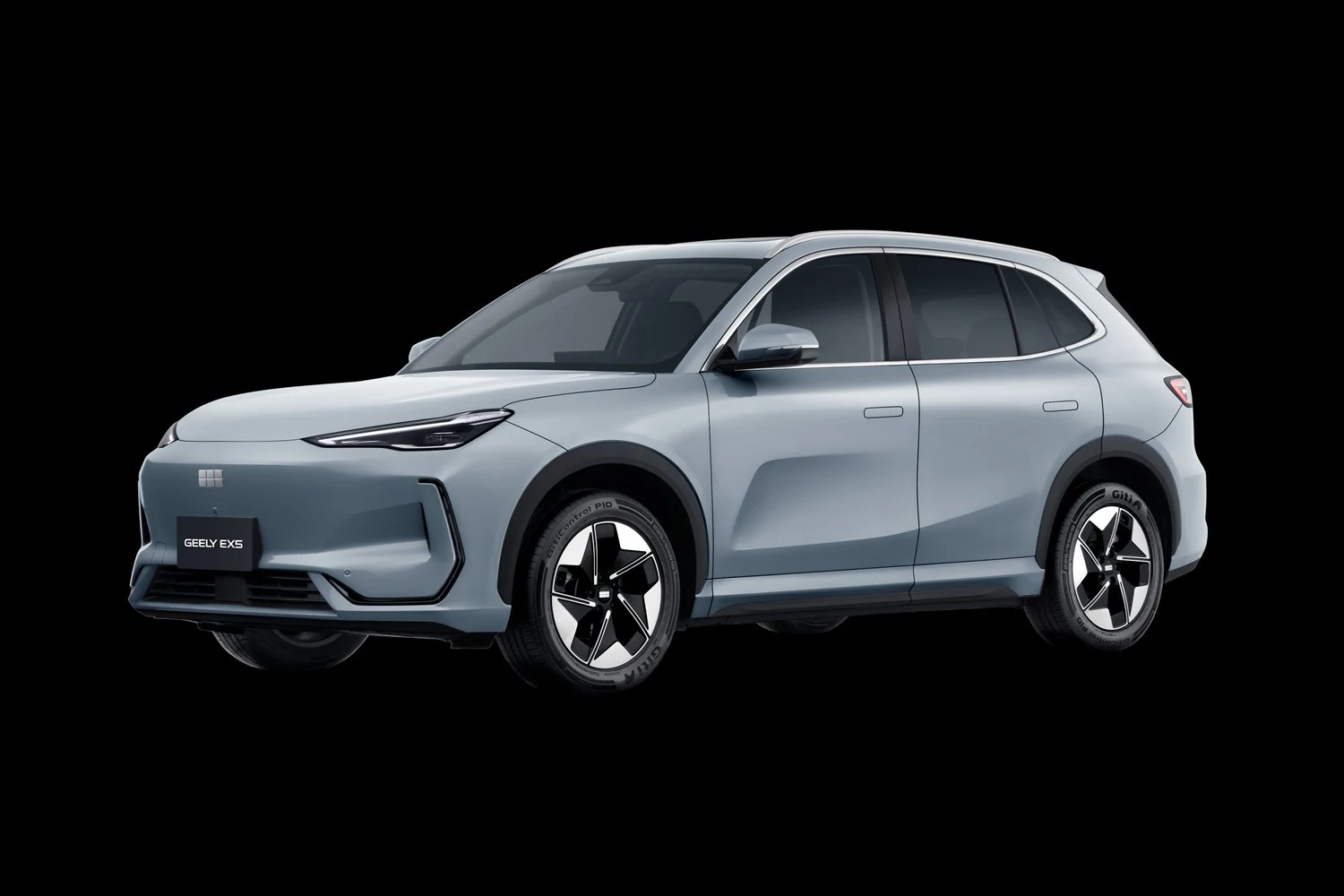
Geely Galaxy E5 / EX5 — the default mid-size fleet EV
530-610 km CLTC range, LFP battery, FWD, 5-seat SUV footprint. The EX5 is our most common fleet specification. Works for ride-hail, corporate, and rental fleet use. Factory RHD available for UK, Australia, Malaysia, etc.
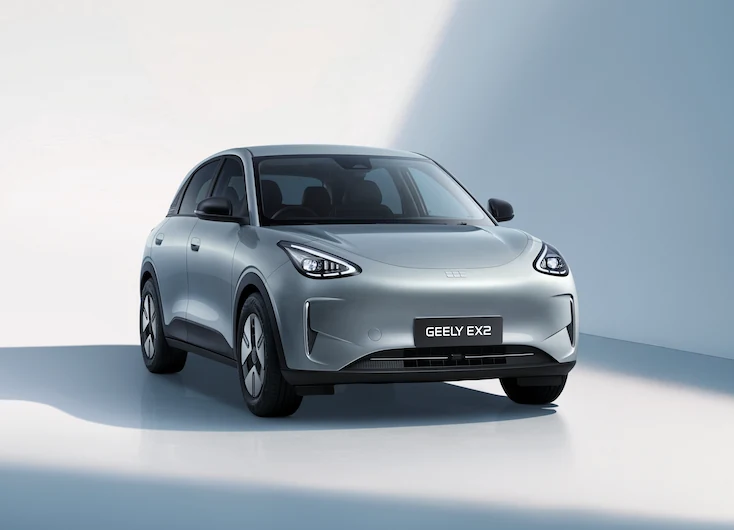
Geely EX2 — compact urban fleet
For last-mile, urban ride-hail, or car-share fleets where the mid-size SUV footprint isn't needed. 30 kWh LFP, 410 km CLTC. Lowest per-unit capex in our regular fleet-spec lineup.
BYD Atto 3 — mid-size alternative
Well-established fleet history in Australia, Thailand, parts of Europe. LFP Blade Battery. Direct comparable to the Geely EX5 on specification.
Zeekr X — premium fleet (airport, chauffeur, executive)
For fleets where the vehicle is part of the service premium — corporate chauffeur, airport transfer, boutique rental. Factory RHD. 530 km CLTC.
Geely Starray EM-i — PHEV fleet for charging-constrained markets
Where the market's charging infrastructure can't support a full BEV fleet duty cycle. 125 km EV range covers daily urban driving; hybrid engine handles overnight charging gaps. Fleet economics still work despite the added powertrain complexity because the 46.5% thermal efficiency keeps fuel consumption low.
Fleet procurement process
A typical fleet procurement timeline looks like this:
- Initial RFQ (1-2 weeks). You send us your target market, vehicle, spec, and quantity. We return a fleet-pricing quote and confirm manufacturer allocation availability.
- Specification finalization (1-2 weeks). Trim, colors, homologation, service plan. For fleets, we usually recommend standardizing on a single trim and one or two colors to simplify downstream service.
- Contract signing and initial deposit (immediately). For medium and small fleet, standard 30% T/T deposit on contract. For larger fleets or LC-structured deals, adjusted accordingly.
- Production or inventory allocation (4-10 weeks). Depending on model and volume. For in-stock models at our partner 4S dealer network, this is often 4-6 weeks. For factory-allocation orders, expect 8-10 weeks.
- Pre-shipment inspection (1 week). We inspect every unit in a fleet shipment, provide photo and video documentation.
- Loading and transit (4-12 weeks). Depends on destination. Shanghai to Chattogram is ~18 days; Shanghai to Jebel Ali is ~25 days; Shanghai to Callao is ~45 days.
- Balance payment against B/L, onward clearance, delivery.
Service and support
Fleet service is where many Chinese vehicle export relationships fall down. For fleet-scale buyers, we structure support more aggressively than for retail:
- Parts consignment. We coordinate with the manufacturer to ship a parts-stock consignment alongside the fleet — typically 3-5% of vehicle value in common-wear parts. This is pre-positioned inventory, not ordered-after-failure.
- Service training support. For larger fleets, we can coordinate manufacturer technical training for your local service partner. Typically 1-2 week engagement.
- Warranty framework. 12-month limited mechanical warranty through our dealer network for markets without official distributor presence. Fleet warranty terms can be adjusted for fleet duty-cycle expectations.
See our fleet buyers landing page for the full fleet service framework.