The first question many small dealers ask is a version of "what's the cheapest Chinese EV I can import?" It's a reasonable question and also the wrong one. The right question is: which affordable Chinese EV has the lowest total cost of ownership for your market? Low FOB price is only the first number in a long equation.
Why cheap can cost more
A $9,000 FOB compact EV with a 200 km real-world range that needs battery service within 18 months is not cheap. It is a warranty problem that happens to arrive in a container. The models we stock at the lower end of the price range have three properties in common:
- LFP (lithium-iron-phosphate) battery chemistry. Lower energy density than NMC, but dramatically better cycle life and thermal safety. LFP packs routinely hit 3,000+ cycles, which in real-world terms means the car outlasts its second owner.
- A proven export track record. Cars that are already on the road in 15+ countries have been debugged by other dealers. Your first container isn't the crash test.
- Parent-brand scale. Tiny niche brands make interesting cars. They also disappear in downturns. Stick with Geely, BYD, Chery, Changan, or their established sub-brands.
The shortlist — our top three
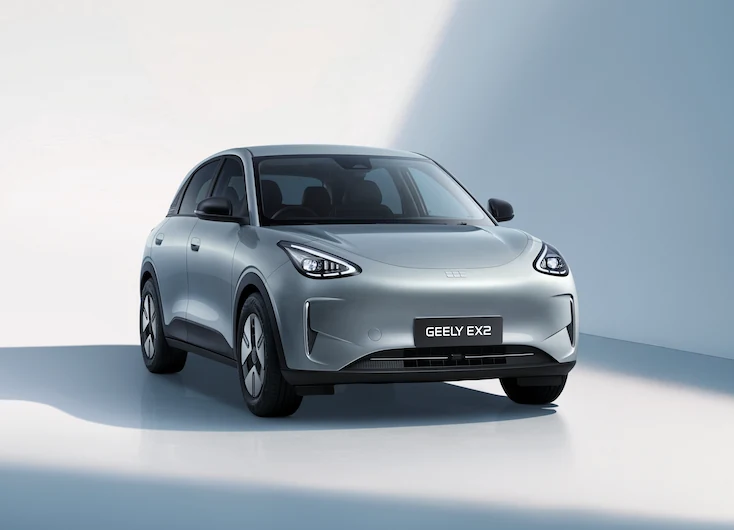
Geely EX2 — compact urban EV
30 kWh LFP pack, 410 km CLTC range, 4 exterior colors, designed around city use. The cheapest Chinese EV we'd actually stock in a showroom. The EX2 makes sense for ride-hail fleets, rental operators, and first-time EV buyers in cost-sensitive markets. It won't excite anyone, and that's exactly what you want at this price point.
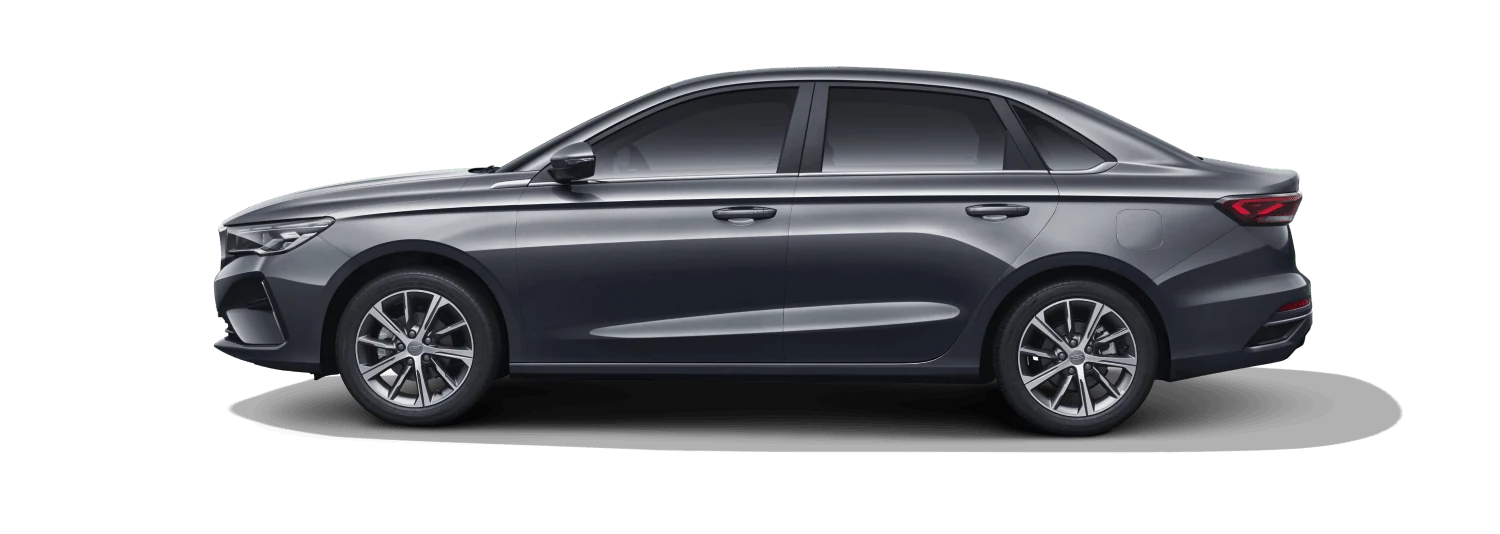
Geely Emgrand — compact sedan, ICE or hybrid
Technically not an EV in its ICE form, but it deserves mention: the Emgrand is one of the highest-volume Chinese export models of the past five years. Available with the Hi-P hybrid powertrain in later configurations. For markets where EV infrastructure is still emerging but price sensitivity is acute, the Emgrand Hi-P is a bridge product that moves serious volume in Russia, the Middle East, Africa, and Latin America.
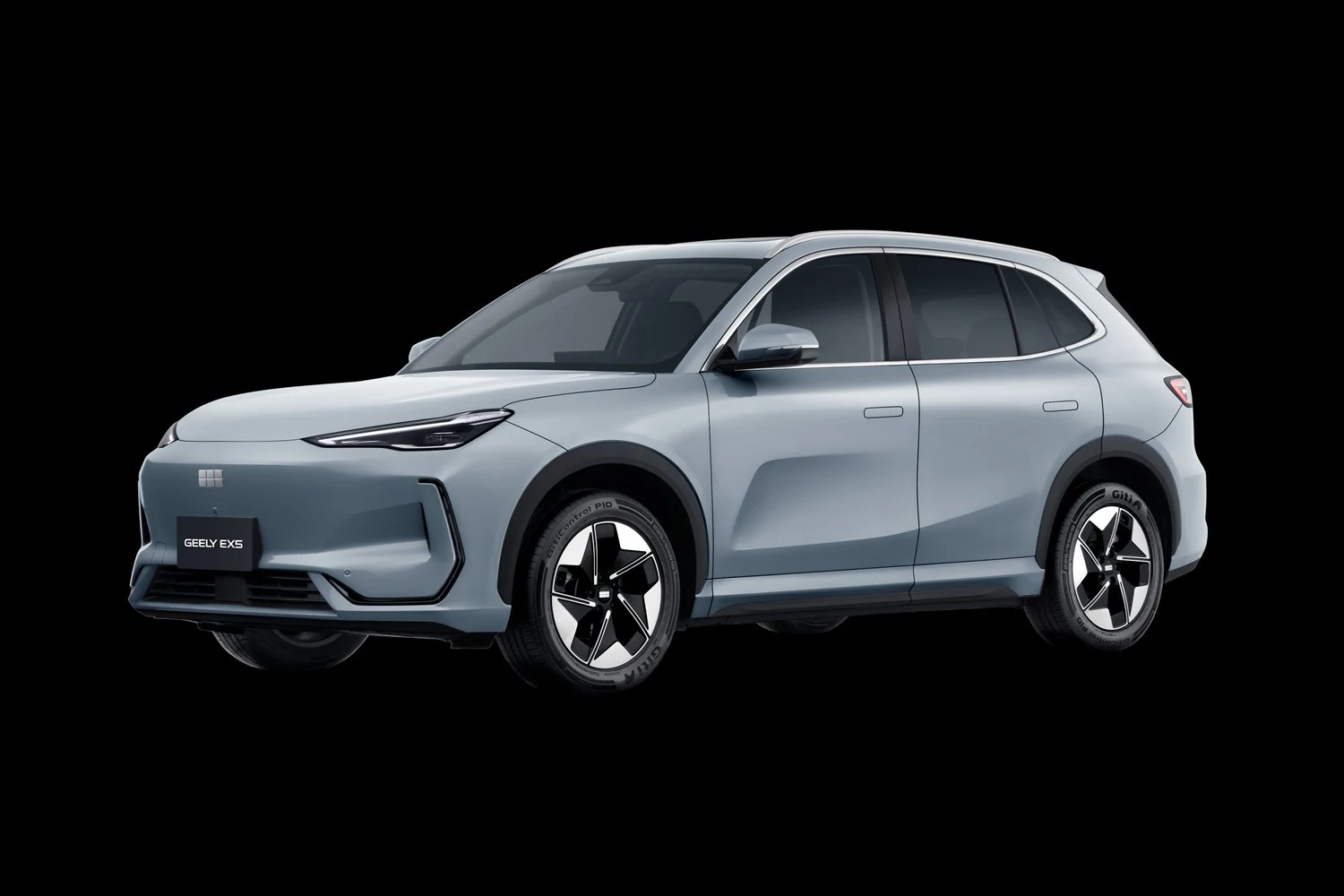
Geely EX5 (base configuration)
A step up in price but a fundamentally different vehicle class. The 60.2 kWh LFP configuration of the EX5 delivers 530 km CLTC at a price that, depending on your destination's duty structure, is still accessible to middle-income retail buyers. Ships in 35+ countries, factory LHD and RHD. If your customer's budget stretches even slightly above the EX2 bracket, the EX5 is almost always the better buy — more car per dollar.
The models we skip
Every small-dealer WhatsApp group circulates the same handful of ultra-cheap Chinese EVs every few months. Our honest opinion:
Sub-$8,000 FOB "mini EVs" from brands you haven't heard of. Almost always problematic. Short battery life, no service infrastructure outside China, cosmetic issues that erode buyer confidence within months. We don't stock them — not because they're bad cars necessarily, but because the moment something goes wrong, the import dealer gets blamed and has no one to escalate to.
Used EVs under 3 years old priced suspiciously low. China has a legitimate used-EV export program, and pricing on legitimate 2-year-old EVs is reasonable but not extraordinary. If a "used" Chinese EV is listed at 40% below its new-car equivalent, something is wrong with the provenance. See our used Chinese EV export guide .
Any vehicle priced in USD without explicit port and Incoterm. "$10,000 per unit" means nothing. Is that FOB Shanghai? CIF Karachi? DDP Lagos? The difference can be 40% of the total. See our Incoterms guide .
Budgeting realistically
If you're buying your first affordable Chinese EV, build your budget from the landed-cost side, not the FOB side. A typical breakdown for a Geely EX2 shipped to an emerging-market port might look like:
- FOB Shanghai — quote on RFQ
- Ocean freight — destination-dependent
- Marine insurance — ~0.5-1% of CIF
- Import duty — anywhere from 0% (preferred-market EV incentives) to 150%+ (protected markets with high CBU tariffs)
- VAT or GST — destination rate
- Clearing, port handling, inland freight, registration — budget 3-5% of landed cost
- Dealer margin — 8-15% typical
Do this math before you commit. We'll help you model it .