
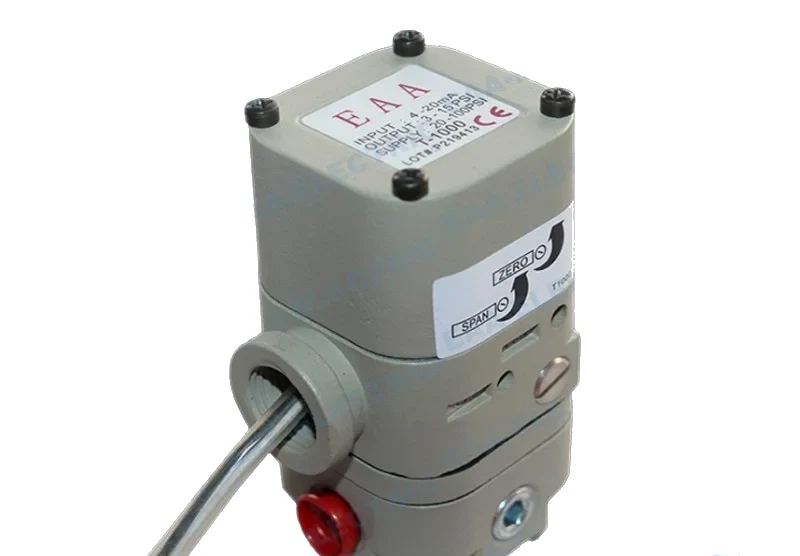
 Marsh Bellofram Type Transducer
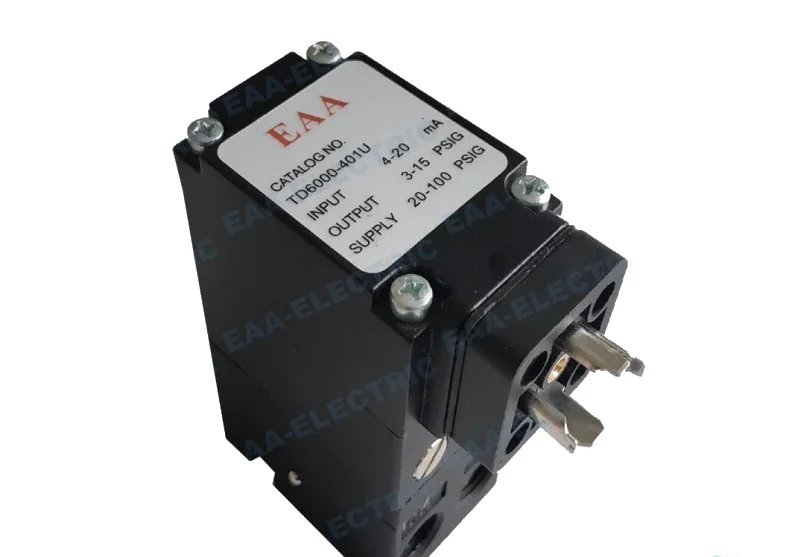 Fairchild Type Transducer
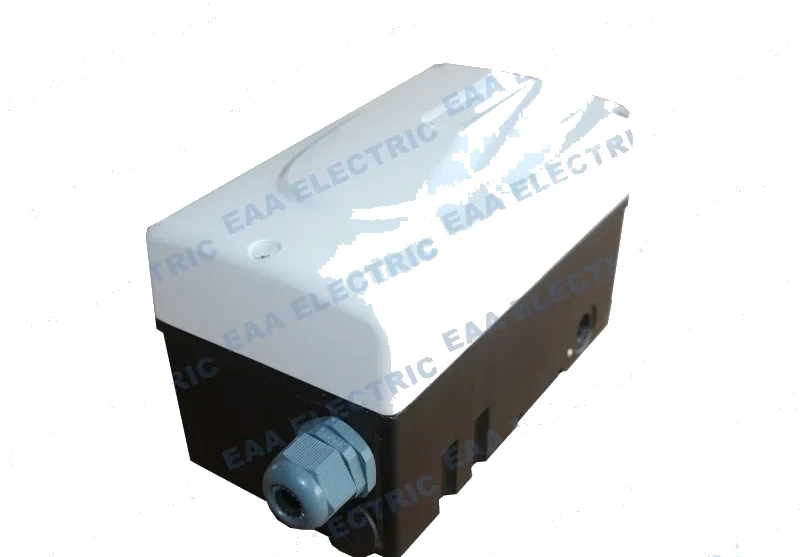 Flowserve Type Transducer
Features Of An Electro Pneumatic Transducer
Reading a feature list is usually a waste of time. This one is worth the minutes, because each point corresponds to a decision you will have to make when the instrument is specified: action direction, adjustment access, mounting angle and area classification.
Direct acting with high output power
The transducer is a direct-acting instrument with no feedback, which is precisely what allows it to obtain high-power pneumatic output signals. The absence of feedback is a design choice with a purpose, not an omission.
Size, sensitivity and where it belongs
Ingenious structure, small size and light weight, with high sensitivity, good stability and medium precision. Medium precision is why it is described as especially suitable for the output loop rather than for a loop that has to correct its own error.
Adjustment and action direction
The mode of action can be changed directly on site. Span and zero adjustment devices are on the outside, which makes adjustment and maintenance straightforward without opening the instrument.
Temperature compensation
A thermistor is attached to the internal circuit of the converter and performs temperature compensation automatically. This is what keeps the output steady as the ambient moves through the day.
Air supply and consumption
A wide range of air supply suits various occasions, and air consumption is small. Both matter when dozens of instruments share one header.
Signal and output flexibility
The converter can be used directly with different input electrical signals such as 4-20 mA DC or 0-10 mA DC, and the output pressure can be divided into 20-60 kPa or 60-100 kPa. Achieving that needs only the zero and span adjustment devices.
Mounting angle
It can be installed at any angle, with one condition: the working installation angle position should be consistent with the angle position it was adjusted at. Calibrate in the orientation the instrument will live in.
Explosion protection and construction
Explosion-proof performance is published as intrinsically safe grade ia IIC T5 and flameproof grade d IIB T6. Parts are formed by precision die-casting with a compact overall structure, and stainless steel fasteners with plastic spraying give good corrosion resistance.
Models This Applies To
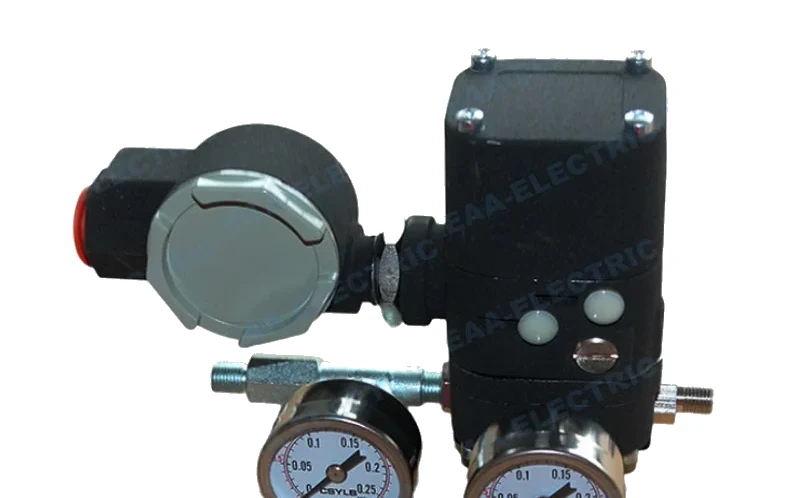 EPC Type Transducer
EPC1000 Electro Pneumatic Transducer
Direct moving E/P converter with a power amplifying relay, EAA's own EPC pattern
View specifications →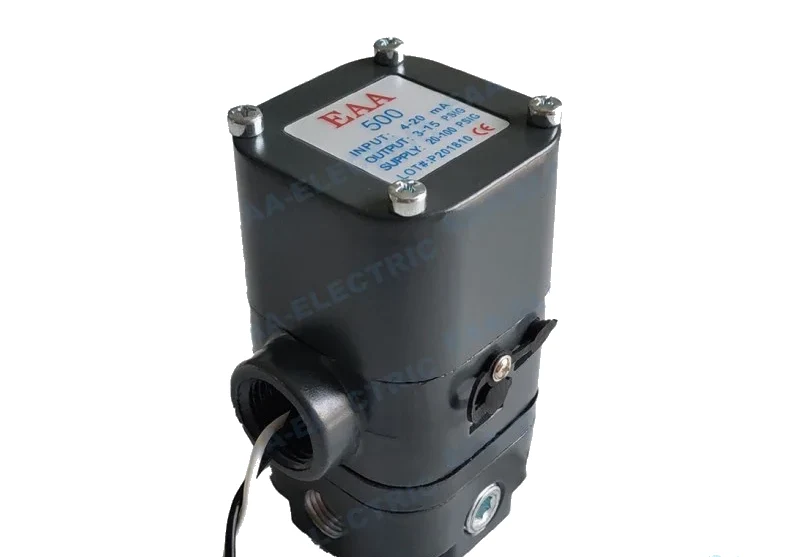 Controlair Type Transducer
500X Electro Pneumatic Transducer
Controlair pattern I/P transducer, 4-20 mA in, 3-15 to 3-120 psi out
View specifications →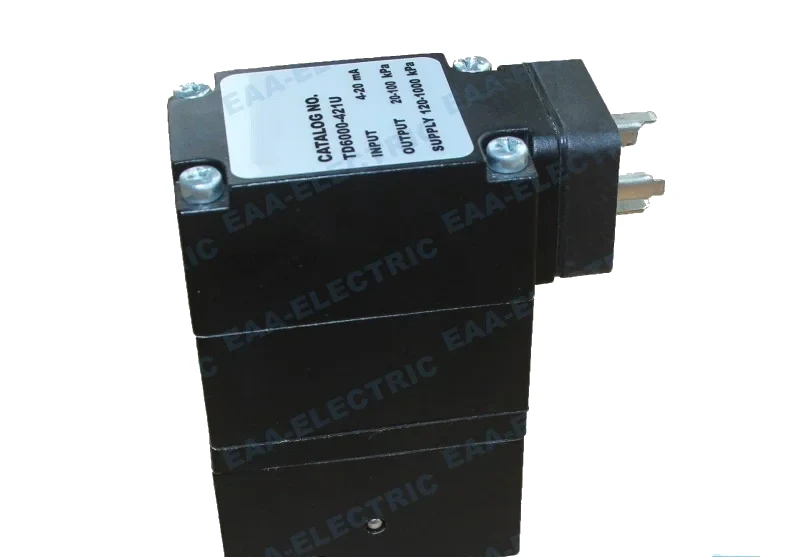 Fairchild Type Transducer
T6000 Electro Pneumatic Transducer
Modular precision transducer, six input and six output ranges, conduit termination
View specifications →Quick Answers
What explosion protection grades are published
Intrinsically safe grade ia IIC T5 and flameproof grade d IIB T6.
Can the transducer be mounted at any angle
Yes, provided the working installation angle matches the angle it was adjusted at. Calibrate in the final orientation.
How is the action direction changed
The mode of action can be changed directly on site, using the external zero and span adjustment devices.
Still Not Sure Which Instrument You Need
Send the loop details and we will point you at the model that fits, and tell you when a positioner would serve you better than a transducer.