
XP300 Student Chidren Biological Microscope for Laboratory Education
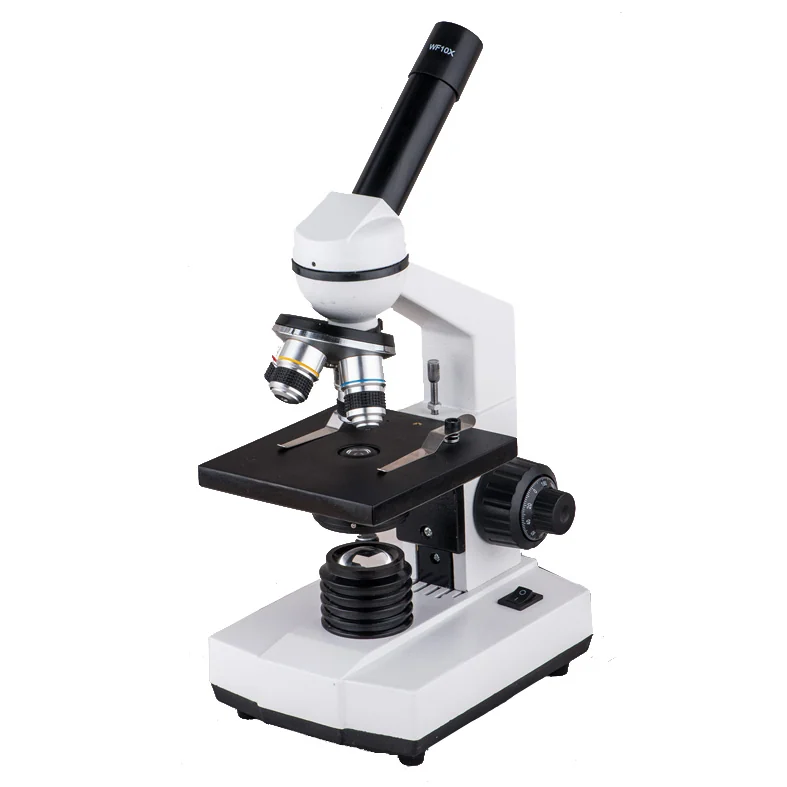
The XP300 is a monocular biological microscope with a triple nosepiece and coaxial coarse and fine focusing, designed for classroom and teaching lab use.
Product Overview
The XP300 is a monocular biological microscope with a triple nosepiece and coaxial coarse and fine focusing, designed for classroom and teaching lab use. It features achromatic objectives of 4X, 10X, and 40X (spring-loaded), wide field eyepieces at 10X (with WF16X optional), and a dual viewing head with one 30° inclined tube and one vertical tube that rotates 360°. The microscope operates on AC 220V or 110V input with DC 6V output, and includes a rotating disc diaphragm for illumination control. It is supplied with a plain stage and paired clips for slide fixation.
- Optical systemAchromatic
- Objective lenses4X, 10X, 40X (spring-loaded)
- EyepieceWF10X (WF16X optional)
- Viewing headMonocular with 30° inclined tube and 360° rotatable vertical tube
- NosepieceTriple
- StagePlain stage with paired clips
Key Benefits
- Monocular head with 30° inclined tube and 360° rotatable vertical tube allows shared viewing in a classroom setting
- Triple nosepiece with spring-loaded 4X, 10X, and 40X achromatic objectives enables quick objective changes
- Coaxial coarse and fine focusing with 20mm focusing range ensures smooth and precise focus adjustment
- Wide field eyepieces at 10X (WF16X available as option) provide a larger field of view for students
- Rotating disc diaphragm controls light intensity and contrast for different specimen types
- AC 220V or 110V input with DC 6V output supports use in labs with varying power standards
- Plain stage with paired clips securely holds slides during observation
- Optional LED lamp improves illumination and reduces heat compared to halogen sources
Application Scenarios
- Classroom instruction in biology where multiple students view the same specimen through the rotating vertical tube
- School lab sessions for observing plant cells, animal tissues, and microorganisms under 40X magnification
- Student-led microscopy exercises with guided focus using the coaxial focusing mechanism
- Teaching lab demonstrations where the 360° rotatable tube allows a teacher to show a specimen to a group
- Low-cost entry-level microscopy for educational institutions with limited budgets
Who It Is For
- Primary and secondary school science departments
- University teaching laboratories for introductory biology courses
- Vocational and technical schools with practical science curricula
- Educational institutions in developing regions requiring durable, low-cost microscopes
- Science outreach programs and science fairs
Problems It Solves
- A single eyepiece limits group viewing; the dual viewing head allows one student to observe while another watches from the side
- Fixed tube angles make it difficult to share a microscope in a classroom; the 360° rotatable vertical tube enables flexible positioning
- Lack of spring-loaded objectives can damage slides; the spring mechanism protects both the objective and the specimen
- Poor illumination control leads to overexposed or dark images; the rotating disc diaphragm adjusts light for different samples
- Inconsistent power supply standards in different countries require adaptable input; the AC 220V/110V input supports global use
- Low magnification range limits learning; the 4X-40X objective set covers basic to intermediate specimen observation
Technical Features
- Achromatic objectives: 4X, 10X, 40X (spring-loaded) for reduced chromatic aberration
- Monocular viewing head with 30° inclined tube and 360° rotatable vertical tube
- Triple nosepiece with spring-loaded objectives for safe and smooth switching
- Coaxial coarse and fine focusing with 20mm focusing range
- Wide field eyepieces: WF10X (WF16X available as optional upgrade)
- Plain stage with paired clips for secure slide fixation
- Rotating disc diaphragm for adjusting illumination and contrast
- AC input 220V or 110V, DC output 6V (LED lamp available as optional upgrade)
- Designed for use with standard glass slides and coverslips
Specifications
| Optical system | Achromatic |
|---|---|
| Objective lenses | 4X, 10X, 40X (spring-loaded) |
| Eyepiece | WF10X (WF16X optional) |
| Viewing head | Monocular with 30° inclined tube and 360° rotatable vertical tube |
| Nosepiece | Triple |
| Stage | Plain stage with paired clips |
| Focusing mechanism | Coaxial coarse and fine adjustment |
| Focusing range | 20mm |
| Illumination | Rotating disc diaphragm |
| Power input | AC 220V or 110V |
| Output voltage | DC 6V |
| Optional lamp | LED lamp |
| Working distance | Approx. 10mm at 40X |
| Condenser | Abbe condenser with rotating disc diaphragm |
Specifications are taken from the AMADA product data for this item. Confirm critical dimensions with us in writing before ordering.
Customization Options
- Option to upgrade eyepiece from WF10X to WF16X for wider field of view
- Optional LED lamp for improved illumination and lower heat output
- Replacement of standard 4X objective with 2.5X for lower magnification use
- Addition of a mechanical stage with slide holder (available separately)
- Custom labeling or branding on the body or stage (OEM service available)
Comparison With Other Options
| XP301 Student Biological Microscope | The XP300 has a dual viewing head with a 360° rotatable vertical tube; the XP301 is monocular only with a fixed tube, limiting group use. |
|---|---|
| Standard monocular biological microscope | The XP300's dual viewing head allows one student to observe while another watches from the side, improving classroom efficiency. |
| Digital biological microscope | The XP300 is analog and does not include a camera; it is simpler, lower cost, and more durable for student use in schools. |
Use Guide
- Adjust the 30° inclined tube to a comfortable viewing angle before starting
- Set the vertical tube to face the observer before switching objectives
- Always start with the 4X objective and focus using coarse adjustment before switching to higher magnifications
- Use the rotating disc diaphragm to control light intensity based on specimen transparency
- For best results, use the 40X objective with a coverslip and adjust the condenser to focus light on the specimen
- Keep the stage clean and dry; avoid placing liquids directly on the stage
- Do not force the focusing knobs; if resistance is felt, check for obstructions or misalignment
More From XP Series
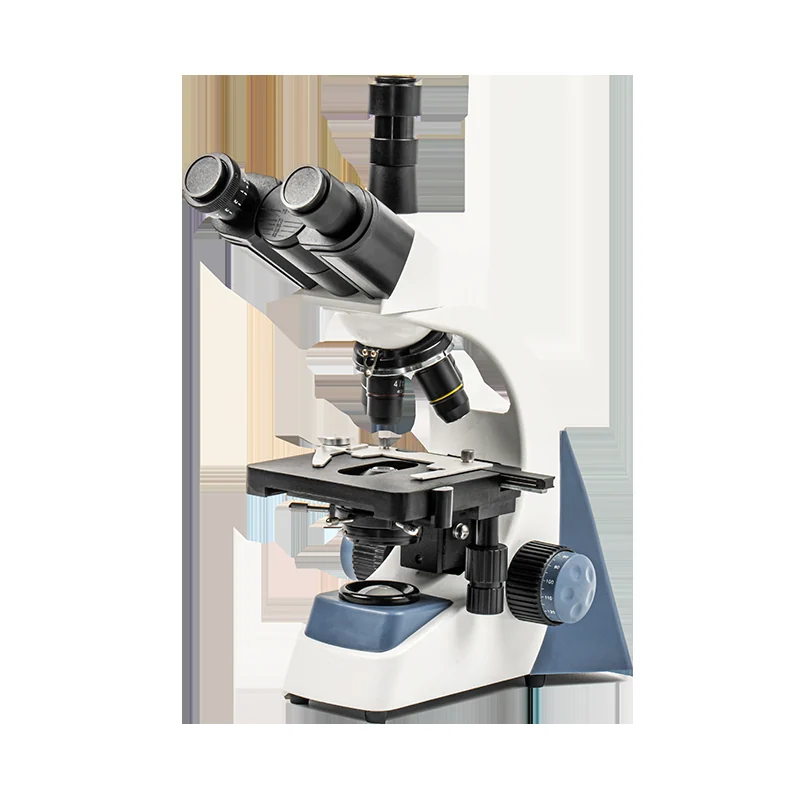
XP700 Lab Hospital Biological Microscope for Clinical and Scientific
View Details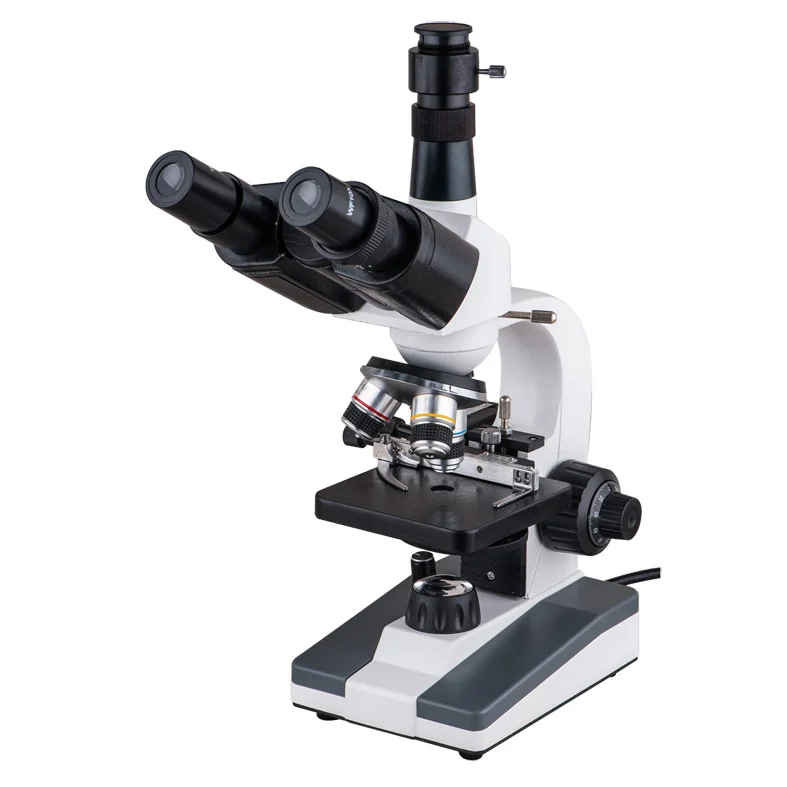
XP900 Student Chidren Biological Microscope for Clinical Observation
View Details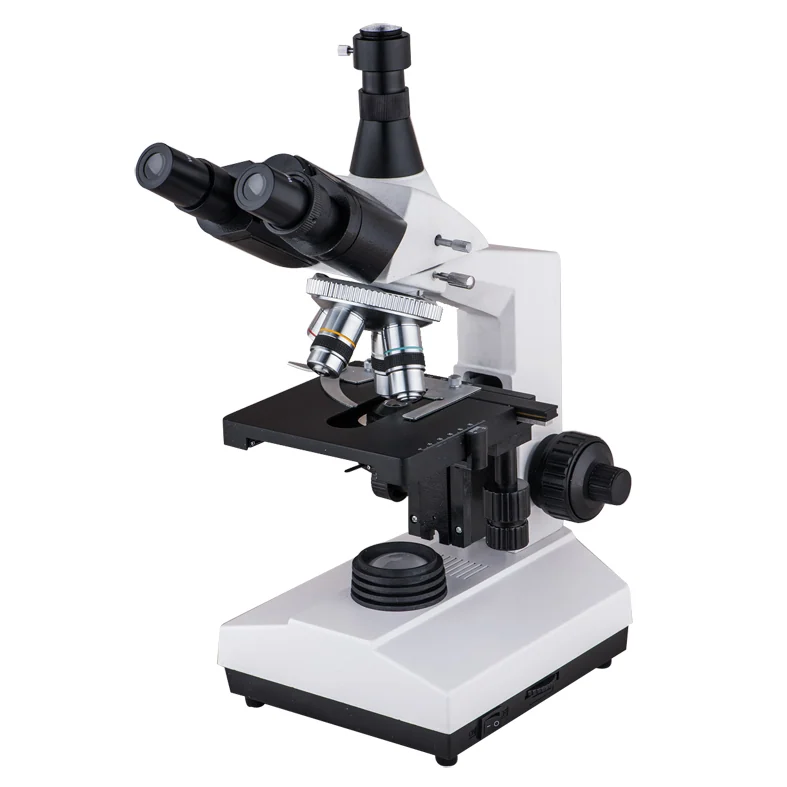
XP800 Student Chidren Biological Microscope for Clinical Work Research
View Details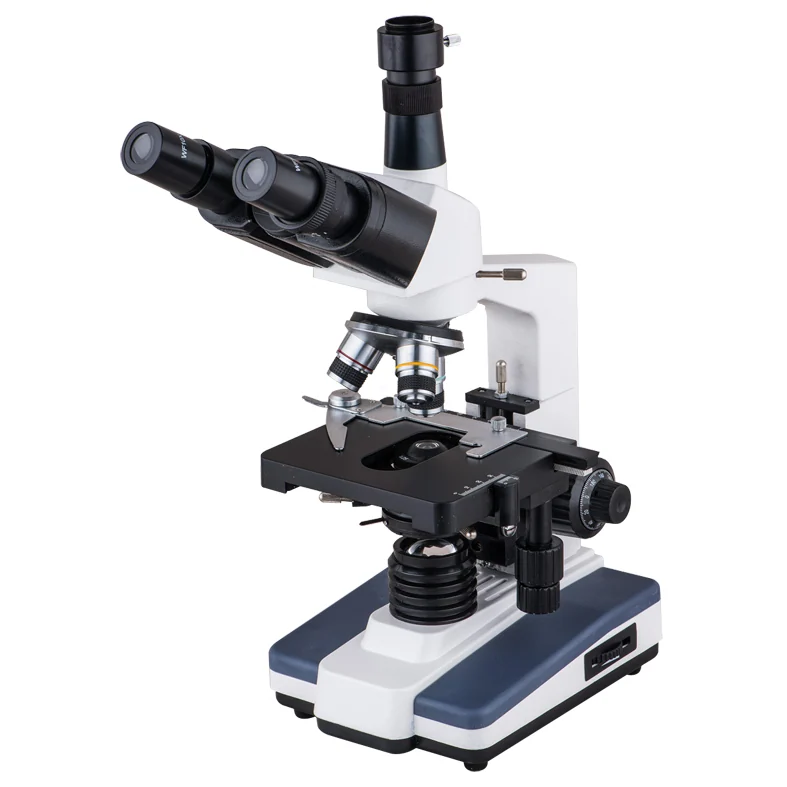
XP600 Student Chidren Biological Microscope for Laboratory Research
View Details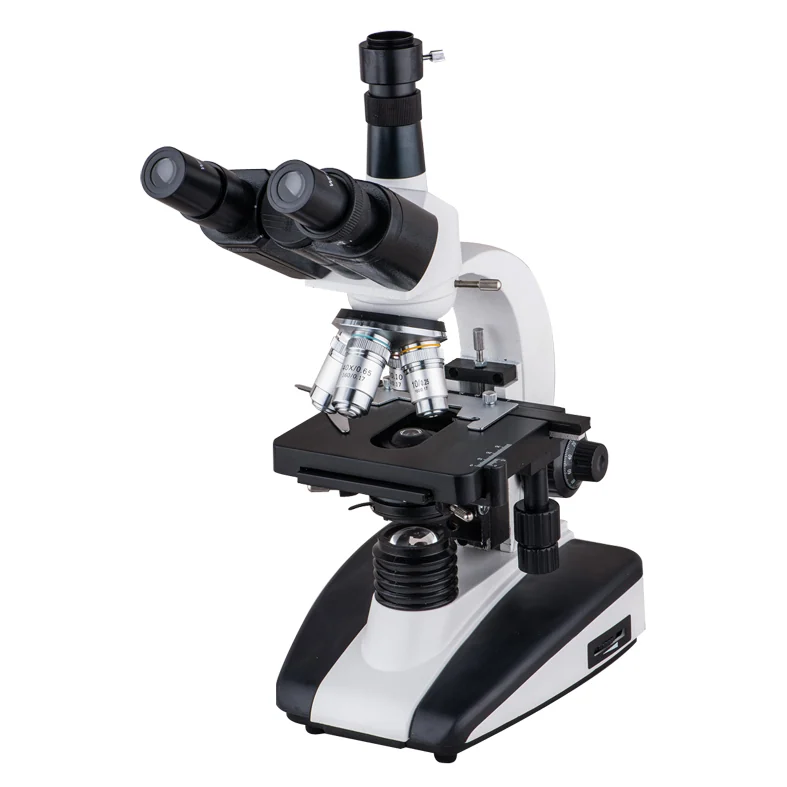
XP500 Student Chidren Biological Microscope for Specimen Observation
View Details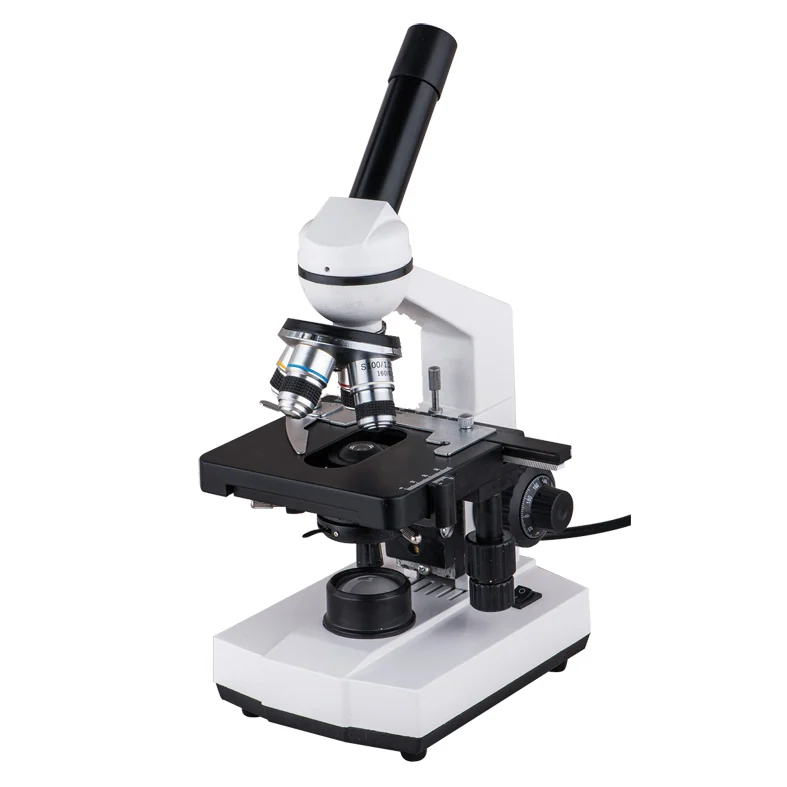
XP400 Student Chidren Biological Microscope for Educational Research
View Details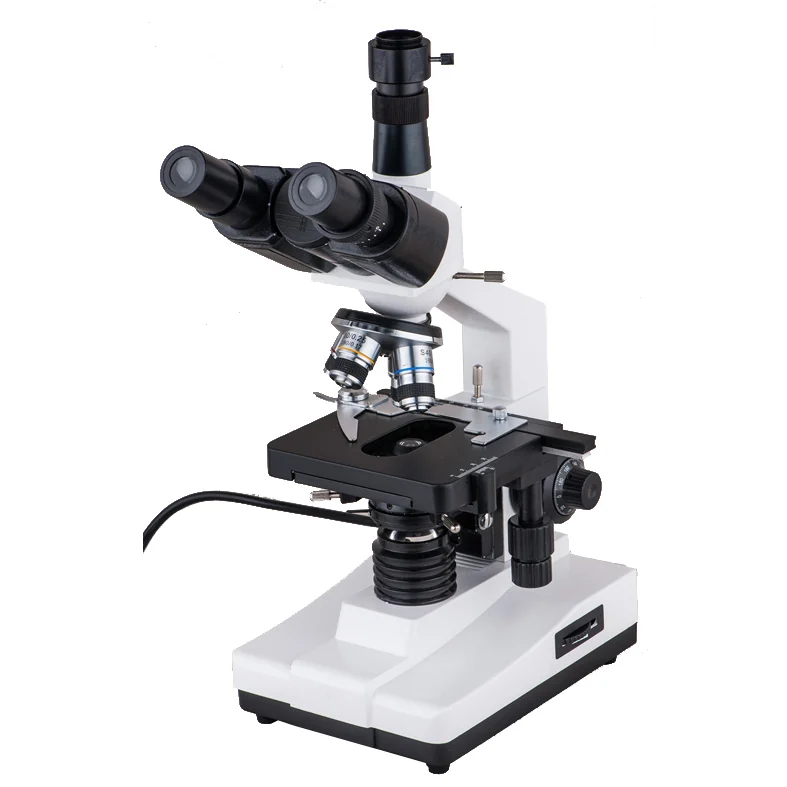
XP200 Chidren Biological Microscope for Students Labs Shcools Hospitals
View Details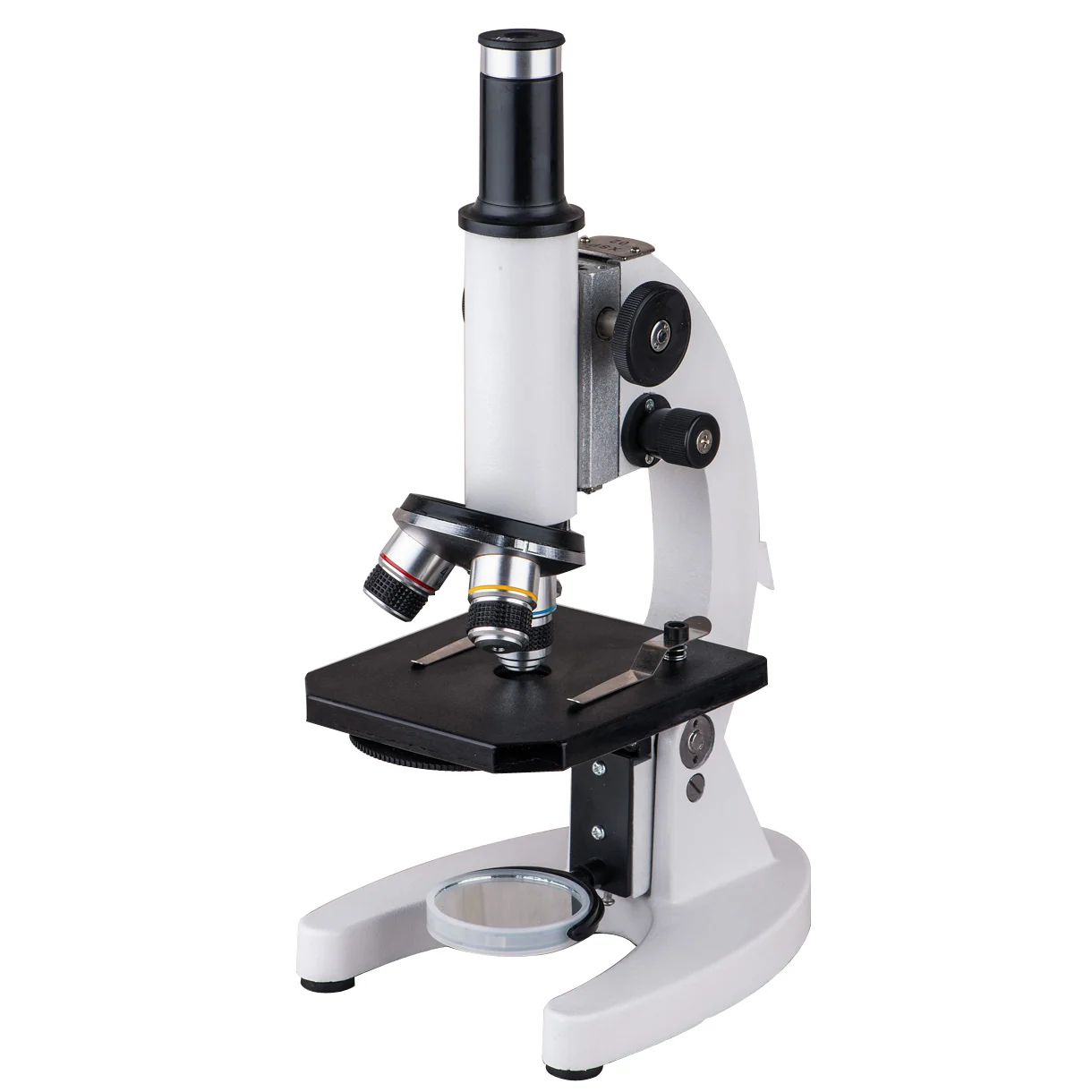
XP100 Student Chidren Biological Microscope for Shcool Hobbyists
View DetailsFrequently Asked Questions
What is the magnification range of the XP300?
The standard magnification range is 40X to 400X using 4X, 10X, and 40X objectives with a 10X eyepiece.
Can I use this microscope with a 16X eyepiece?
Yes. The WF16X eyepiece is available as an optional upgrade and increases the total magnification to 64X-640X.
Does the microscope have a built-in light source?
No. It requires an external light source or a DC 6V LED lamp (optional). The power input is AC 220V or 110V.
Can multiple students use the same microscope?
Yes. The 360° rotatable vertical tube allows one student to observe while another views from the side, making it ideal for classroom use.
What type of slides can be used with this microscope?
Standard 76mm x 26mm glass slides with coverslips. The plain stage with paired clips holds them securely.
Is the focusing mechanism smooth and reliable?
Yes. The coaxial coarse and fine focusing system is designed for consistent movement across the 20mm range, with spring-loaded objectives to prevent damage.
Request A Price On The XP300 Student Chidren Biological Microscope for Laboratory Education
Send quantity, destination and the application. We will confirm the configuration, the price and the lead time.