
XP600 Student Chidren Biological Microscope for Laboratory Research
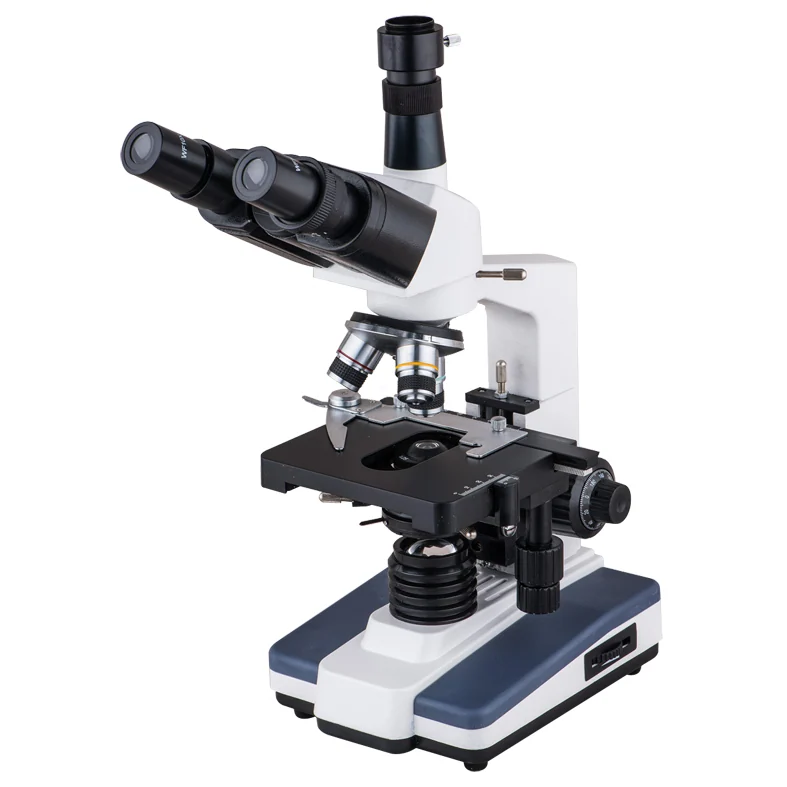
The XP600 is a student and children's biological microscope with a monocular or binocular head, designed for classroom and teaching labs.
Product Overview
The XP600 is a student and children's biological microscope with a monocular or binocular head, designed for classroom and teaching labs. It features achromatic objectives from 4X to 100X (oil immersion), a wide field eyepiece, and a double-layer mechanical stage with 125mm x 115mm travel. The microscope uses a halogen lamp or optional LED light source and includes an Abbe condenser with iris diaphragm and filter. It supports both coaxial coarse and fine focusing with 0.002mm interval and 30mm focusing range.
- Objective lenses4X, 10X, 40X(S), 100X(S,Oil)
- EyepieceWF10X (standard), WF16X (optional)
- Head typeMonocular, Compensation Free Binocular (30° inclined), Trinocular, Dual Observation Head (30° inclined and vertical, 360° rotatable)
- StageDouble-layer mechanical stage, 125mm x 115mm travel
- FocusingCoaxial coarse and fine adjustment, 30mm focusing range, 0.002mm focusing interval
- CondenserAbbe NA=1.25 with iris diaphragm and filter
Key Benefits
- Monocular or compensation-free binocular head for clear, stable viewing in teaching environments
- Achromatic objectives from 4X to 100X (oil immersion) allow for detailed observation of biological specimens
- Wide field eyepieces (WF10X standard, WF16X optional) increase the field of view for easier specimen location
- Double-layer mechanical stage with 125mm x 115mm travel enables precise slide positioning
- Coaxial coarse and fine focusing with 0.002mm interval and 30mm focusing range ensures smooth, accurate focus adjustment
- Abbe condenser with iris diaphragm and filter improves contrast and resolution at high magnifications
- Halogen lamp standard, optional LED lamp reduces heat and power consumption
- Trinocular head with 7-inch LCD screen available for digital documentation and group viewing
Application Scenarios
- Classroom instruction in biology with students using individual microscopes
- School lab sessions for observing plant cells, animal tissues, and microorganisms
- Teaching labs where multiple students share one image via a trinocular head and LCD screen
- Basic research tasks in university introductory biology labs
- Children's science programs requiring durable, easy-to-use microscopes
Who It Is For
- Schools and educational institutions teaching biology at primary and secondary levels
- University teaching labs for introductory biology courses
- Science outreach and children's science programs
- Laboratories requiring low-cost, reliable biological microscopes for training
- Instructors who need a consistent, standardized setup across multiple student stations
Problems It Solves
- A monocular head limits viewing comfort and causes eye strain during long observation periods
- Fixed focus mechanisms require frequent refocusing when changing objectives
- Small stage travel makes it difficult to locate and center specimens on slides
- Poor illumination leads to dim or uneven images, especially at high magnifications
- Lack of a digital output prevents group viewing or documentation of observations
- High heat from halogen lamps can damage sensitive specimens or cause discomfort
Technical Features
- Achromatic objectives: 4X, 10X, 40X (Spring), 100X (Spring, Oil)
- Wide field eyepiece: WF10X standard, WF16X optional
- Monocular head or compensation-free binocular head inclined at 30°
- Trinocular head with 7-inch LCD screen available
- Dual observation head: one tube inclined at 30°, one vertical, 360° rotatable
- Double-layer mechanical stage, 125mm x 115mm travel
- Coaxial coarse and fine focusing, 30mm focusing range, 0.002mm focusing interval
- Abbe condenser with NA=1.25, iris diaphragm, and filter
- Halogen lamp: 220V/6V 20W or 110V/6V 20W standard, LED lamp optional
- Standard configuration includes 4X, 10X, 40X(S), 100X(S,Oil) objectives and WF10X eyepiece
Specifications
| Objective lenses | 4X, 10X, 40X(S), 100X(S,Oil) |
|---|---|
| Eyepiece | WF10X (standard), WF16X (optional) |
| Head type | Monocular, Compensation Free Binocular (30° inclined), Trinocular, Dual Observation Head (30° inclined and vertical, 360° rotatable) |
| Stage | Double-layer mechanical stage, 125mm x 115mm travel |
| Focusing | Coaxial coarse and fine adjustment, 30mm focusing range, 0.002mm focusing interval |
| Condenser | Abbe NA=1.25 with iris diaphragm and filter |
| Illumination | Halogen lamp 220V/6V 20W or 110V/6V 20W (standard), LED lamp (optional) |
| Working distance | Standard for objectives 4X to 100X (oil immersion) |
| Field of view | Depends on objective and eyepiece combination |
| Optical system | Achromatic |
| Adjustment | Interpupillary adjustment for binocular head |
| Optional accessories | WF16X eyepiece, LED lamp, trinocular head with 7-inch LCD screen |
Specifications are taken from the AMADA product data for this item. Confirm critical dimensions with us in writing before ordering.
Customization Options
- Choose between monocular, binocular, trinocular, or dual observation head configurations
- Upgrade to WF16X eyepiece for wider field of view
- Add LED lamp to reduce heat and power use
- Add trinocular head with 7-inch LCD screen for digital output and group viewing
- Select optional objectives or eyepieces to extend magnification range
Comparison With Other Options
| XP600 monocular microscope without binocular head | The binocular head provides better viewing comfort and reduces eye strain during extended use, especially in teaching environments. |
|---|---|
| XP600 with standard halogen lamp only | The optional LED lamp reduces heat output and power consumption, making it safer for prolonged use and sensitive specimens. |
| XP600 without trinocular head | The trinocular head with 7-inch LCD screen allows digital capture and group viewing, enabling documentation and shared observation without switching instruments. |
Use Guide
- Adjust the interpupillary distance on the binocular head to match your eye spacing before focusing
- Start with the lowest magnification objective (4X) to locate the specimen, then move to higher magnifications
- Use the coarse focus first, then fine-tune with the fine adjustment for sharp images
- Ensure the condenser is raised to the correct position and the iris diaphragm is adjusted for optimal contrast
- For oil immersion (100X), apply a drop of immersion oil to the slide and clean it immediately after use
- If using the LED lamp, confirm it is properly connected and powered before use
More From XP Series
XP700 Lab Hospital Biological Microscope for Clinical and Scientific
View Details
XP900 Student Chidren Biological Microscope for Clinical Observation
View Details
XP800 Student Chidren Biological Microscope for Clinical Work Research
View Details
XP500 Student Chidren Biological Microscope for Specimen Observation
View Details
XP400 Student Chidren Biological Microscope for Educational Research
View Details
XP300 Student Chidren Biological Microscope for Laboratory Education
View Details
XP200 Chidren Biological Microscope for Students Labs Shcools Hospitals
View Details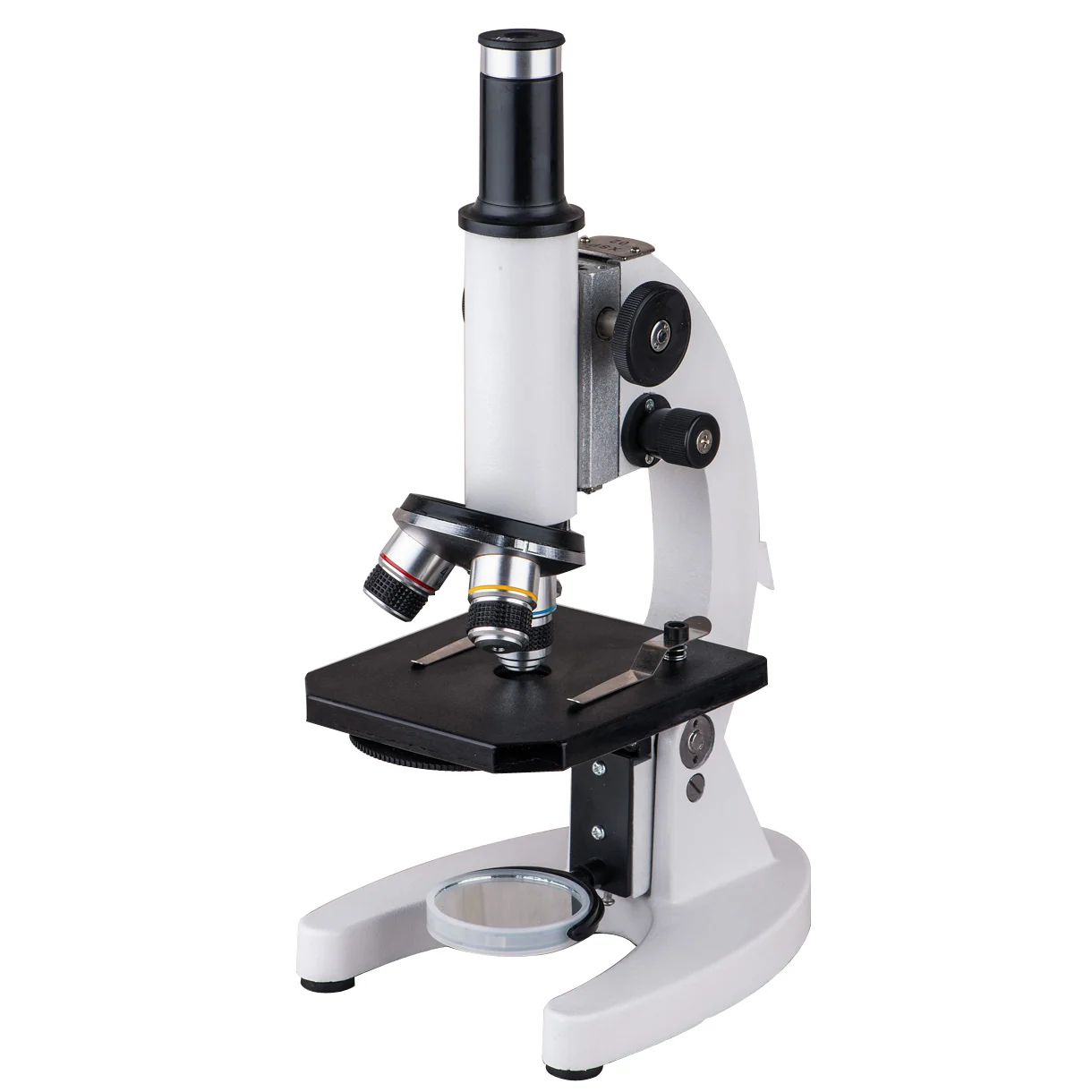
XP100 Student Chidren Biological Microscope for Shcool Hobbyists
View DetailsFrequently Asked Questions
What objectives are included in the standard configuration?
The standard configuration includes 4X, 10X, 40X (Spring), and 100X (Spring, Oil Immersion) achromatic objectives.
Can I use this microscope with a digital camera or screen?
Yes. The trinocular head with 7-inch LCD screen is available as an option for digital viewing and documentation.
Is the LED lamp included in the standard package?
No. The LED lamp is an optional accessory; the standard configuration uses a halogen lamp.
What is the focusing interval and range?
The focusing interval is 0.002mm, and the total focusing range is 30mm with coaxial coarse and fine adjustment.
Can I switch between monocular and binocular heads?
Yes. The microscope body supports multiple head types; specify your preference when ordering.
What is the field of view with the WF10X eyepiece?
The field of view depends on the objective used; it varies from approximately 4.5mm at 4X to 0.45mm at 100X.
Request A Price On The XP600 Student Chidren Biological Microscope for Laboratory Research
Send quantity, destination and the application. We will confirm the configuration, the price and the lead time.