
Metallurgical Microscope
Microscopes designed for inspecting metal surfaces, alloys, castings, heat-treated parts and microstructures under high magnification with controlled illumination and precise optical correction.
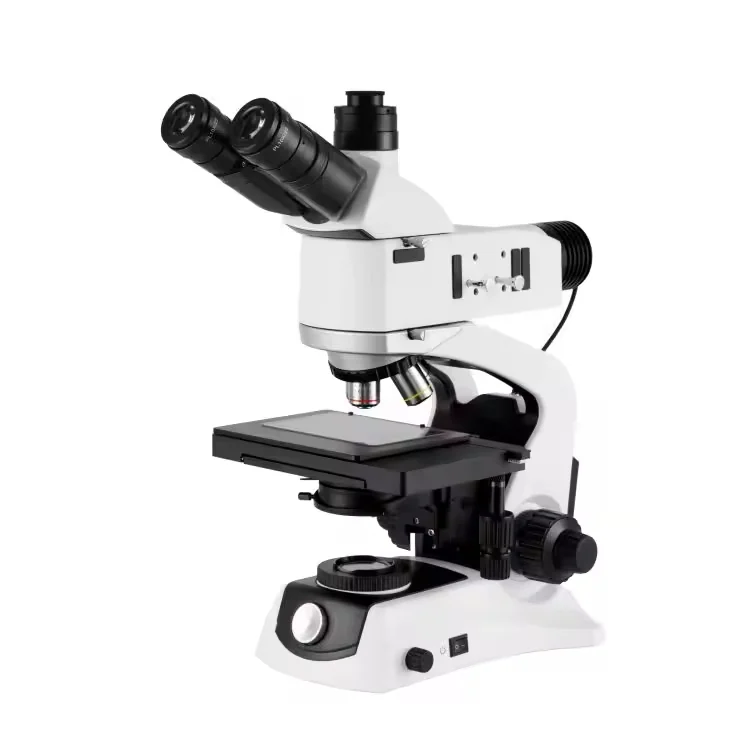
A metallurgical microscope is built for examining opaque metal samples such as polished sections, machined surfaces, welds and castings. It uses transmitted illumination through a condenser and objectives designed for high numerical aperture and flat field correction. The optical system is infinity color corrected, ensuring sharp, distortion-free images across the field. The trinocular head allows for both direct observation and camera integration, with adjustable tilt and interpupillary distance for ergonomic viewing.
Choose the Metallurgical Microscope Family
14 productsUpright Metallurgical Microscope
Upright metallurgical microscopes designed for high-magnification inspection of polished metal surfaces, semiconductor wafers, and opaque industrial samples under transmitted or reflected light. Available in models from XUM100 to XUM904 with trinocular heads, infinity optical systems, and interchangeable objectives.
 10 products
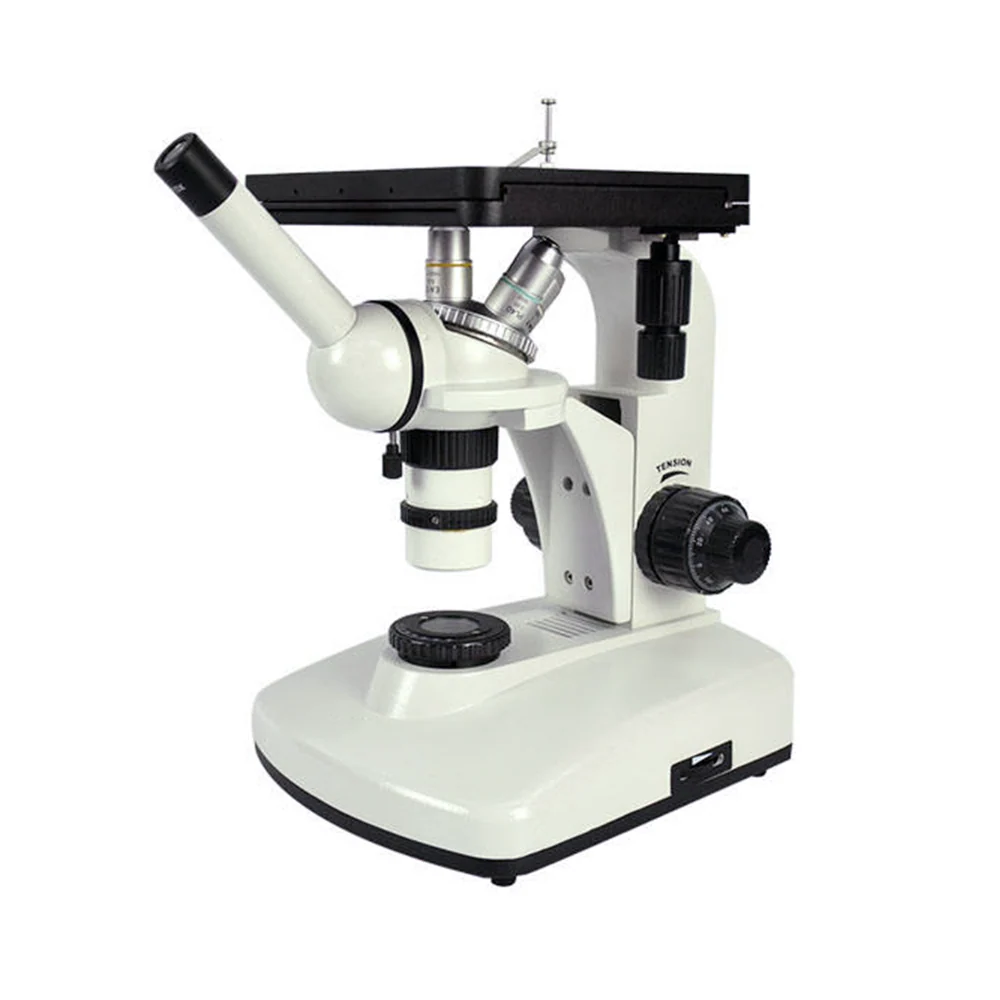
Inverted Metallurgical Microscope
Microscopes designed for examining polished metal surfaces, thin sections and opaque materials from below, with objectives positioned beneath the sample and illumination directed upward through the specimen.
 2 products
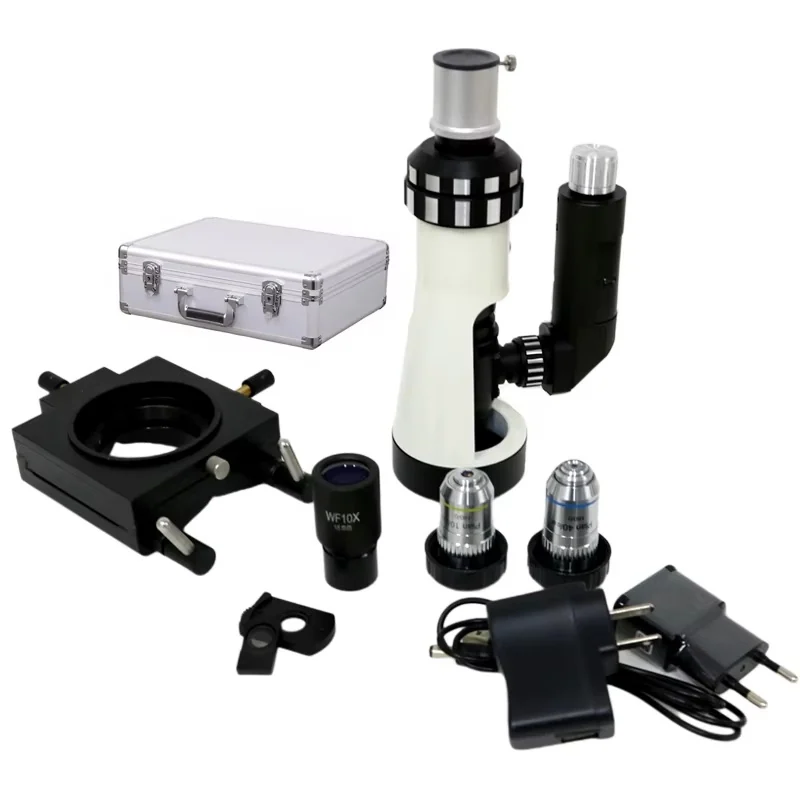
HandHeld Metallurgical Microscope
Portable monocular microscopes for on-site inspection of metal surfaces, heat-treated parts, and machined components using transmitted light and polarized illumination.
What Goes Wrong Without the Right Metallurgical Microscope
- Standard biological microscopes lack the transmitted illumination needed for opaque metal samples
- Poor optical correction causes edge distortion and color fringing in high-magnification metallography
- Short working distance objectives make it hard to inspect large or uneven metal parts
- Fixed viewing angles cause eye strain during long inspection sessions
- No provision for camera integration limits documentation of microstructures
Who Buys From This Category
- Metallurgy labs inspecting grain structure and phase distribution in metals
- Foundry quality control checking casting defects and porosity
- Heat-treatment labs verifying case depth and microstructure changes
- Manufacturing inspection lines checking machined metal components
- Research labs analyzing fracture surfaces and wear patterns
Why These Items
- Infinity color corrected optical system reduces chromatic aberration and ensures consistent image quality
- Long working distance objectives allow inspection of large or uneven metal surfaces without collision
- Trinocular head with 0-35 degree tilt and 50-76mm interpupillary adjustment supports ergonomic viewing
- Abbe condenser with N.A 1.25 provides high-resolution transmitted illumination for fine microstructures
- Splitting ratio 100:0 or 0:100 allows switching between direct observation and camera capture without repositioning
Where These Are Used
- Inspecting a polished steel cross-section for martensite formation after quenching
- Checking a weld bead for lack of fusion or porosity using dark field illumination
- Documenting grain size in an aluminum alloy using a digital camera attached to the trinocular port
- Examining a cast iron surface for graphite distribution and nodularity
- Verifying surface hardness layer depth in a hardened gear tooth
Before You Order
- Confirm the nose diameter of your microscope objective matches the standard 23.2mm for compatibility with the trinocular head
- Select a condenser with N.A 1.25 if you need to resolve fine microstructural features
- Choose a long working distance objective if you are inspecting parts with surface irregularities or coatings
- Ensure your camera or imaging system supports the interface type (e.g. C-mount) used by the trinocular head
Frequently Asked Questions
Can I use a metallurgical microscope with a digital camera?
Yes. The trinocular head supports camera attachment via the 0:100 splitting ratio, allowing full use of the camera while maintaining direct observation.
What is the working distance of the long working distance objectives?
The long working distance objectives are designed for professional use with extended clearance, but exact values are not specified in the source.
Does the microscope support dark field or polarizing illumination?
Yes. The system supports bright field, dark field, polarizing and DIC (Differential Interference Contrast) observation modes.
What is the purpose of the 100:0 or 0:100 splitting ratio?
It allows you to direct all light to the eyepieces (100:0) or to the camera port (0:100), depending on whether you are observing or capturing images.
Is the trinocular head adjustable for different users?
Yes. The head has a 0-35 degree tilt and an interpupillary distance range of 50-76mm, with left diopter adjustment of ±5.
Get A Price On Metallurgical Microscope
Send the model numbers you are considering, or describe the task and let us shortlist them for you.